

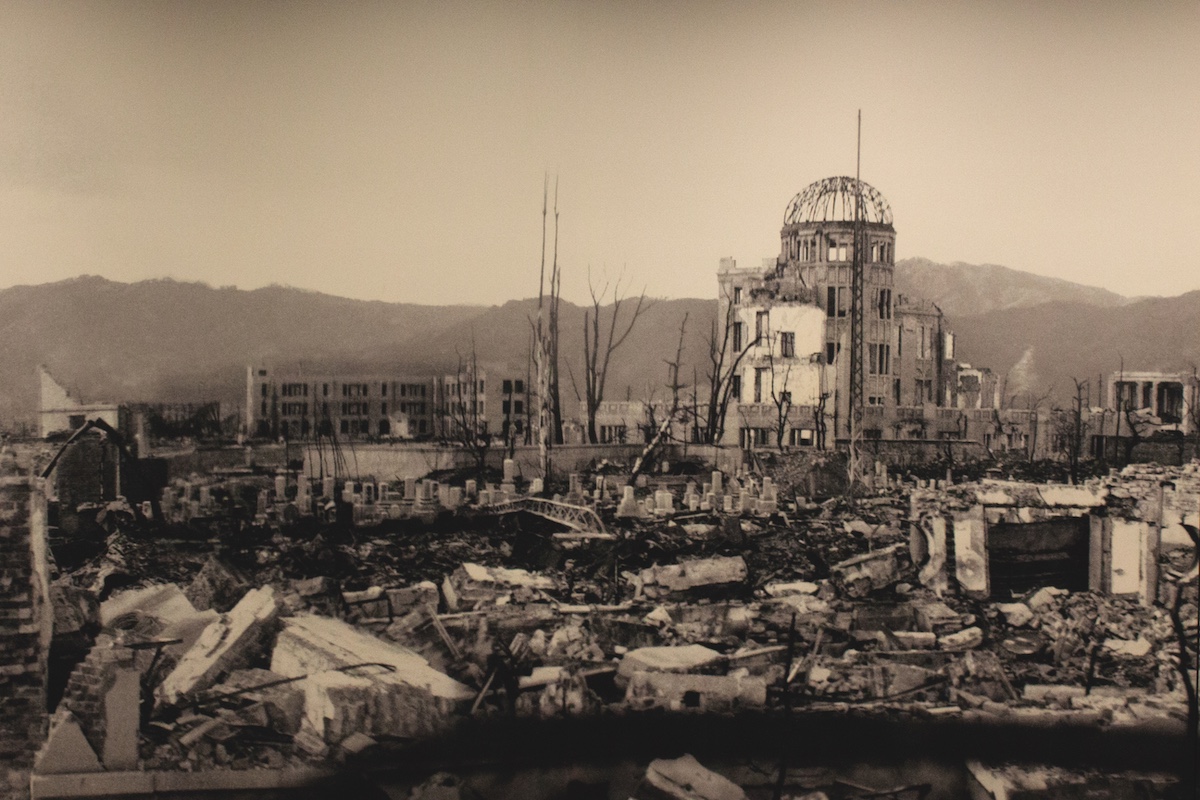
The City of Hiroshima after the bombing, August 6th, 1945
Text: H.E. Mr. Kansuke Nagaoka, Ambassador of Japan to the Czech Republic; Photo: Shutterstock
At 8:15 am on August 6th, 1945, the first atomic bomb used against humans was dropped on Hiroshima. 600 meters over the city, and with a blinding flash, the atomic bomb exploded 43 seconds after being dropped, creating a fireball that blazed like a small sun. More than one million degrees Celsius at its center, the fireball reached a radius of over 200 meters in just one second, and surface temperatures near the hypocenter rose to 3,000 to 4,000 °C.
51,787 out of 76,327 buildings were completely destroyed or burnt, and 6,180 were partially destroyed. It is estimated that approximately 140,000 people died by the end of December 1945. Consequently, the radiation continued causing deaths and disorders for decades. Even today, explanations of the effects of radiation over the years are inadequate.
At the time of the explosion, fierce heat rays and radiation burst out in every direction, causing the air around the fireball to expand and creating a super-high-pressure blast. The complex interactions of these three factors inflicted tremendous damage upon the city.
The damage inflicted by the atomic bomb was characterized by instant and massive destruction, indiscriminate mass slaughter, and radiation. In particular, the damage caused by the radiation led to decades of human suffering.
At the time of the explosion, the temperature of the detonation point exceeded 1,000,000 °C, and the fireball generated in the air grew to a radius of over 200 meters one second later.
Beginning 0.2 seconds after detonation, heat rays emitted in all directions by the fireball exerted powerful effects at ground level for three seconds. People sustained severe burns from the powerful heat rays, and many died as a direct result.
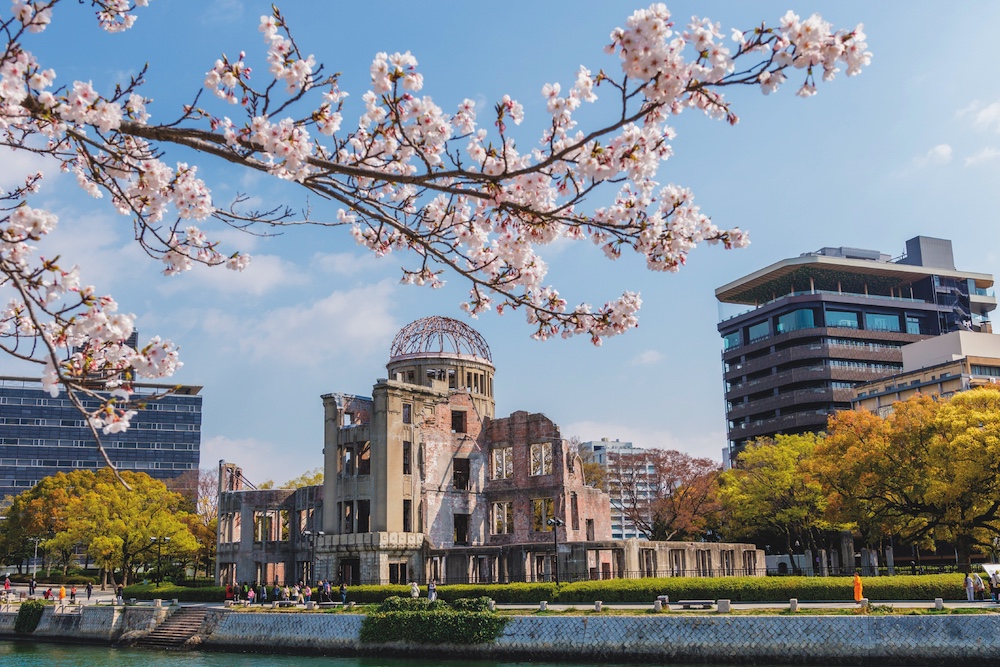
The City of Hiroshima today
The surface of roof tiles within 600 meters of the hypocenter melted and blistered. Many trees ignited, and within three kilometers, electric poles, trees, and lumber were charred. The explosion of the atomic bomb momentarily created a super-high pressure of several hundred thousand atmospheres. The surrounding air expanded enormously, generating a shockwave followed by a tremendous blast of wind. Within two kilometers of the hypocenter, most wooden houses were destroyed. Although ferro-concrete structures remained standing, they were severely damaged, with all windows shattered and interiors completely gutted by fire.
Unlike conventional bombs, the atomic bomb emitted massive amounts of radiation that inflicted grave damage to human bodies. Penetrating deep into bodies, radiation caused damage to cells, altered blood, diminished the blood generation function of bone marrow, and damaged the lungs, liver, and other organs.
The explosion left residual radiation on the ground for a long period of time. Consequently, many who entered the city after the explosion to search for family or co-workers, as well as those who entered to participate in relief activities, developed symptoms similar to those resulting from direct exposure. Many died.
Radiation effects from the atomic bomb extended beyond the acute effects, such as fever, nausea, and diarrhea, that appeared immediately after the bombing. It caused various disorders for decades, and continues to threaten the health of hibakusha (atomic-bomb survivors) today.
Several years after radiation exposure, the number of deaths from leukemia and other cancers increased. Excess cases of leukemia began appearing two to three years after radiation exposure, and peaked seven to eight years after it. In contrast, the latency period for solid cancers is relatively long; they are assumed to have increased five to ten years after the radiation exposure.
Even today, explanations of the effects of radiation over the years are inadequate. Research and survey efforts continue.
The intense blast and heat rays of the bombing destroyed and burnt almost all buildings within two kilometers of the hypocenter. Even in the area beyond two kilometers of the hypocenter, wooden buildings sustained major damage, and 90 percent of the structures in the city sustained devastating damage. According to the city’s 1946 general survey, 51,787 out of 76,327 buildings were completely destroyed or burnt by the bombing, and 6,180 were partially destroyed.
Various institutions have investigated the number of people who perished in the bombing, but so far the precise number is unknown. The City of Hiroshima estimates that approximately 140,000 people had died by the end of December 1945, when the acute effects of the radiation subsided. It is thought that approximately 350,000 people were in the city when the bomb exploded on August 6th, 1945.
Approximately half of those who were within 1.2 kilometers from the hypocenter died within the day; 80 to 100 percent of those who were closer to the hypocenter are thought to have died. Even among those who were able to escape an instant death or death within the day, the closer they were exposed to the bombing, and the more serious damages they suffered, the higher their mortality was.