

The final design is a masterclass in optical physics
Text: Dahlia Yaari; Photo: Tamara Hegedűs
A rare find in Brazil sparks a historic endeavour
The gem’s story begins in 2013, deep within the prolific mines of Minas Gerais, Brazil. It was there that a topaz crystal of extraordinary size and clarity was unearthed. For a year, the massive rough stone circulated in the raw gemstone market, a remarkable but challenging specimen. The standard path for such a large, clean crystal would have been pragmatic: sawing it into numerous smaller, easily marketable gems for rings and pendants.
The risk and expense of handling it as a single piece were deemed too great by most.
In 2014, the stone was sold in a fair of minerals and gems in Munich, and went into a private collection of gemstones to Switzerland. In 2016 it finally crossed the way of Niveau élevé, a Swiss Watch & Juwellery brand, which saw a different destiny for the crystal. They made the audacious decision to preserve its integrity and attempt what had never been done before: to shape it into the largest polished gem in history.
The dragon guards the rainbow
This decision marked the beginning of a half-decade-long project that would push the boundaries of gemmology.
Idar-Oberstein artisans overcome nature’s challenges
The task of cutting the colossal topaz fell to the artisans of Idar-Oberstein, a small German town with a legendary, centuries-old reputation as the world’s premier gem-cutting centre. The project was led by master cutter Jürgen Christmann, a figurehead of the local craft. Yet, even with this depth of experience, the team faced unprecedented challenges.
The primary obstacle was a fundamental property of the topaz mineral: its basal cleavage plane. Imagine the crystal’s atomic structure as a stack of paper. The bonds between the sheets are far weaker than the bonds within each sheet. This means topaz can be split perfectly and easily along this single plane with a sharp impact, or even with stress from polishing. One mistake could instantly cleave the multi-million-dollar stone in two. The team spent an entire year meticulously studying the rough crystal, mapping its internal stresses and cleavage plane to devise a safe cutting strategy.
The second major problem was mechanical. No machine in existence was built to handle a rough gem weighing more than 20 kilograms. A new, custom-built polishing apparatus had to be designed and constructed, featuring a precision three-axis control system to manoeuvre the stone with absolute stability and accuracy.
To mitigate the immense risk, the team undertook a two-year prototyping phase. Using a specialised Japanese glass with a refractive index identical to topaz’s (1.63), they created five exact replicas of the rough stone. Polishing these glass models allowed them to test the new machinery, refine the complex cutting pattern, and perfect their technique before ever touching the actual gem. It was a painstaking process of trial and error, a dress rehearsal for one of the most demanding lapidary projects ever attempted.
From optical physics to spiritual symbolism
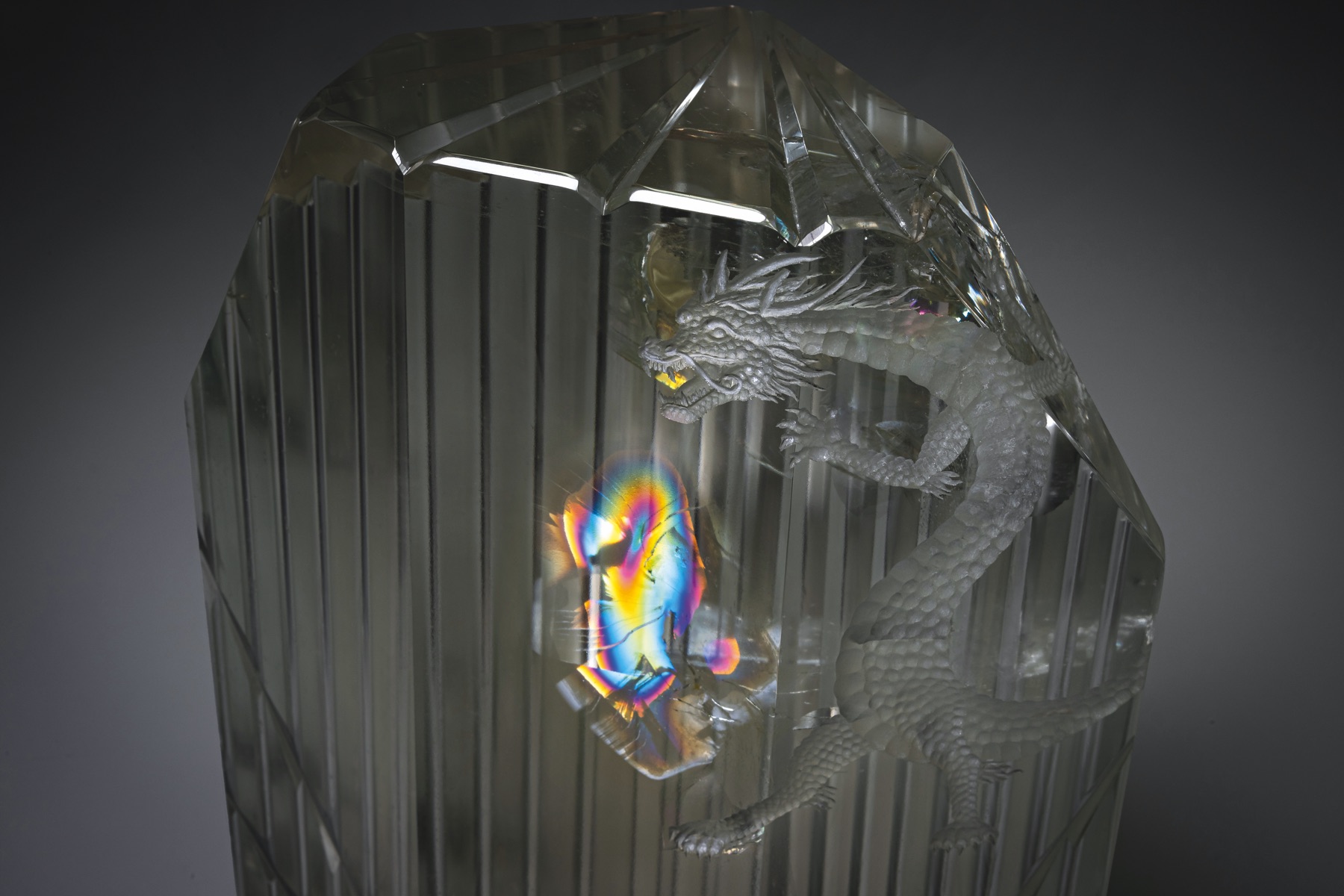
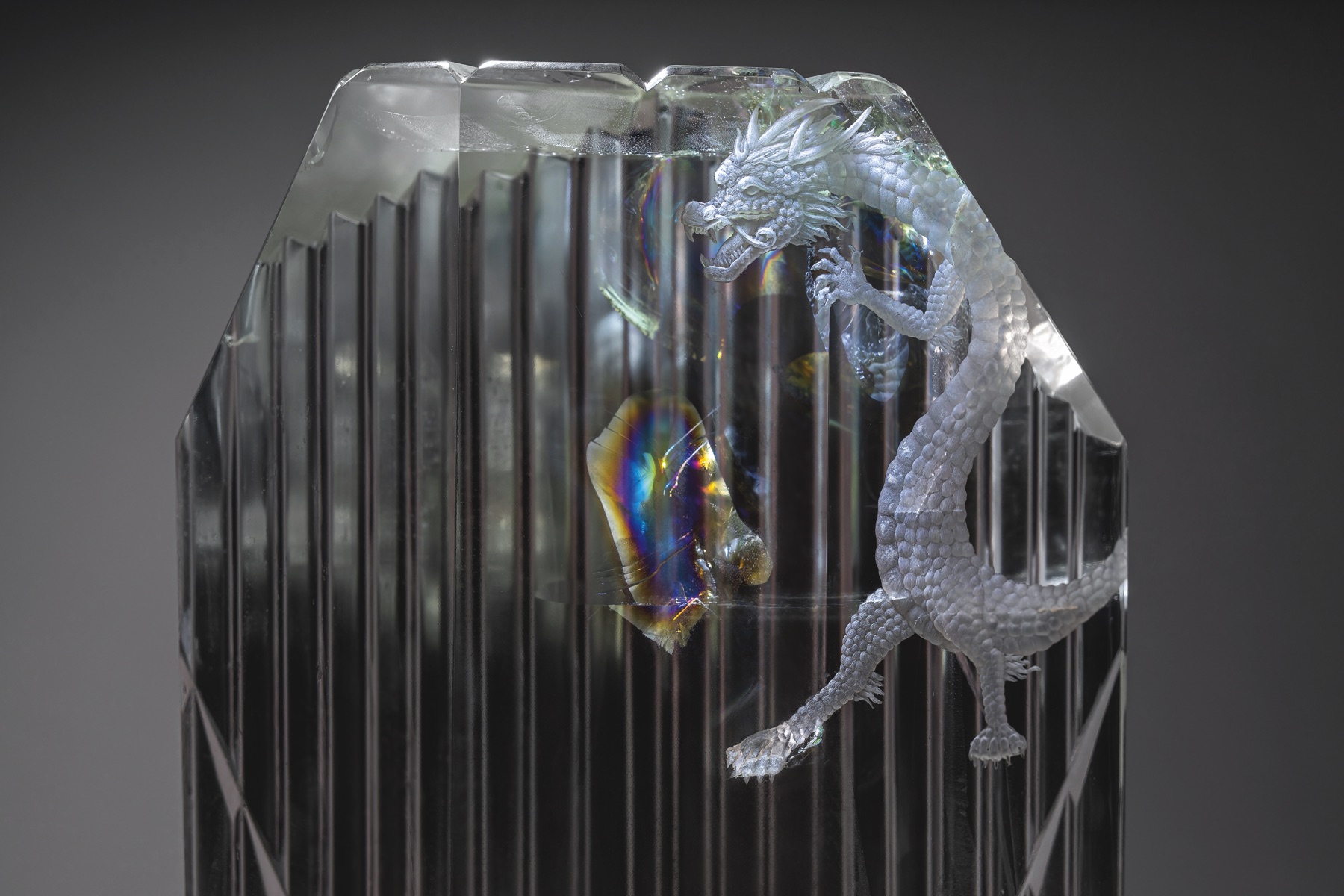
The final design of The Secret Rainbow is a masterclass in optical physics. The crown (top) features a clean step-cut to showcase the gem’s internal purity. The pavilion (back) is where the true innovation lies. It is carved with a series of precise grooves, each angled to achieve a double total reflection from the backside of the stone, directing the incoming light back into the direction from where it came.
This phenomenon occurs when light travelling through a denser optical medium (the topaz) strikes the boundary with a less dense optical medium (air) at a high angle, known as the critical angle. Instead of escaping, the light is reflected back into the gem as if from a flawless mirror. By engineering the pavilion this way, the designers ensured that a maximum amount of light entering the stone is reflected back to the viewer’s eye, creating exceptional brilliance.
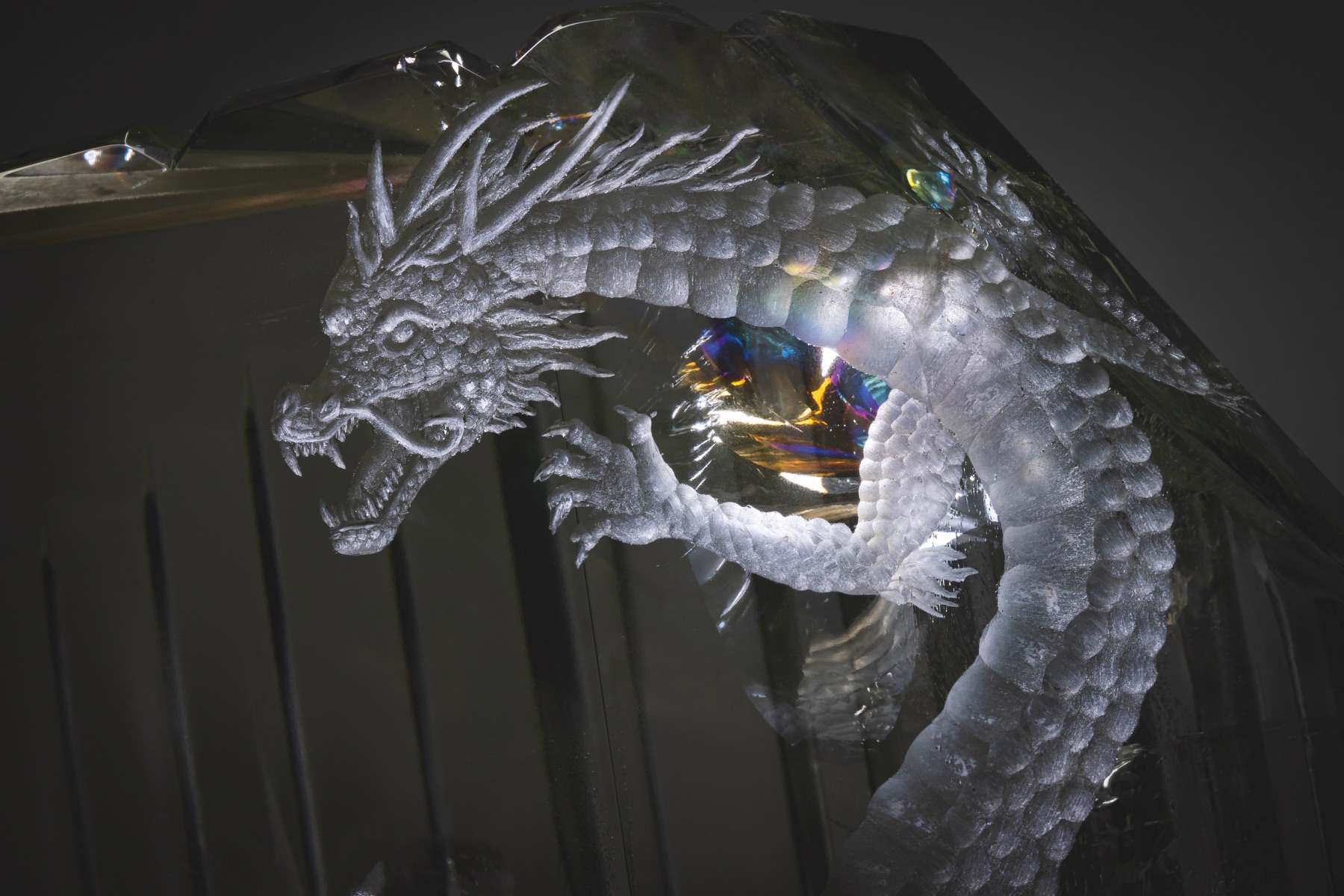
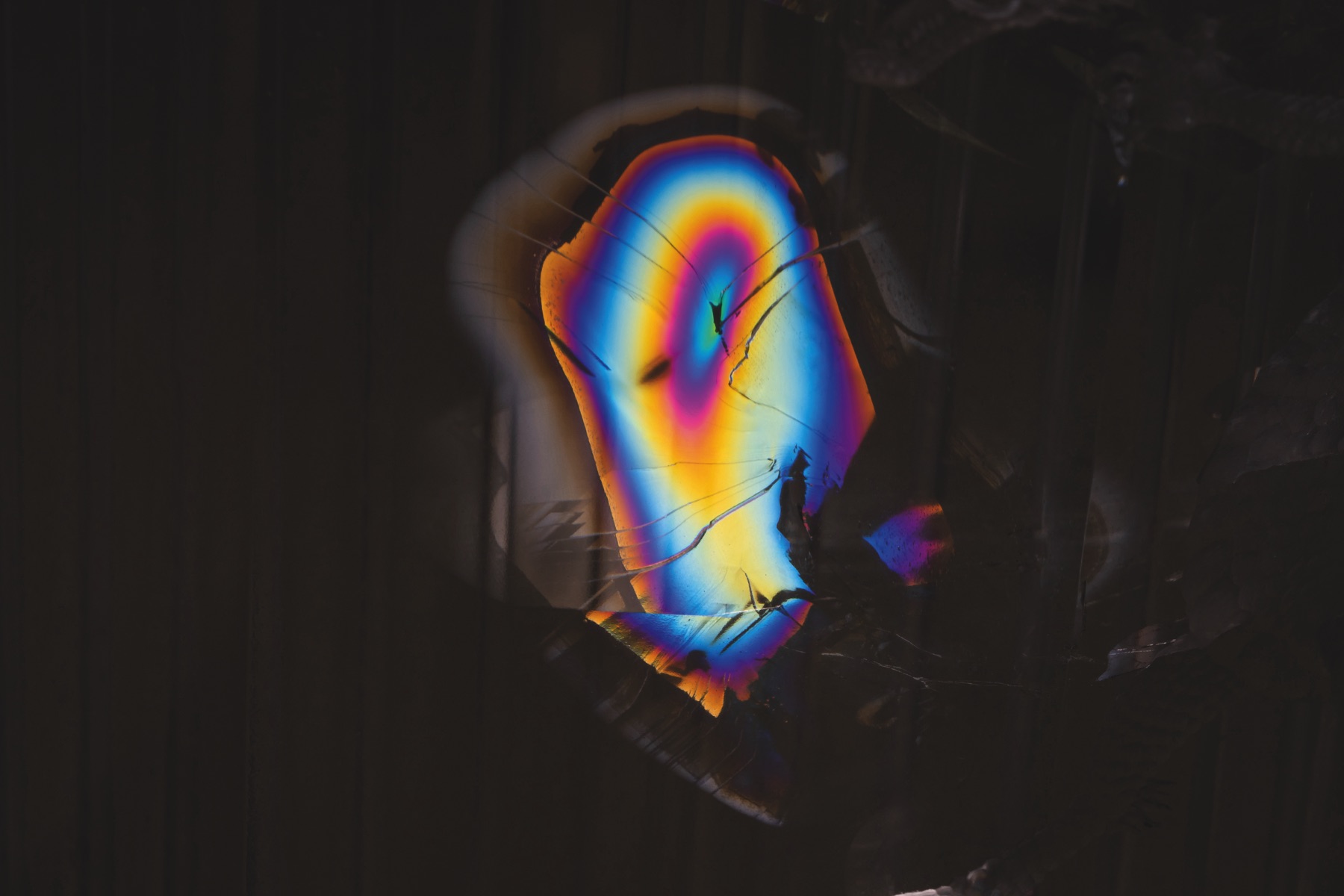
This technical brilliance serves a rich symbolic narrative. The grooves are arranged to a symbol of a rising sun, representing new beginnings. Carved into the gem’s side is a dragon, a universal archetype of a treasure’s guardian. The rainbow it guards symbolises higher knowledge or a bridge to the divine. This symbolism connects deeply with one of the proposed origins of the word ‘topaz’. While often linked to the Greek island Topázios, another theory traces it to the Sanskrit word तपस् (tapas), meaning “heat” or “fire”. This root word is central to the concept of Tapasya, the spiritual discipline of generating internal energy to achieve self-realisation. The gem’s visual story – a guardian dragon at the gate of divine light – mirrors this ancient concept of spiritual struggle and enlightenment.
An official 2024 new world record
After two years of polishing the actual topaz, the work was completed in August 2023. In May 2024, the Gubelin Gem Lab provided the final, official validation. Their report confirmed the gem as a 50,200-carat topaz of exceptional quality, officially cementing its status as the largest faceted gemstone ever recorded. It surpasses the former titleholder, the El Dorado Topaz (31,000 carats), by a staggering margin of over 19,000 carats.
The Secret Rainbow represents a convergence of geological chance, human perseverance, scientific understanding, and artistic crafting. It is a testament to the idea that even in the 21st century, there are still new frontiers to explore in one of humanity’s oldest arts.
 DAHLIA YAARI is a marketing manager and consultant with experience in the high-end jewellery and precious stones industries. She thrives as a certified diamond gemmologist with strategic business acumen, advising several jewellery firms on marketing and growth. In addition, she plays a role in the world’s only fully regulated diamond investment fund, contributing to the design and support of specialized software. Her multi-faceted background allows her to bridge the worlds of fine jewellery craftsmanship and cutting-edge technology.