
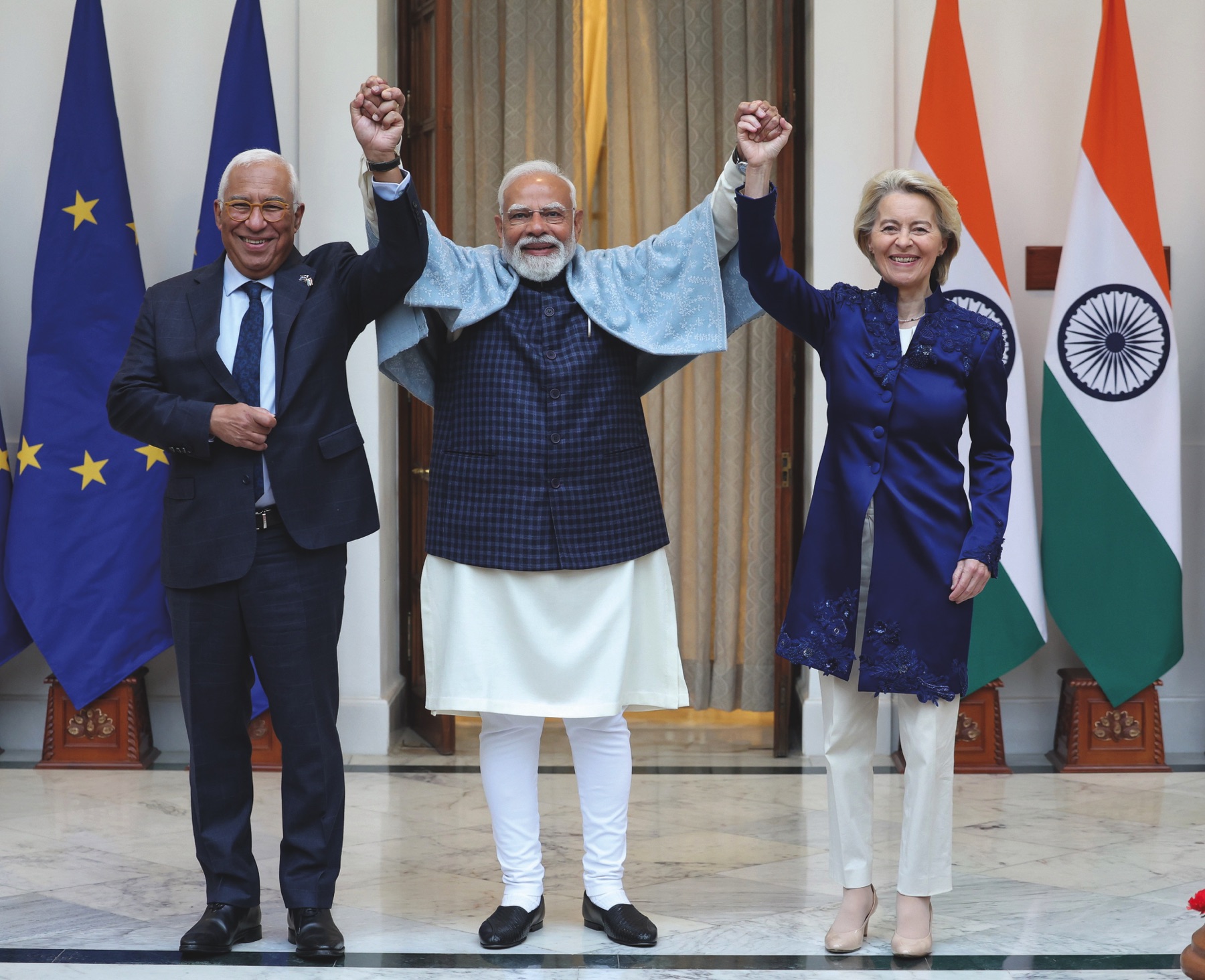
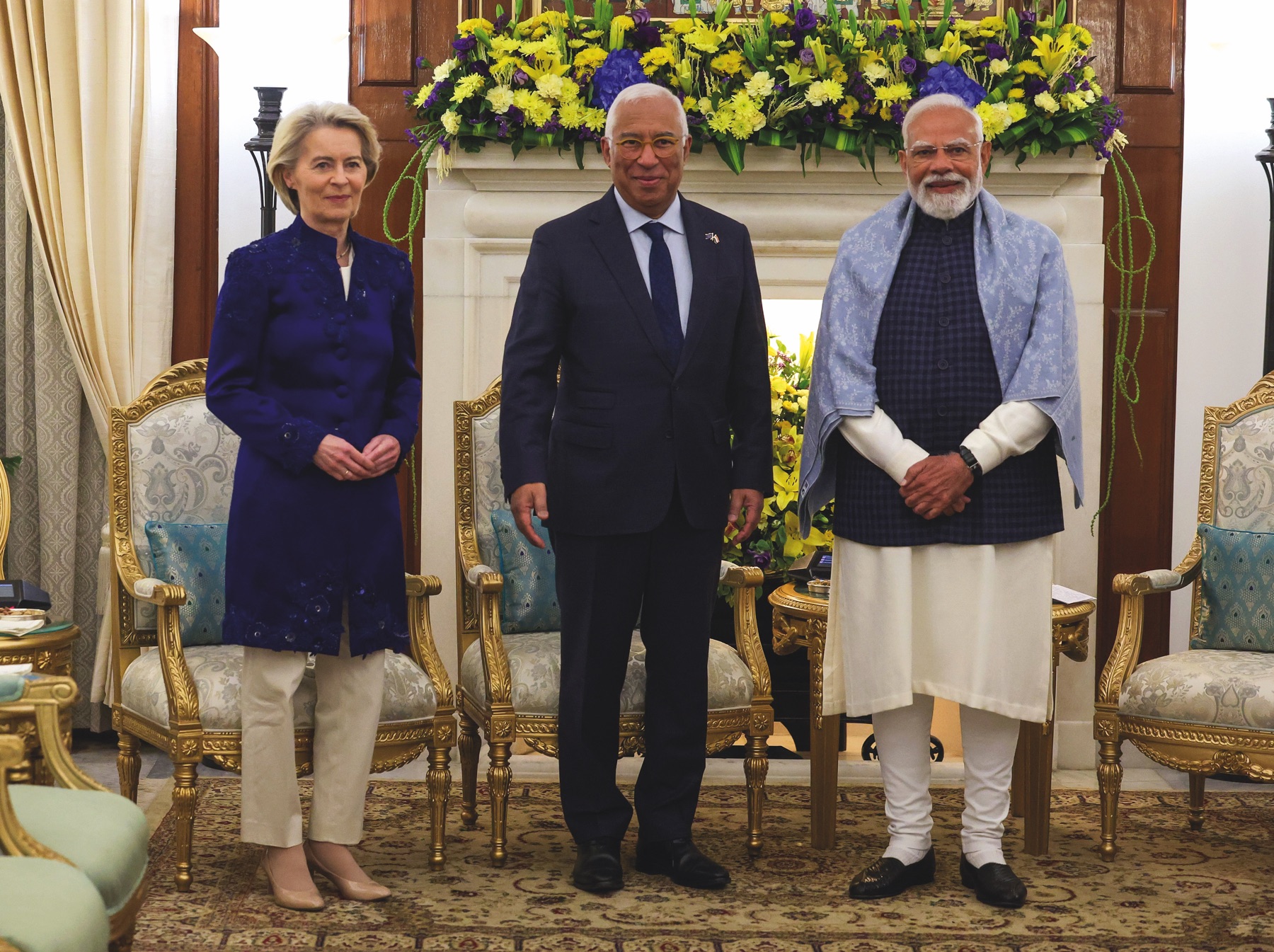
From right: European Commission President Ursula von der Leyen, Prime Minister of India Narendra Modi, and European Council President António Costa
Text: H.E. Mr. Anil Trigunayat, former Ambassador of India to Jordan, Libya, and Malta, and Distinguished Fellow at the prestigious think tanks like Vivekananda International Foundation and United Services Institute of India; Photo: Archive
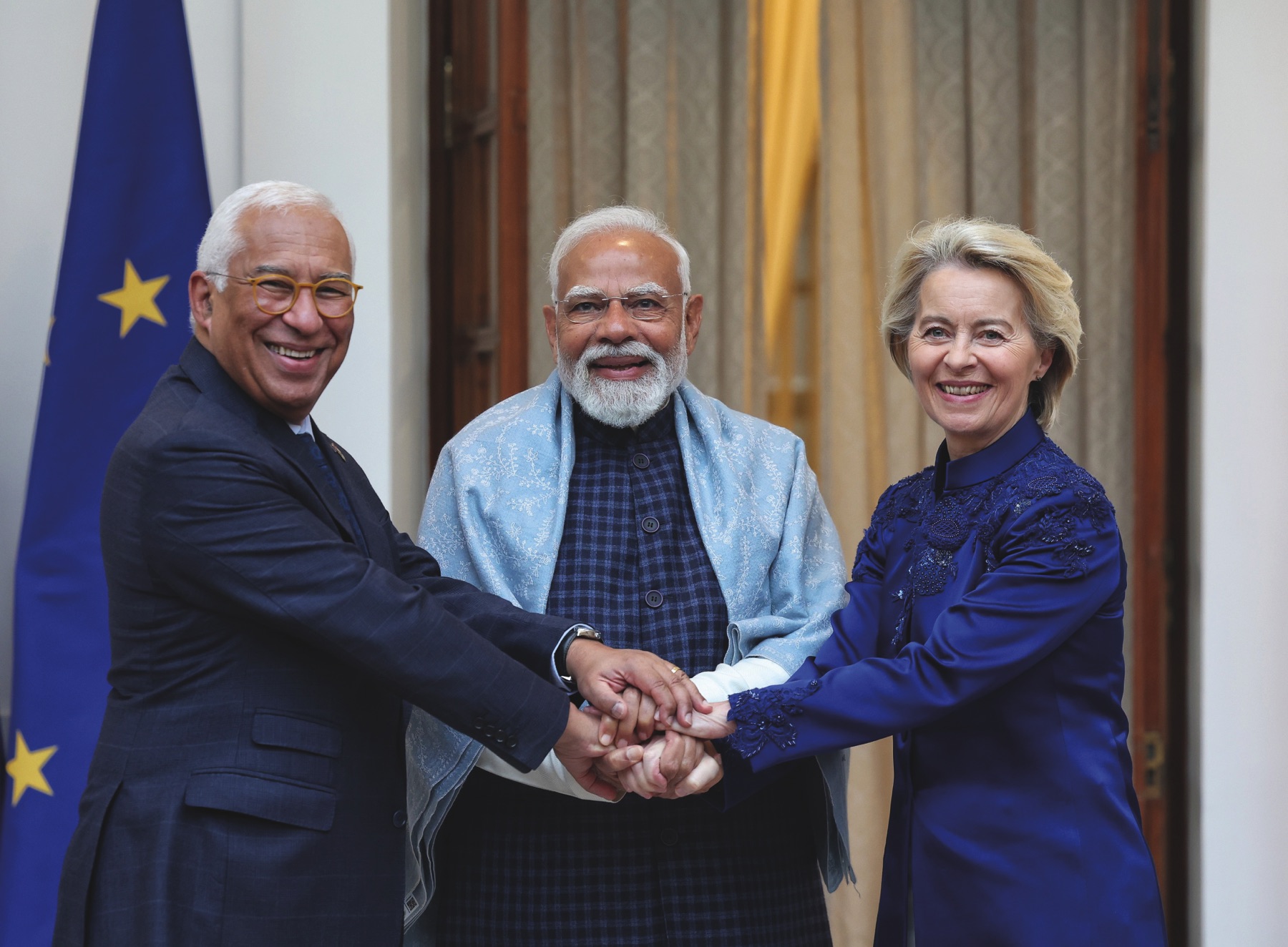
It was expected that, during January 2026, the gaps would be addressed, and that the Free Trade Agreements (FTA) could be signed on 27th January, when the India-EU Summit took place in New Delhi, or earlier. India had also conferred a distinct honour on the EU leadership by inviting them as the Chief Guests on the Republic Day – 26th January. European Commission President Ursula Von der Leyen and European Council Chief Antonia Costa were this year’s summit’s Chief Guests.
This gesture on India’s part illustrates the fact that, under the changed global circumstances and volatility, the EU and India have begun to attach greater importance to one another by cementing and frequenting high-level interactions. This is despite certain political differences with certain members over the Russia-Ukraine war and India’s continued imports of crude oil from Russia.
Pragmatism and the fact that India has become the fastest growing major economy (surpassing the UK and Japan in the space of a year to become the fourth largest worldwide), together with India’s clear articulation of its national interests, have made everyone realise the need to dispense with rigid positions for their own interests. Besides, India and the UK, as well as several other countries, have already signed the Free Trade Agreements (FTA). The Economic Cooperation FTA with some European countries, including investment commitments, has also become operational. All these factors, along with the ever-threatening Trumpian tariffs and disenchantment with US policies, have caused a reasonable ground to identify and overcome any irritants in India-EU trade and economic relations, including the trade agreement.
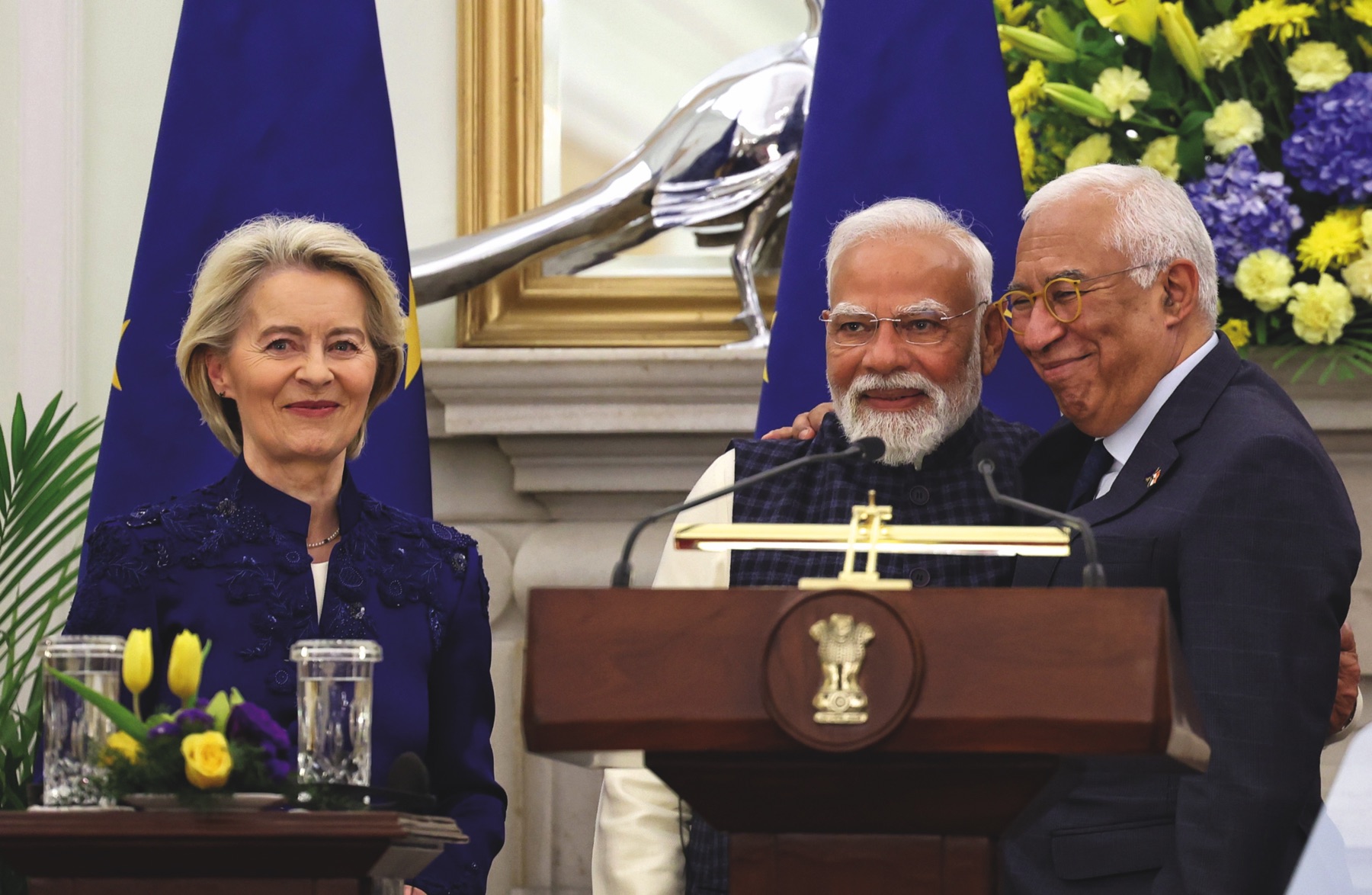
From left: European Commission President Ursula von der Leyen, Prime Minister of India Narendra Modi, and European Council President António Costa
High level contacts have been exceptional in recent past. It was for the first time that 22 EU Commissioners travelled to India. German Chancellor Merz has just concluded a state visit, signing over two-dozen agreements. The French President is also expected to visit early this year as the deal over several hundred Rafale fighter aircrafts and other equipment is being negotiated and finalized by India and France. Shri Ajit Doval, National Security Adviser to the Prime Minister of India and H.E. Emmanuel Bonne, Diplomatic Adviser to the President of the Republic of France co-chaired the 38th India-France Strategic Dialogue in New Delhi on 13th January this year. During the Strategic Dialogue, India and France reiterated their commitment to their strategic partnership.
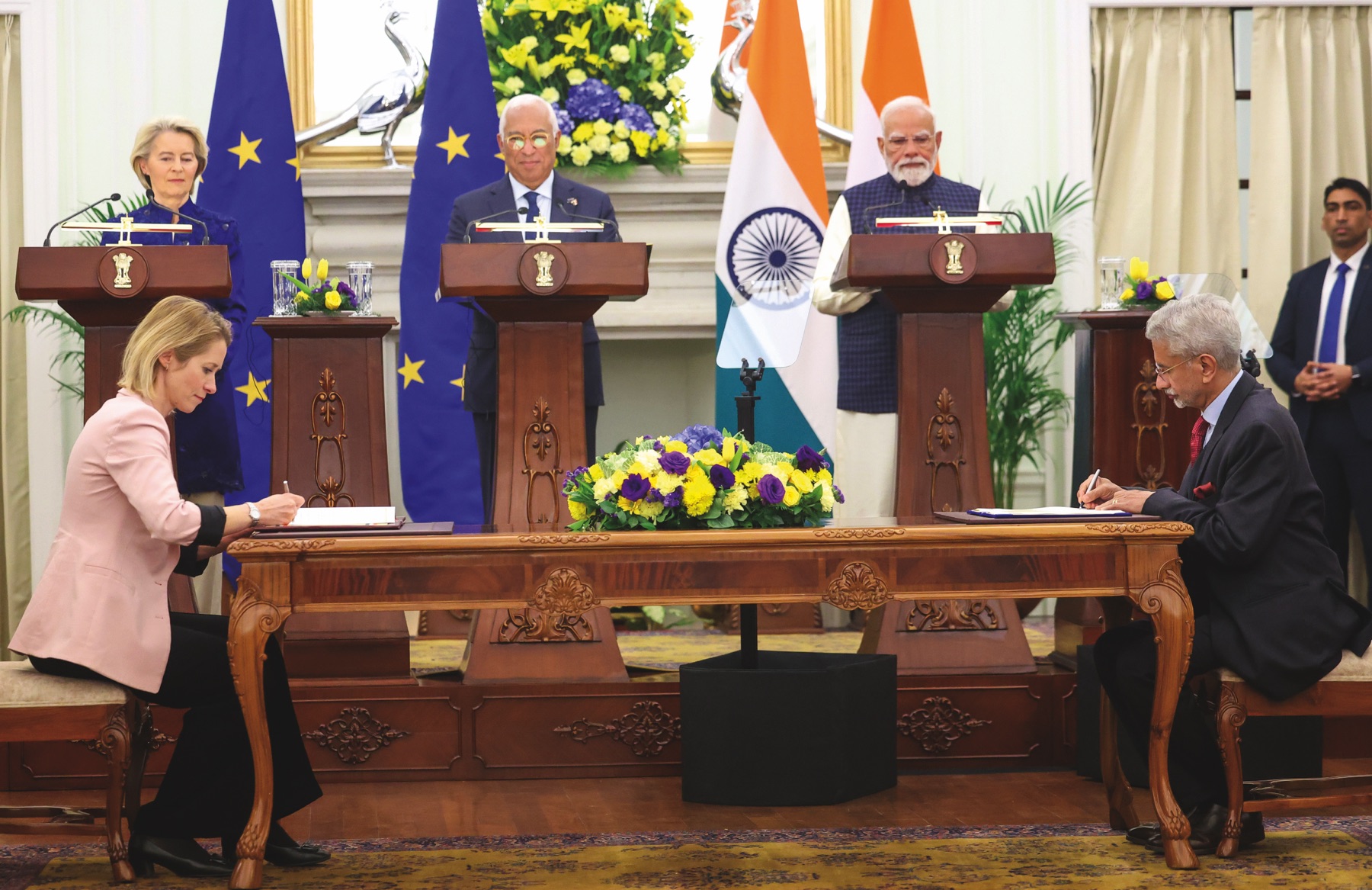
Signing the Strategic Partnership document. High Representative for Foreign Affairs and Security Policy and Vice-President of the European
Commission Kaja Kallas in the foreground together with Dr. S. Jaishankar, Minister of External Affairs of India
Earlier, Minister of External Affairs Dr S. Jaishankar started off the new year with his first visit to Europe – to France and Luxembourg. Apart from conferring with his counterpart, he also called on French President Macron. In the India-France Year of Innovation, they explored ways of diversifying ties in areas of innovation and technology, startups, health, education, and mobility. They also discussed growing cooperation in the strategic areas of defence, security, space, economy, as well as civil, nuclear, and maritime security. An India-Weimar Foreign Ministers meeting was also held. Dr Jaishankar appreciated his counterpart and President Macron’s comments that, as the Chairs of G7 and BRICS respectively during 2026, they would aim to work together to find synergies rather than work at cross purposes. He also said that “our two nations committed to multi-polarity, and I believe that working together is important for ourselves, and also for stabilizing the global politics at this stage.” Italian PM Meloni invited PM Modi to visit Italy. The IMEC corridor and its multidimensional route have tremendous connectivity and capacity potential between India, the Middle East, and Europe, which both sides are serious about exploiting, despite immediate roadblocks.
The comprehensive trade and investment deal has dragged on for over two decades. Fortunately, though, the differences regarding market access, agriculture, automobiles, and technical and non-technical barriers to trade – including GIs and the EU’s Carbon Border Adjustment Mechanism – are now nearing redressal or are being narrowed to achieve mutual satisfaction. The Trade Deal will provide smoother access to each other’s markets, especially for the Indian labour-intensive products.
The remit of bilateral engagement has expanded to a wide range of strategic domains, including climate change, counterterrorism, and defence and security – including cyber, AI, quantum technologies, and next-generation communications such as 6G – as well as human resources, education and skills development, innovation, renewables, and the Indo-Pacific. India and the EU had established a Trade and Technology Council in 2023 to enhance cooperation in digital governance, semiconductors, clean energy technologies, and resilient supply chains. Migration and mobility remain a major priority for India.
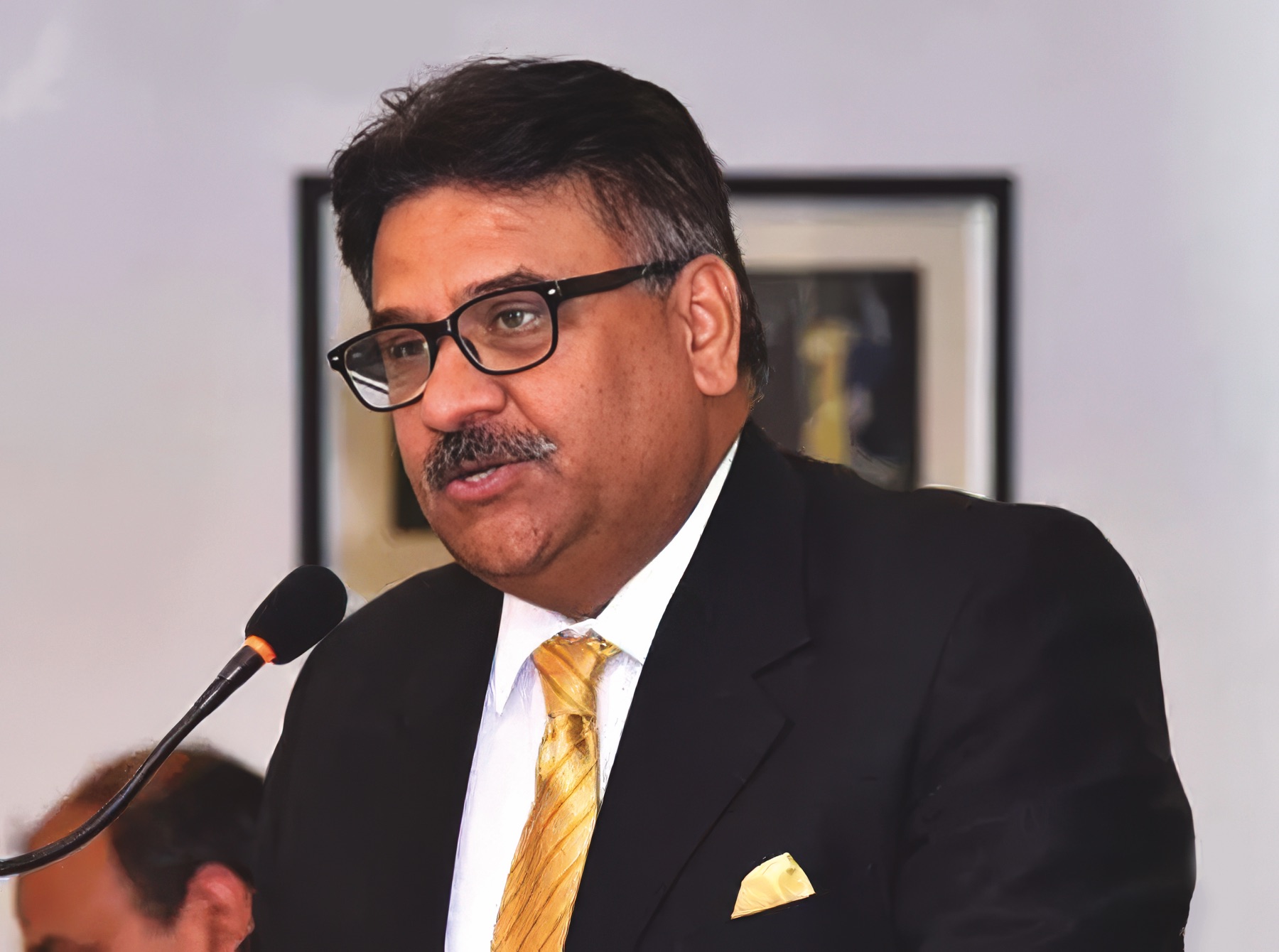
Ambassador Anil Trigunayat has been a professional Indian Diplomat for over three decades.
He is a regular commentator on foreign affairs and a prolific writer.
The question of how to immunise global and value supply chains against utter dependencies on a certain country – and against the arbitrary behaviour of certain others – remains a major area of concern and congruence for both sides. India reiterates that relationships can be reinforced only through mutual respect, mutual interests, and mutual sensitivity.
India and the EU have a matured strategic mindset, driven by mutual interests that can lead to a productive and rewarding strategic partnership, and with shared values and democratic architecture suitable for the 21st century. Both sides support multilateral global governance and the rules-based order, as well as supporting the institutions that provide a fulcrum for the shape of things to come.