

Text: Martina Hošková, M.Zisso; Photo: Archive
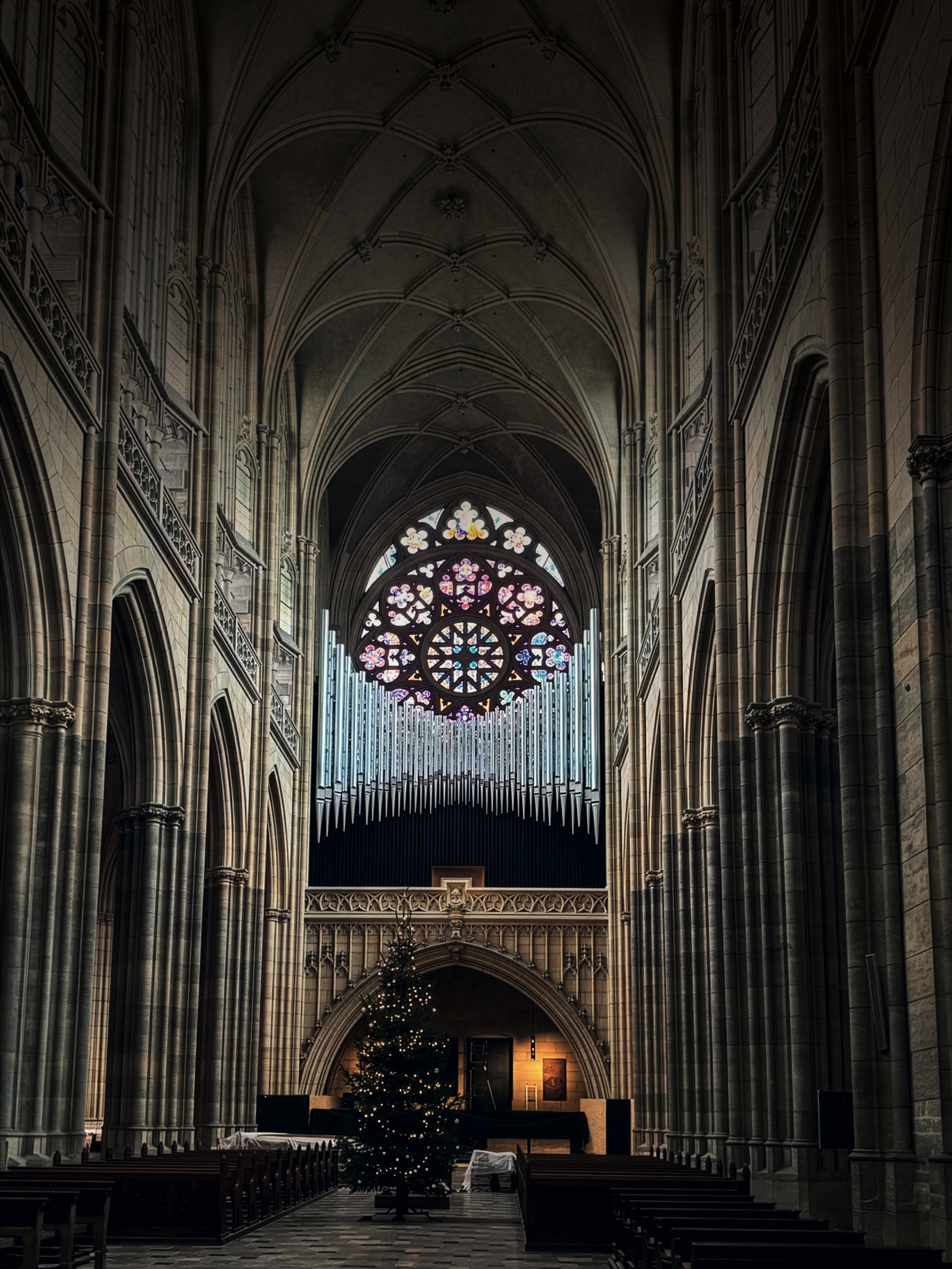
Rising above Prague Castle, the cathedral has been shaped over centuries as a site of faith, power, and collective memory. A nationwide fundraising campaign for Prague cathedral’s new organ ran from 2014, allowing people to contribute any amount, or even ‘adopt’ an organ pipe, and together they managed to raise more than CZK 100 million. The ceremonial consecration of the organ is planned for St. Vitus Day, June 15th, 2026.
Lasvit’s contribution introduces a subtle contemporary layer through handblown glass elements designed by Peter Olah for the organ’s façade. The elongated crystal forms reference the verticality of the cathedral itself and the basalt columns of Panská skála in northern Bohemia. The result is a restrained installation, one that allows present day craftsmanship to sit within a historic interior without disruption, adding a new visual resonance to a space defined by continuity and care.
Freely suspended pipes are complemented by work with crystal elements placed between them, inspired by the winter view of the above-mentioned Panská skála, a formation of vertical shapes resembling organ pipes with flowing water that freezes in the gaps. The aim was to create an organ with components symbolically rooted in the Czechoslovak context, and research has revealed no comparable attempt to combine pipes with glass. The design therefore addresses not only the fixing of the glass elements but also their vibration and illumination; metal pipes are intended to alternate in an irregular rhythm with the glass components, echoing the structure of the rock formation, while light will emerge from the glass and reflect across the tin pipes.
The lighting concept envisions the organ as truly alive through gently dynamic, animated light that responds to the music of the instrument rather than dramatic colour changes. This creates a sensitive interaction between light and sound that allows the organ to breathe, while in moments of silence it may glow statically or fade completely – a subject of ongoing discussion given the traditional, analogue character of the cathedral environment where only white light is typically used.
Visitors from Japan
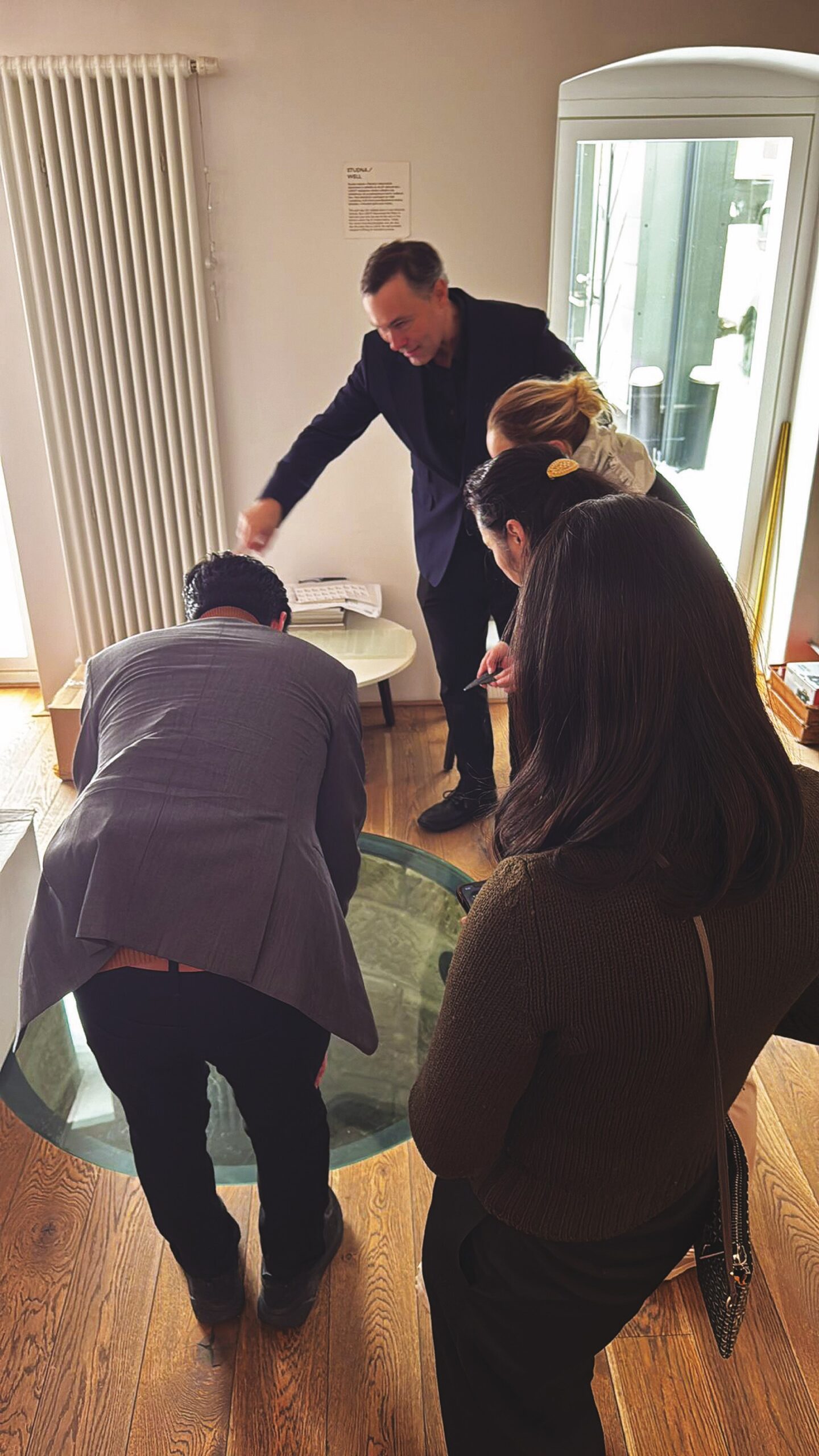
Visitors from Japan also captivated by the beauty of the new crystal installation at St. Vitus Cathedral
A story of LASVIT and Ms. Chihiro Aldeen
In early January, Lasvit welcomed Japanese clients to their headquarters in Nový Bor, Czechia. For them, it was their first visit to the country.
Our guests came from Japan, a country known for its unparalleled range of traditional craftsmanship. Few places in the world have preserved such a vast and diverse spectrum of craft practices, many of which continue to exist today.
The longevity of Japanese traditional crafts lies not in remaining unchanged, but in their ability to adapt. Over centuries, these crafts have endured repeated periods of hardship by responding to the spirit of each era. They have incorporated new materials, technologies, and ideas while maintaining the essence of their techniques. Tradition, in this sense, has never been static, it has always been in motion.
In recent years, however, traditional crafts have faced decline. One reason may be that the idea of “tradition” has been emphasized at the expense of evolution, leading practices that have simply remained unchanged to be mistaken for living crafts. From our perspective, revitalization is essential. Only by reinterpreting traditional techniques can craftsmanship continue to thrive.
This belief is shared by the Lasvit Japan country head, Ms. Chihiro Aldeen, who is based in Kyoto, where generations of master artisans are concentrated. Her work has long focused on reimagining traditional craftsmanship for contemporary contexts. Three years ago, Aldeen encountered LASVIT through a brief exchange at Salone del Mobile in Milan, a moment that quietly sparked the collaboration that has since taken shape. She immediately recognized a shared philosophy: a deep respect for traditional techniques, combined with a modern sensibility. She soon joined the company, and has since been involved in numerous projects across Japan.
During their stay, the Japanese guests were deeply impressed by Prague and Nový Bor, particularly by how naturally traditional craftsmanship remains woven into everyday life in Czechia. The experience left a lasting impression. By the end of the visit, the words spoken before the journey had changed into “let’s come back again during Salone del Mobile in Milan.” The warmth of the Czech people had clearly been felt.
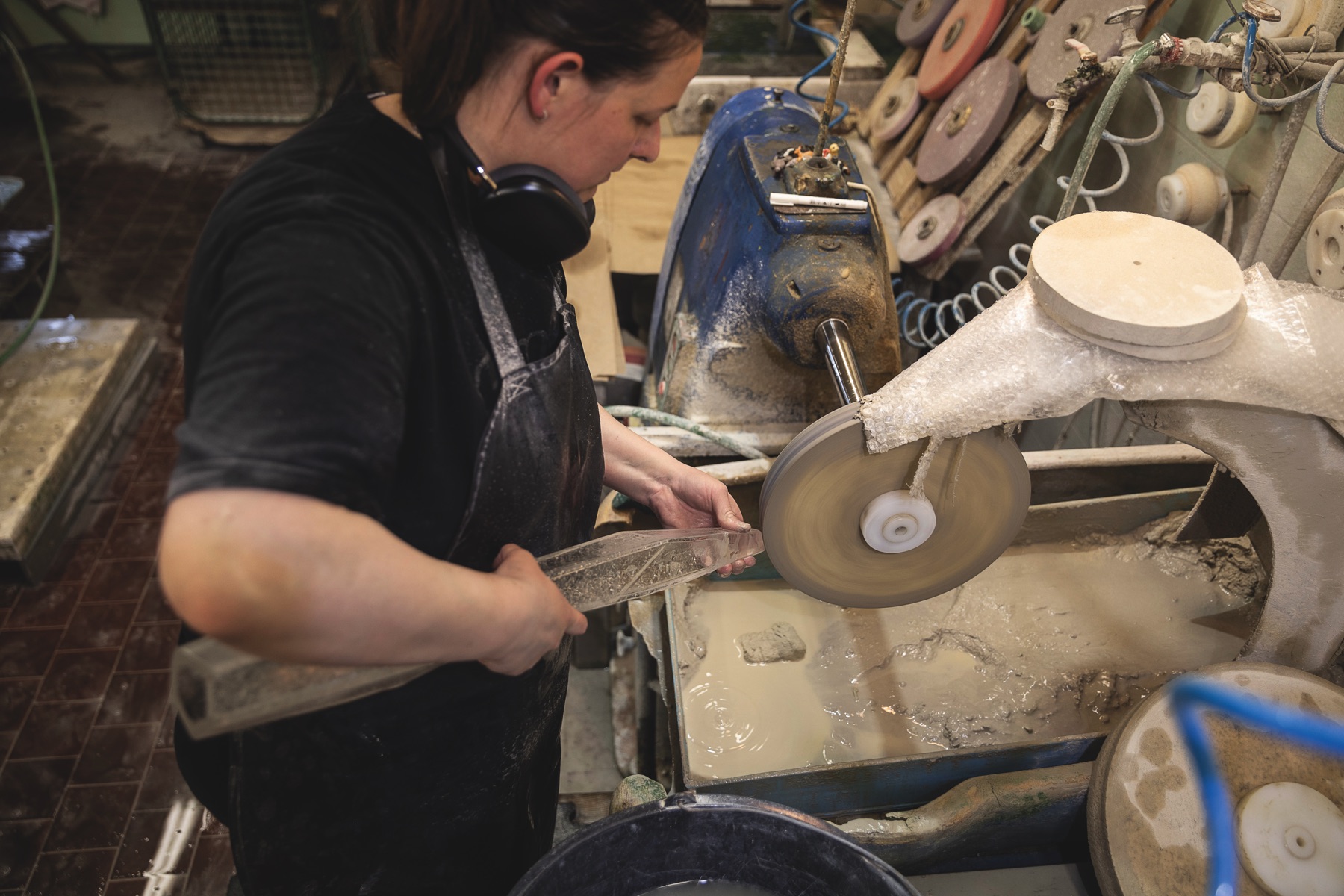
At the LASVIT headquarters and factory, the guests were welcomed with open arms. Despite it being the first working day of the year, the team prepared everything with great care and generosity. The sincerity of this welcome deeply moved our visitors from Japan.
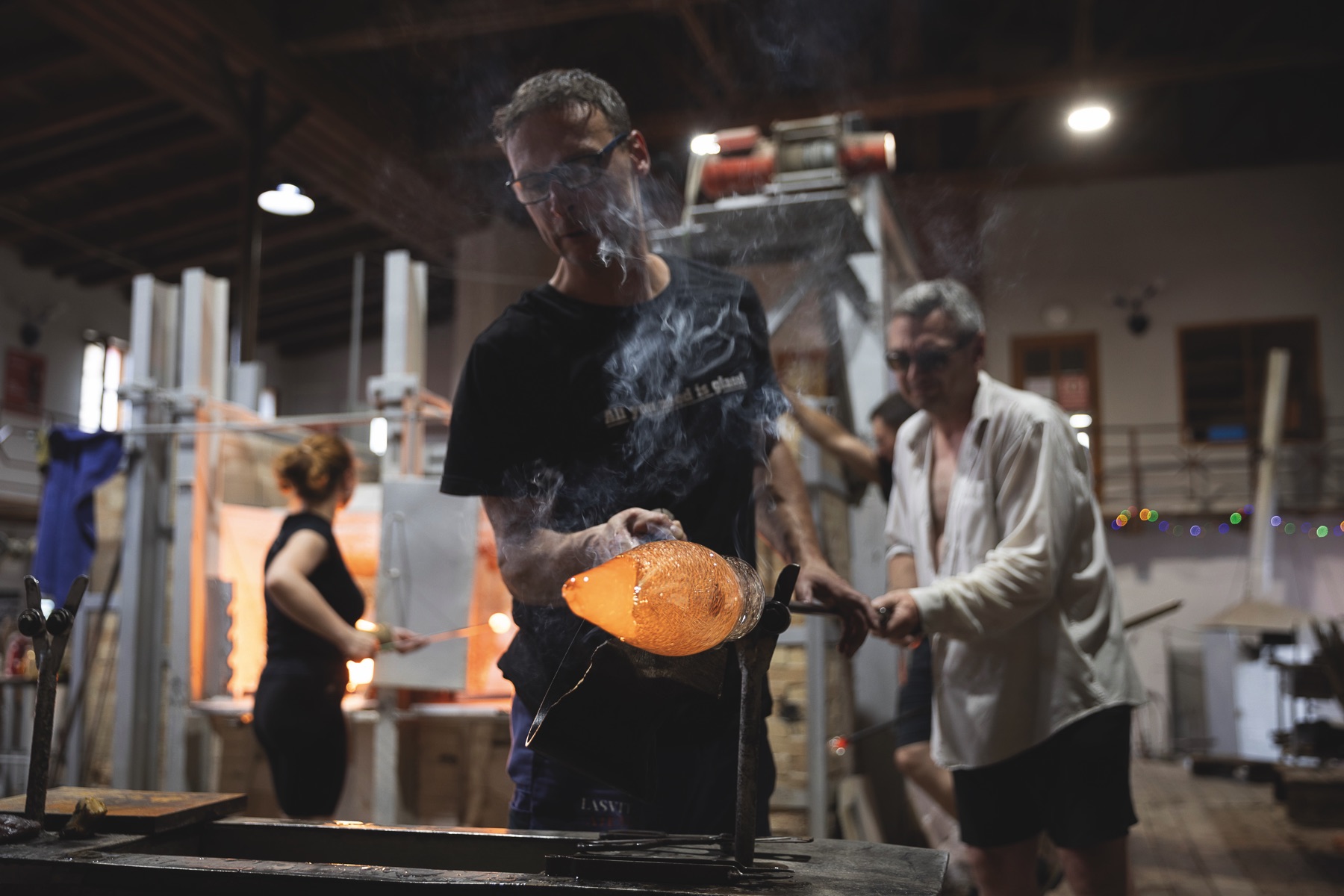
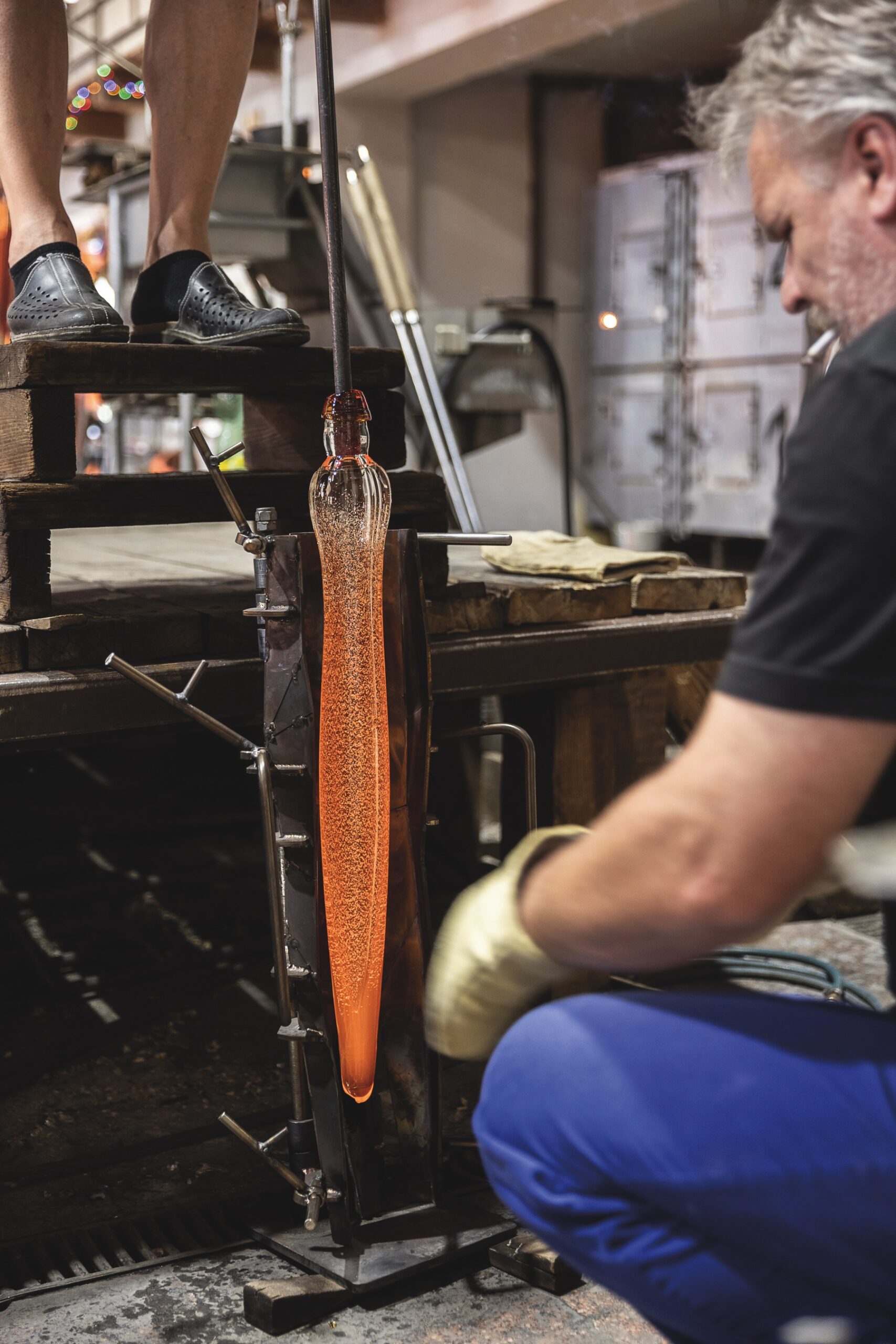
Seeing glass art created in front of one’s eyes is always powerful. Crystal glass, refined through countless meticulous processes, fully earns its reputation, often compared to diamonds for its clarity and brilliance.
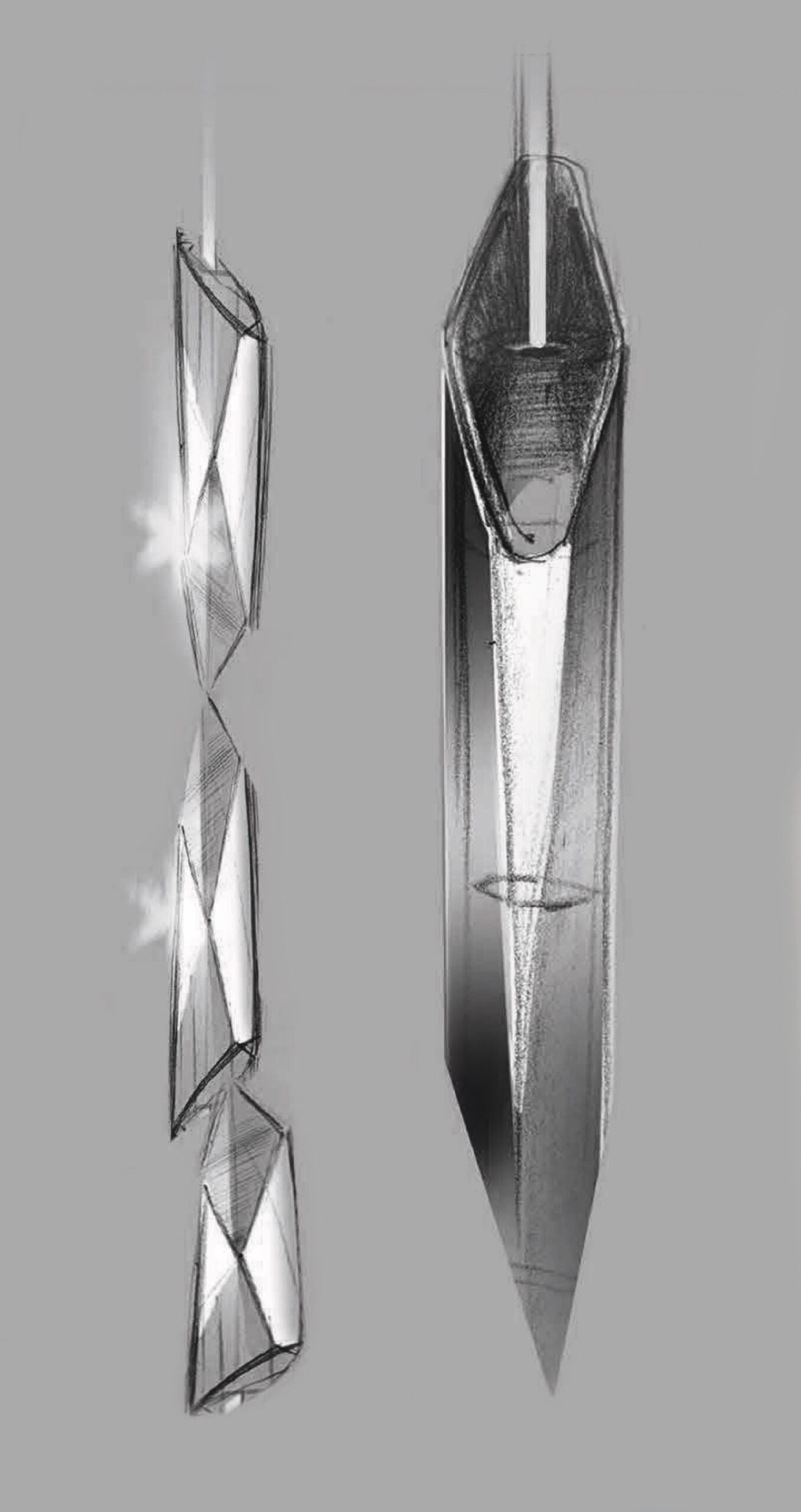
Chart of the future crystal work
The crystal installation adorning the pipe organ inside St. Vitus Cathedral at Prague Castle left us all speechless, its beauty transcending words. On the way to the airport, we made a final stop at Bořislavka Centrum, where the glass artwork in the reception area of KKCG’s headquarters, enhanced by dynamic lighting, left a final, unforgettable impression.
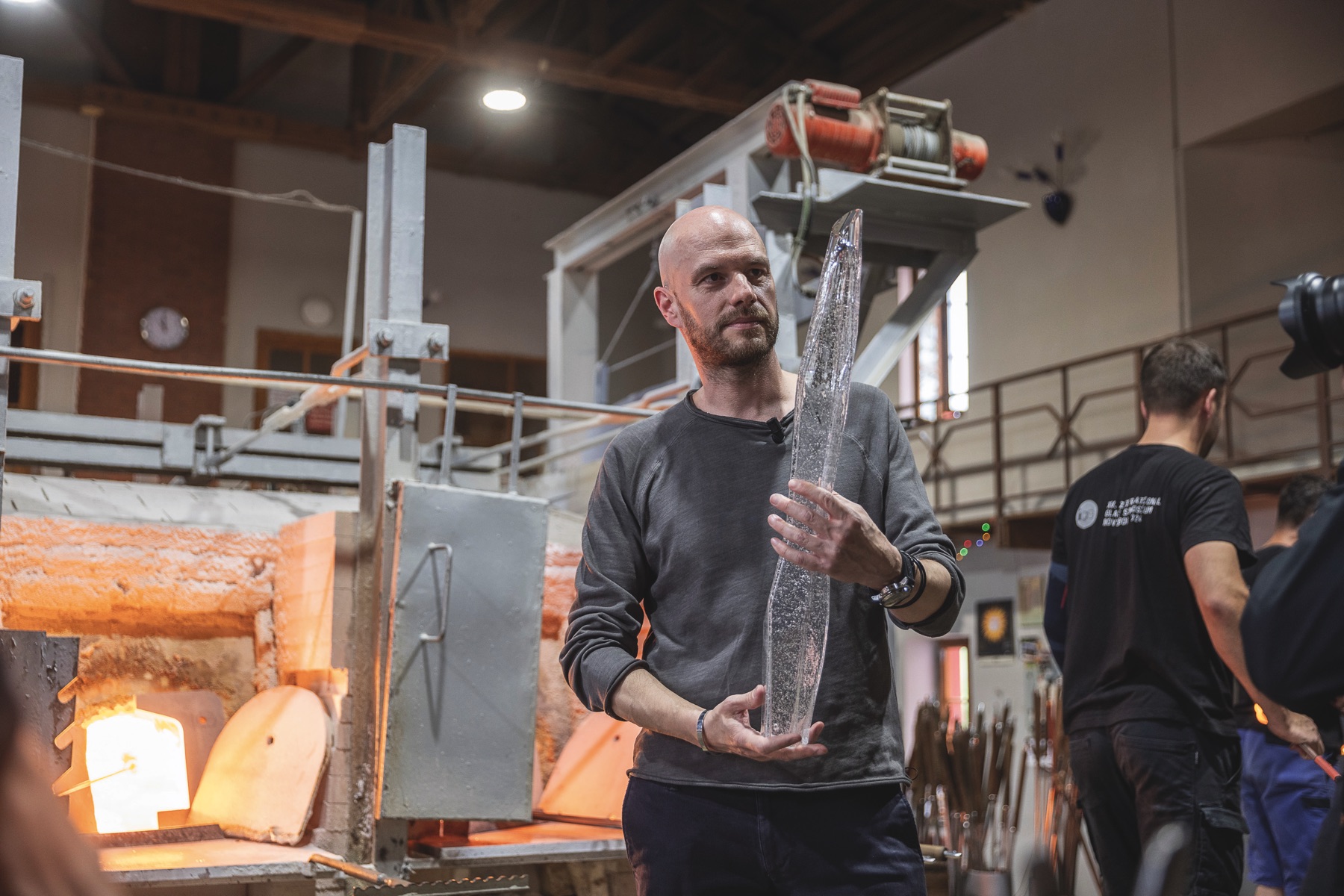
Peter Olah, Designer
What began as a chance encounter has grown into a meaningful partnership. Today, we are nurturing this collaboration together in Japan, guided by shared values and a belief that craftsmanship, when allowed to evolve, can continue to resonate across cultures and generations.