
It is important to cherish what keeps us united
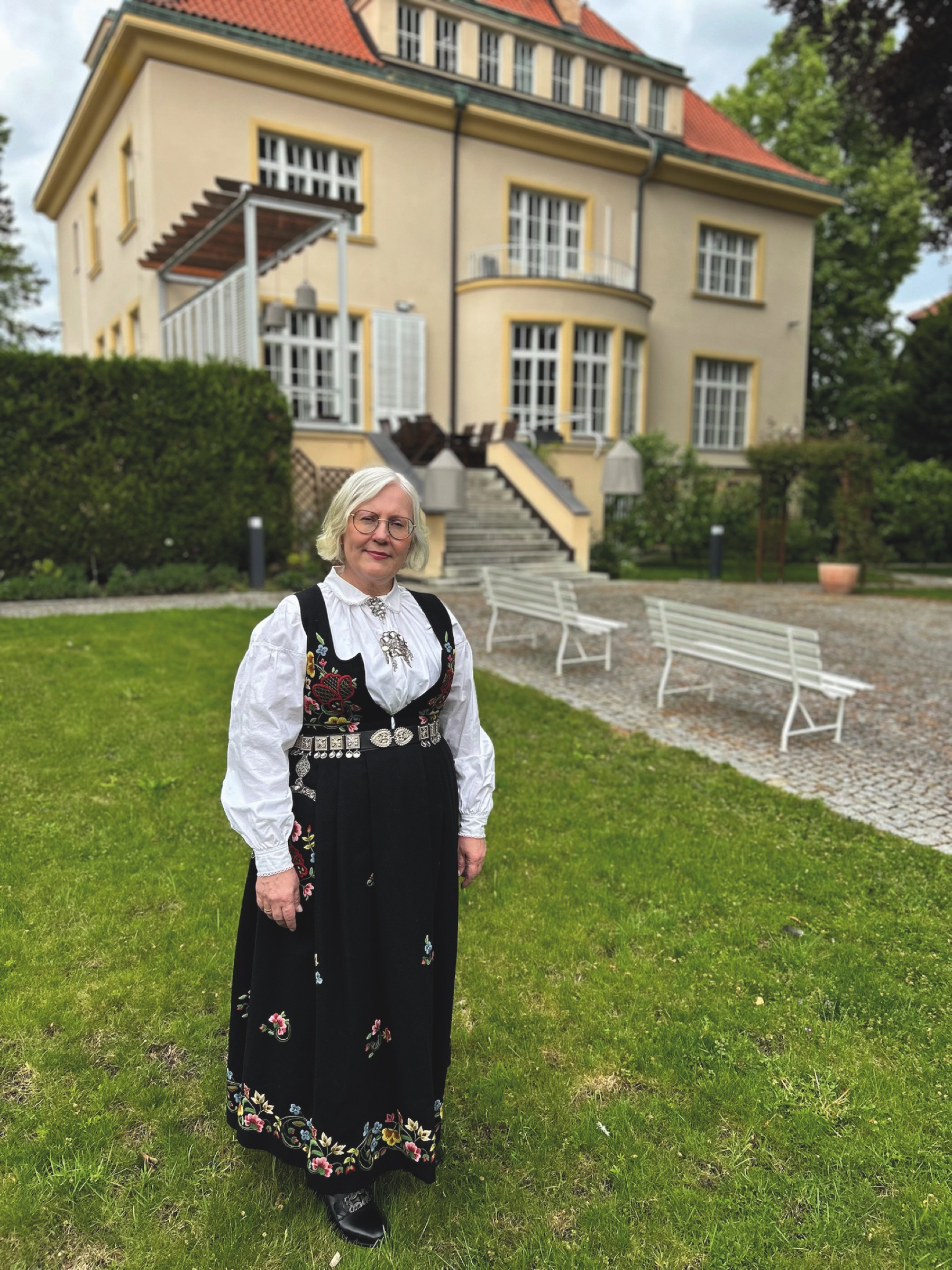
H.E. Ms. Snøfrid Byrløkken Emterud
Text: Martina Hošková and M. Zisso; Photo: Asgeir Helgestad and archive
You have been in the Czech Republic for about a year now. How has the experience been for you so far? Can you share some highlights?
It has been an absolute treat to come to the Czech Republic. Not only is it a beautiful country in the very heart of Europe, but I also find the Czechs and Norwegians to be quite alike. I have met with many Czechs with a profound love of nature and the outdoors. I also have a feeling that we are a bit similar in the sense that we might both seem a bit reserved and non-flashy.
Despite the short time I have been here, there have already been many highlights. However, let me pick one, which was the signing last autumn of the Memorandum of Understanding (MoU) between the Czech Republic and Norway, Iceland, and Liechtenstein for the fourth programming period of the EEA and Norway Grants (2021–2028). I have been impressed with the partnership that has developed between Czech and Norwegian programme partners, institutions, and NGOs.
How many countries have you served in before now?
This is my fifth country to serve in, but the first as an ambassador. I have previously been posted to Kyiv, Hanoi, Tokyo, and Moscow.
What inspired you to become an ambassador?
After 25 years in the Foreign Service, with numerous postings abroad, I wanted to further utilize the experience and expertise I had gained and take the next step up in leadership.
Can you single out the part of the ambassador’s job you find most challenging?
I find the job very rewarding and inspiring. The most difficult part is to find the time to meet all the interesting partners, as well as to participate in the many exciting events I am invited to.
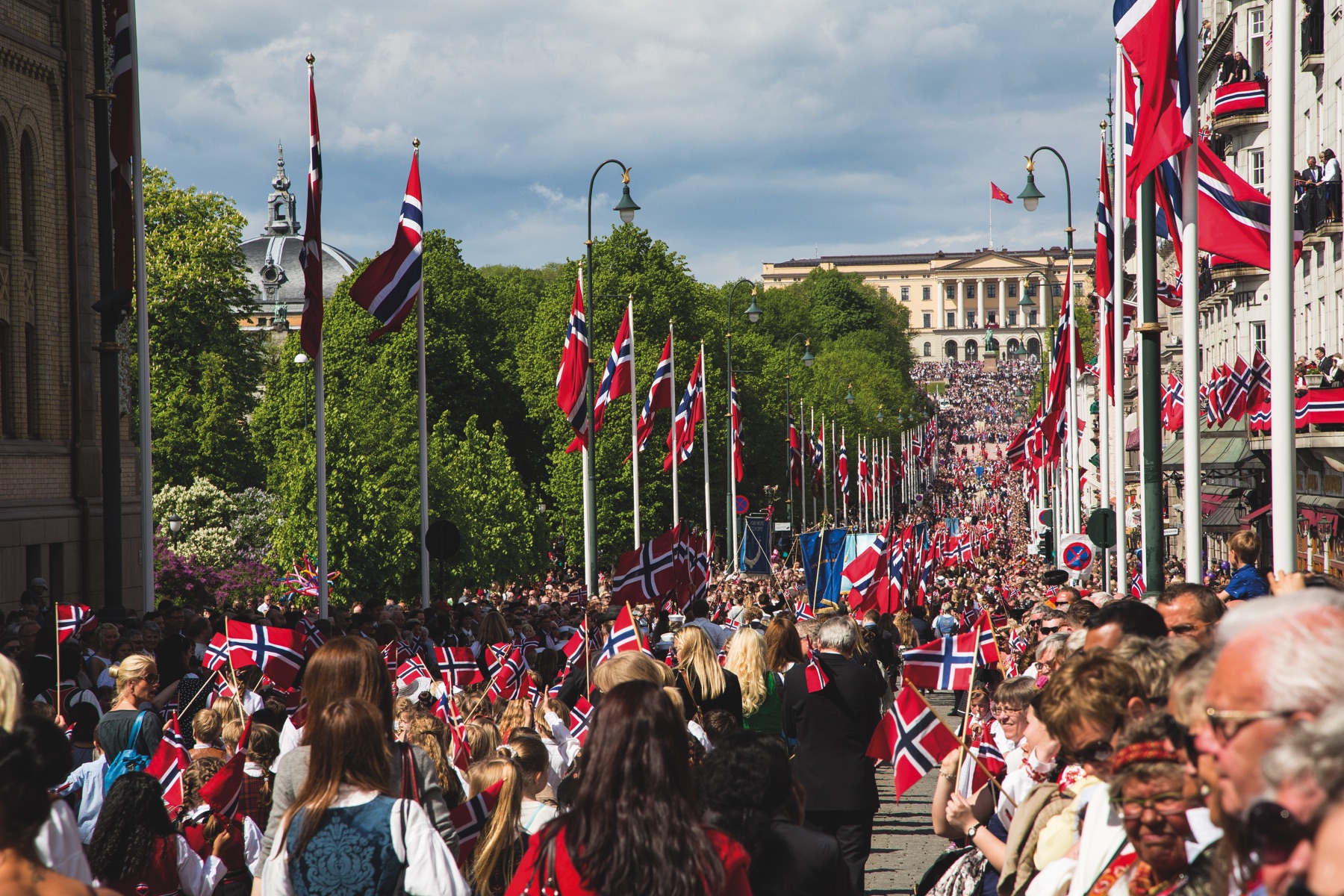
17th of May celebration in Oslo. Photo by Asgeir Helgestad
What about your free time?
I spend my free time with my family. I like to go for walks, read, and discover Prague. I also enjoy playing videogames with my children.
Could you tell us about your country?
Norway is a country known for its dramatic nature with fjords, mountains, and long coastline. It is a constitutional monarchy with a deeply rooted democracy and rule of law, and high levels of trust in public institutions. Norway has a highly developed economy, combining a strong welfare state with open markets. It is especially recognized for its energy sector (oil, gas, and renewables), maritime industries, fisheries, and advanced technology.
Profits from natural resources have been carefully managed through the world’s largest sovereign wealth fund, contributing to high living standards and economic stability.
Culturally, Norway values equality, independence, and work–life balance. Its society is relatively informal, with a flat hierarchy and an emphasis on cooperation and consensus. Outdoor life plays a central role among many, reflecting a deep respect for nature and sustainability.
Norway is not part of the EU. Why is that?
After a long and heated debate, we held a referendum about accession to the then European Community in 1972. The result reflected clearly how divided the population was, as 53.5% rejected membership while 46.5% supported it. Broadly speaking, farmers, fishermen, and a radical part of the labour movement feared that membership in the European Community equalled unrestrained and massive competition from abroad, which they could not match. Here, we have to bear in mind that Norway – since the introduction of the welfare state after WWII – has quite generously subsidised farmers and fishermen in order to secure their livelihood in harsh and remote regions of the country.
A new referendum in 1994 confirmed that the polarization was almost unchanged – 52.2% of the electorate opposed EU membership. However, during the last three decades, both Europe and the EU, as well as global geopolitics, have changed fundamentally.
A third EU referendum is still not on the horizon, but our neighbours in Iceland recently decided to hold a referendum – not about EU membership, but to restart negotiations with the EU about a possible membership.
Many Norwegians think this two-step approach would be suitable for us too.
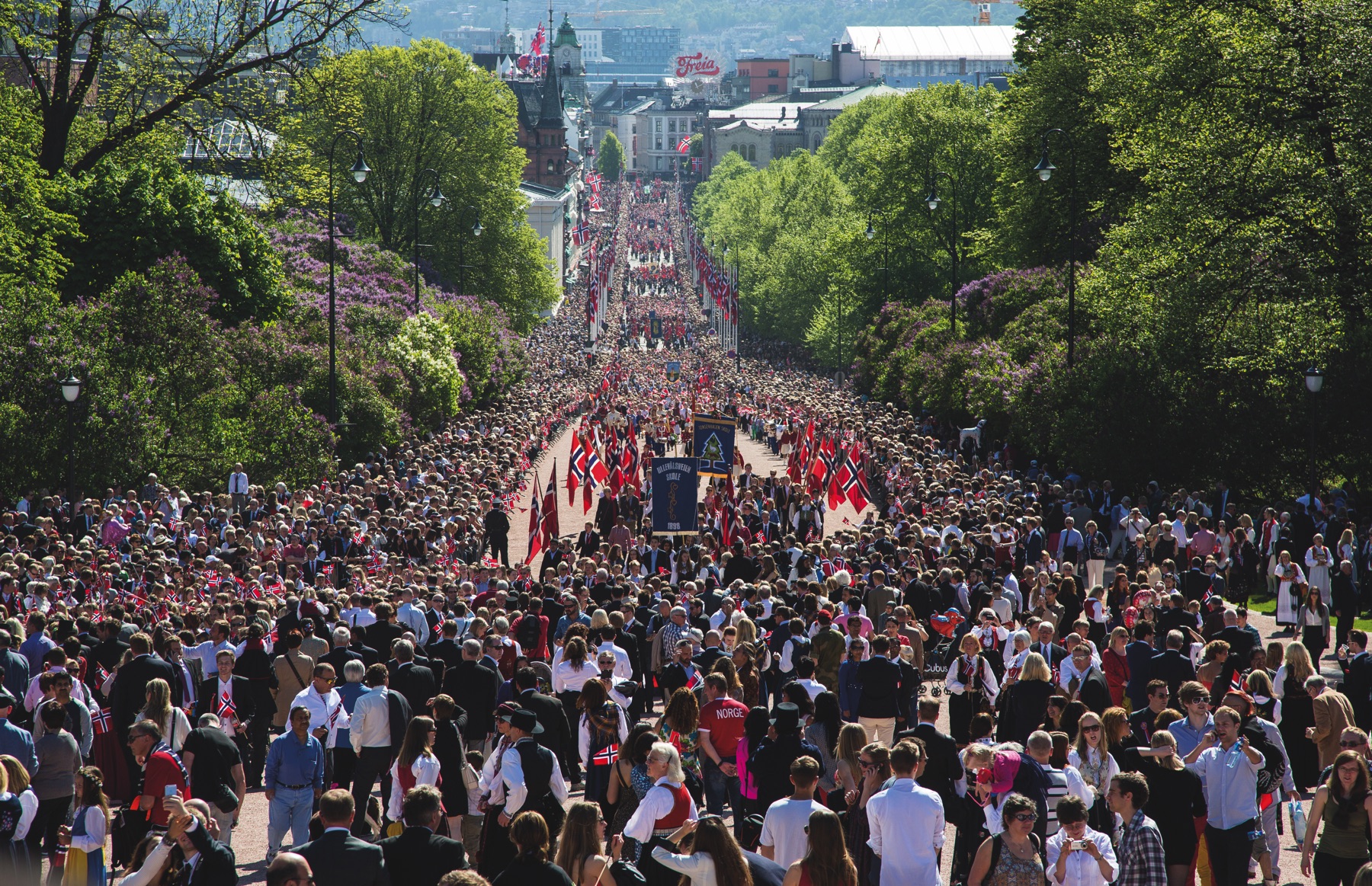
17th of May celebration in Oslo. Photo by Asgeir Helgestad
On a per-capita basis, Norway is the world’s largest producer of oil and natural gas outside of the Middle East. How does your country manage the income generated by this wealth?
Norway discovered oil in the North Sea in the late 1960s, creating enormous national wealth in a relatively short time. To manage these resources, the State established the oil company Equinor (formerly Statoil) in 1972, based on the principle that at least 50% of every oil license should be state-owned. Today, the Norwegian government owns 67% of Equinor, ensuring that the profits from oil and gas production benefit the public. The returns from the fund help finance Norway’s welfare model, supporting universal healthcare, free education, pensions, and unemployment benefits.
What sets Norway apart from many other oil and gas producing nations is how we handle our petroleum income. Instead of spending the revenue directly, Norway created the Government Pension Fund Global in the 1990s in order to invest surplus from oil and gas earnings and secure long-term financial stability.
To avoid inflation, it was decided that the fund should only be invested abroad. The aim of the fund is to ensure that we use this money responsibly, think long-term, and therefore safeguard the future of the Norwegian economy. The fund operates transparently and under ethical guidelines. Today, the Government Pension Fund Global is one of the world’s largest funds, owning approximately 1.5% of all publicly listed companies globally.
A unique feature is “the Norwegian Fiscal Rule”. It stipulates that, rather than using the oil revenue itself, the government must spend only the expected real return from the fund, estimated at around 3% annually. This approach creates long-term stability in the economy, prevents overspending, and ensures that wealth is preserved for future generations.
Norway has long been seen as a progressive country with strong commitments to equality and inclusion. Could you tell us more about that, especially from your perspective as a female ambassador?
Norway has a long tradition of promoting women’s rights, minority rights, and LGBTQ rights. Norwegian women gained the right to vote in 1913, and today women hold 44.4% of seats in our parliament, reflecting decades of commitment to political equality.
A key part of Norway’s success lies in the measures that support real-life gender equality. For decades, policies such as generous parental leave, including father’s parental quota, the right to childcare, and family-friendly workplace structures have enabled women to participate fully in the labour market and advance into leadership roles.
Norway was a pioneer in introducing a 40% gender quota for public limited company boards in the early 2000s, with the law being passed in 2003 and fully implemented by 2008. In 2023, this requirement was significantly expanded to include medium sized and large companies across multiple corporate forms, a change that came into force in 2024 and will be gradually applied to around 20,000 companies by 2028.
Despite major progress, Norway still faces economic gender gaps, including a persistent pay gap and gender-segregated career paths. Ensuring equal pay, reducing gender segregated sectors, and increasing women’s access to top leadership roles remain key steps toward full equality.
On LGBTQ rights, Norway is considered one of the world’s most progressive nations. Anti-discrimination protections date back to 1981, same-sex marriage and full adoption rights have been legal since 2009, transgender people gained self-determination rights in 2016, and conversion therapy was banned in 2024.
As a female ambassador, I see daily how these policies translate into real opportunities. In the Norwegian diplomatic service, we have a nearly 50/50 gender balance, with 48% of ambassadors being women. Representation matters, and Norway shows that when societies invest in equality, women and minorities participate fully and naturally rise to leadership.
I would also like to add that equality and inclusion in Norway are not viewed as merely abstract ideals, but as necessary conditions for a well-functioning society as it supports economic strength, creates trust and social stability, and strengthens democracy.
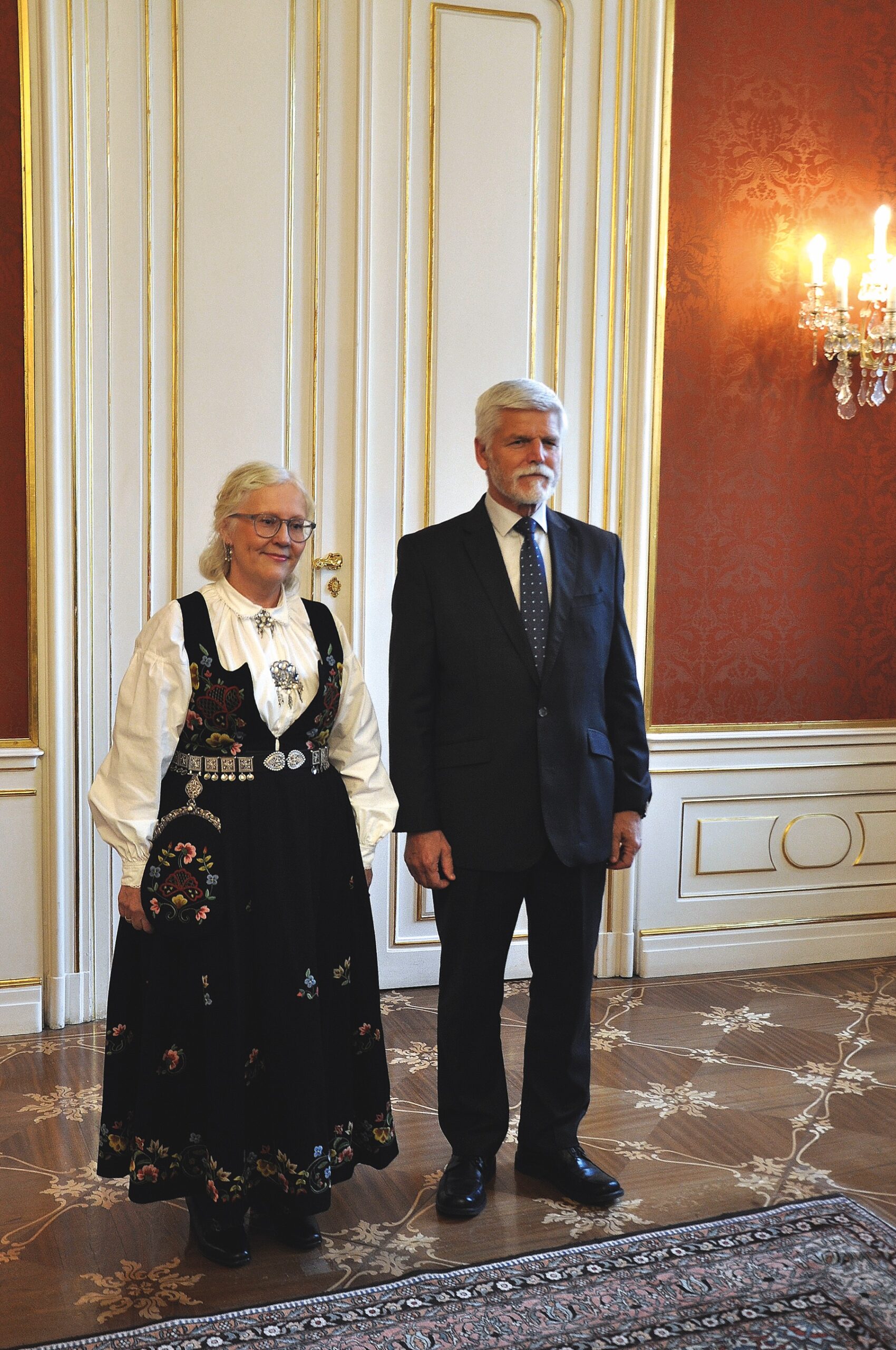
H.E. Ms. Snøfrid Byrløkken Emterud and the President of the Czech Republic, Mr. Petr Pavel
What is the current status of Czech–Norwegian relations?
Perhaps it will sound like a cliché when coming from an ambassador, but I can’t truthfully answer in any other way than that our relations are excellent. In short – Norwegians and Czechs think similarly about many issues, maybe because we both are smaller nations with a certain sense of egalitarianism and a down-to-earth attitude towards life. We enjoy sports and outdoor activities, and many of us react spontaneously against injustice, which explains why Norway and the Czech Republic, as NATO allies, have so strongly supported Ukraine from the very beginning of Russia’s aggression. And finally, through our Norway Grants cooperations, it is evident that we share many common values, such as a commitment to freedom of speech, rule of law, transparency, and the inclusion of minorities.
This interview is taking place on the occasion of Norway’s Constitution Day. What are your wishes for your country – and for the Czech Republic?
Norwegians celebrate on 17th May because it marks the day in 1814 when Norway adopted its constitution, laying the foundation for the country as an independent and democratic nation. At the very heart of the 17th May celebration are the children – symbolizing our future.
At a time when Russia’s brutal warfare against Ukraine continues and devastates the life of so many fellow Ukrainian civilians; at a time when the world’s turmoil reaches its way into our lives, it is so important to cherish what keeps us united. The most important thing we can all do is to participate in and care for the community around us.
It strengthens trust. It strengthens democracy. And it strengthens our resilience.