

In Europe we need each other
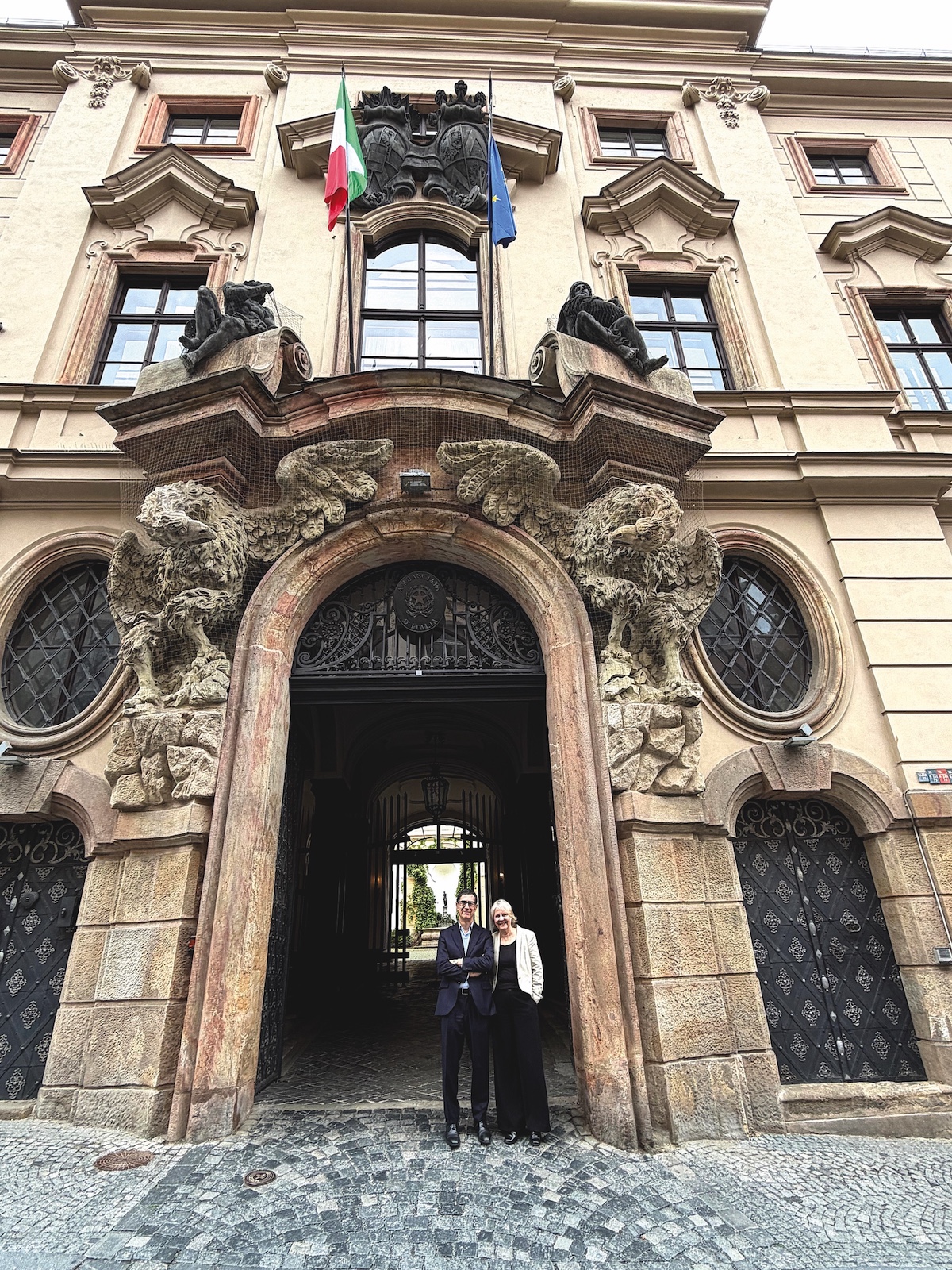
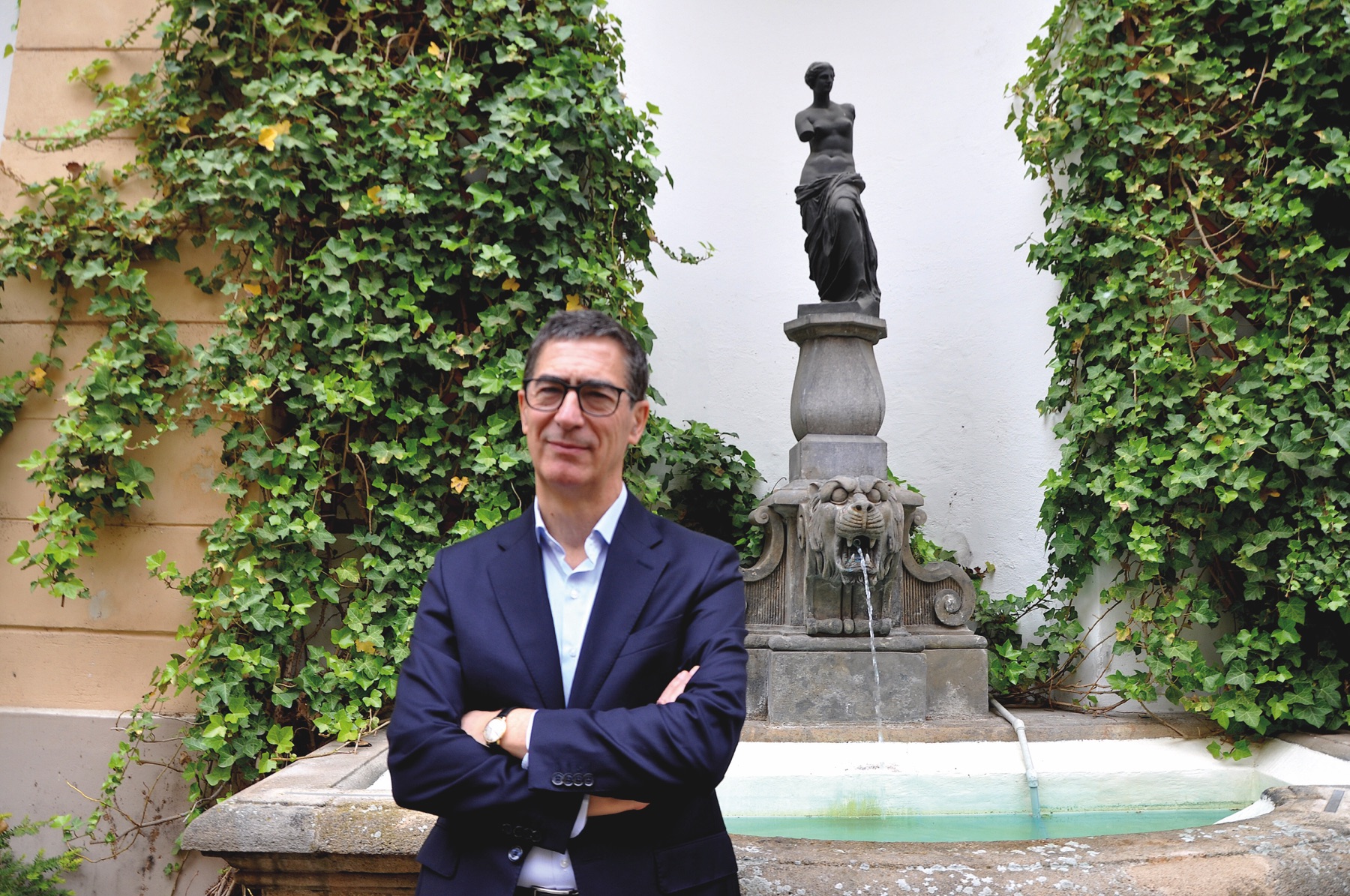
Welcome to the beautiful Italian Embassy in Prague, Mrs. Beate Bender and H.E. Mr. Ambassador of the Italian Republic.
Text: Martina Hošková and M. Zisso; Photo: Archive
Can you tell us a bit about how you became an ambassador?
When you are in the diplomatic service, you are usually expected to become an ambassador sooner or later, wherever in the world that may be. But for me, it was also a matter of choosing where I wished to serve, and having the right opportunity.
I made the deliberate choice to apply for the position of Ambassador of Italy to Prague – the capital of a country that has always fascinated me. I consider myself extremely fortunate to have been given this chance. I am deeply grateful to my Minister and to the Italian government for making this dream come true.
It hasn’t been long since you assumed your post. What is your impression so far?
I have been in the Czech Republic for about three months, but I have already gathered a number of impressions that I am glad to share.
The first is the incredible beauty of your country and your capital. It made me reflect on how much two peoples, Czechs and Italians, may share in their love and quest for beauty. A second impression is the importance of history for your nation – and the need to know it well in order to better grasp how Czech people think and respond to contemporary events and challenges. In this respect, too, I see parallels between our countries. Measured over the span of centuries, both of us achieved national independence relatively late, after long struggles, painful setbacks, and periods of dictatorship.
Of course, every national history is unique, which is why I believe it is essential to understand what it means in each country.
How many countries have you served in before?
Only two. I had a rather unusual career path, serving three different periods in Germany – all in Berlin – and one posting in Canada, in Ottawa. This was largely a matter of personal choice, and I was fortunate that my ministry gave me the possibility to pursue this less conventional trajectory.
I also had the opportunity to undertake short missions in more distant countries – from Afghanistan to Colombia, from Myanmar to Bolivia, and from Pakistan to Cuba and the Philippines – during the years I worked in Rome in our Directorate General for Development Aid, a field I grew very fond of.
Does being an ambassador fit well into your daily life?
Being an ambassador engages you for many hours of the day – and often well into the evening. My first impression was that I was constantly running against time, and on top of that feeling sorry for having to decline so many interesting activities simply because they do not fit into a 24 hour day. The challenge is to find a reasonable balance and to not succumb to the fear of missing out; always remembering that missing out is better than burning out.
At the same time, I feel very well supported – both within the embassy and in my interactions with Czech institutions – enjoying, so to say, special attention.
The challenge here is to not allow yourself to get spoiled, to not change your habits, and to continue doing the ordinary things everyone else does. It is important to keep in mind that this special attention is given to us because we are pro tempore entrusted with representing our country – the permanent entity that truly matters.
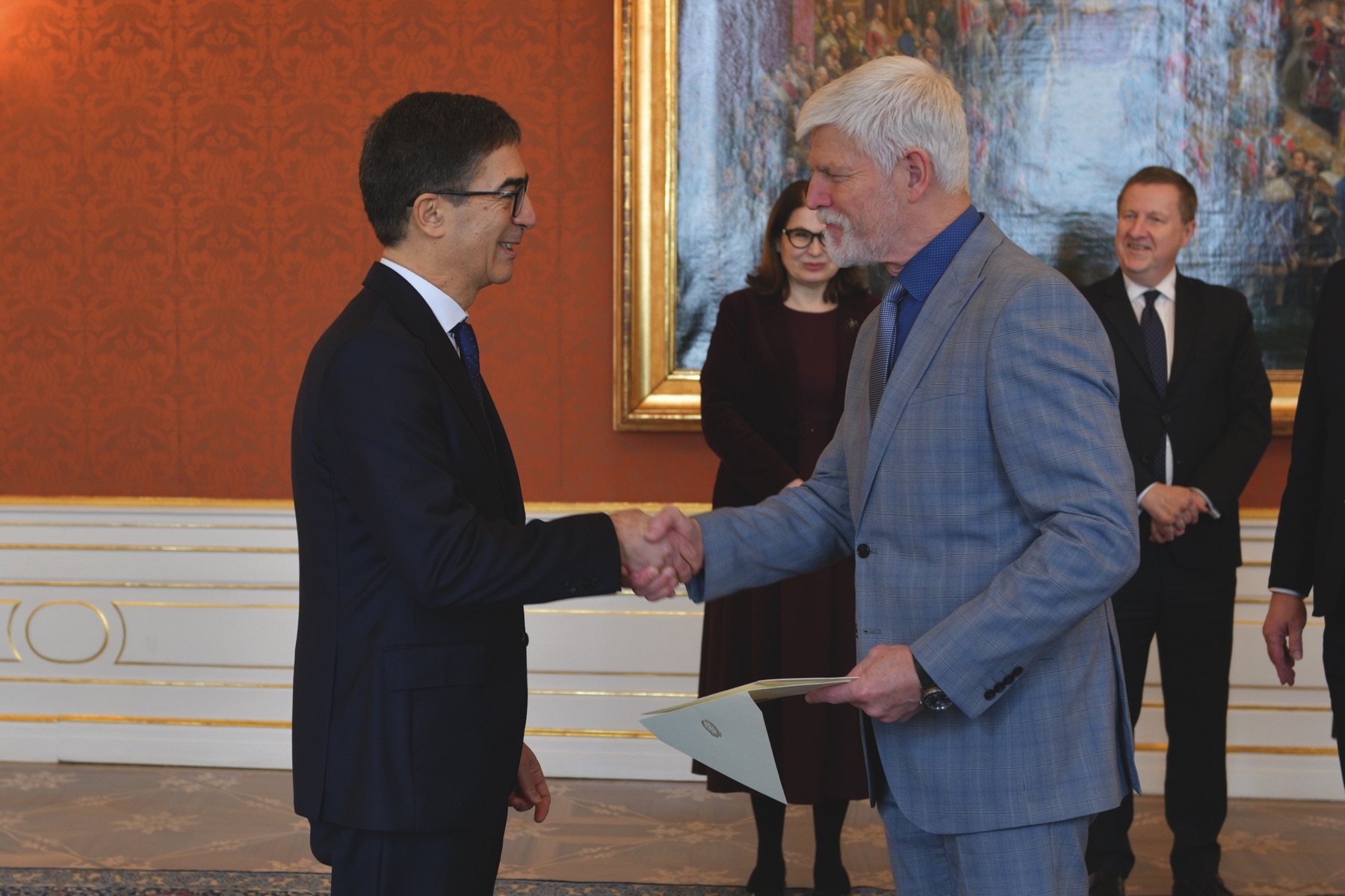
The President of the Czech Republic, Petr Pavel, and H.E. Mr. Alessandro Gaudiano, Ambassador of the Italian Republic
What is the best adventure you have had?
The life-long one with my wife would be my instinctive answer. But I suppose your question refers more to a professional or “exotic” adventure. Among these I would count entering the ancient King’s Palace in Kabul at night in early December 2001, to meet the new Afghan leadership while fighting with the Taliban was still ongoing. That small “adventure” has a special place in my memory: it was a moment of hope. But not all hopes come true, and our engagement in Afghanistan did not have a happy ending. It still hurts me when I think that we were not really able to help the Afghan people in the long run.
What do you see as the most difficult part of being an ambassador?
I think the greatest challenge is striking the right balance between being very straightforward in pursuing the concrete results that are in your government’s interest, and being mindful of the interests and sensitivities of your partners – even when these may represent an obstacle or cause delays in achieving what you wish for.
This balance is essential for safeguarding a long-term relationship with a partner, which in turn creates the environment in which concrete objectives can be achieved more effectively.
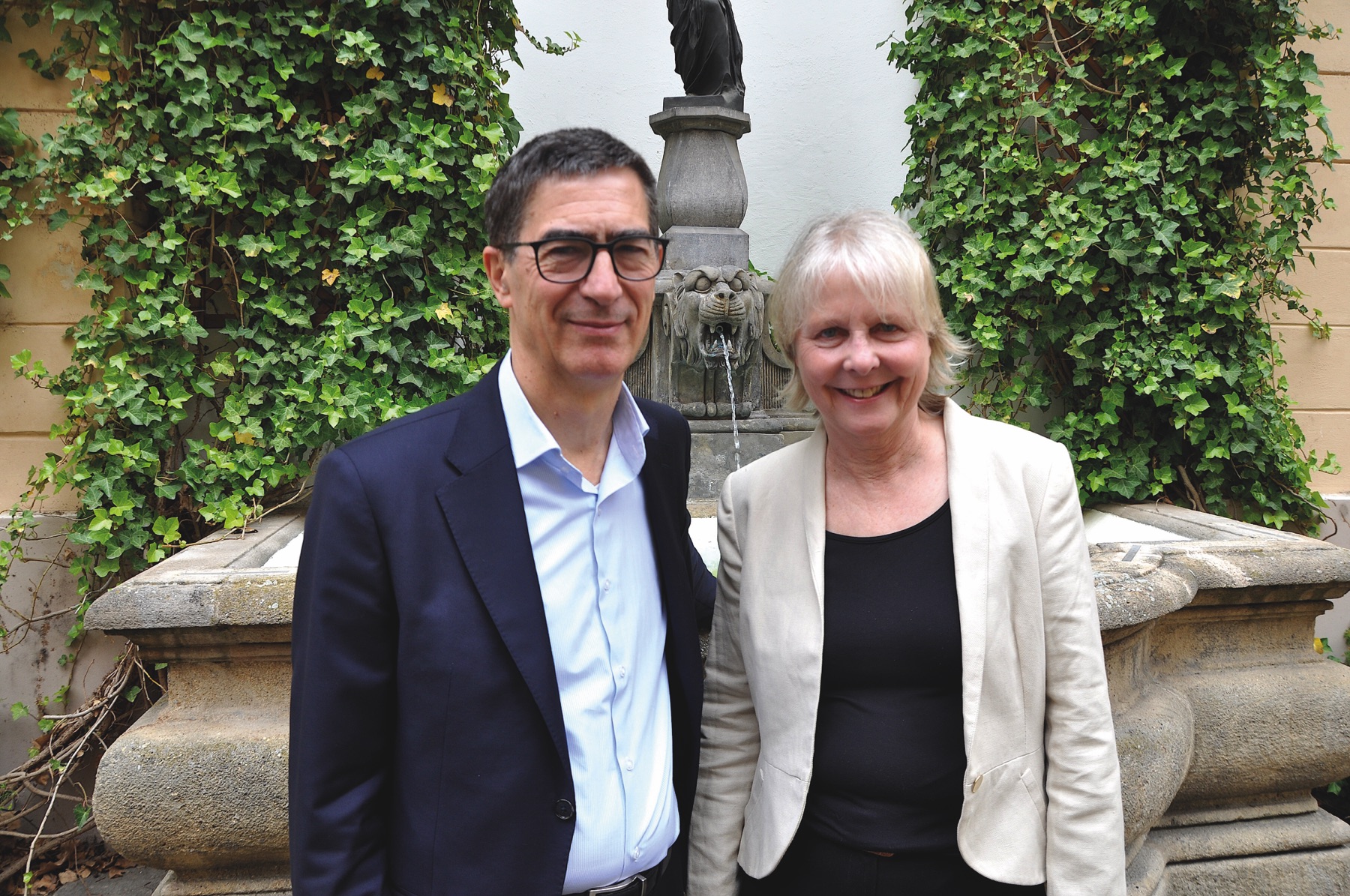
H.E. Mr. Alessandro Gaudiano, Ambassador of the Italian Republic, and his spouse Mrs. Beate Bender
How do you like to spend your free time?
I enjoy walking through this wonderful city, keeping in touch with family and friends, and reading. Learning Czech is also a kind of “halfway” free time activity – even though it is more demanding than walking, talking, or reading.
Can you give a piece of advice to the next generation of ambassadors?
Take our job seriously, without taking ourselves too seriously.
We should always remember that, as civil servants, we are there to serve. We carry a great responsibility – for our own country as well as for its partners around the world – which ultimately means responsibility for many people.
Many Czech people love spending their holidays in Italy. Do you promote your country here in this sense?
I am very happy about the fondness Czech people have for Italy as a holiday destination.
I think that, to a large extent, they discovered it on their own, but we are of course keen to help them deepen this discovery by presenting lesser known destinations, with the invaluable support of many exceptional partners. By exceptional partners I mean not only travel partners, but also all of the actors, with the Italian Cultural Institute at the forefront, who contribute to making Italy known and appreciated in the Czech Republic.
This year we also had the opportunity to host the Olympic and Paralympic Games in Milano Cortina, which helped us highlight Italy on the world stage and generated a special wave of sympathy among Czech people.
In general, I believe we Italians are fortunate to have a national brand in which many elements reinforce one another: history and art, natural landscapes, cuisine, fashion, industrial design – all blended into a lifestyle you can experience during a holiday in Italy, but also bring back home.
By the way, Prague itself offers many elements of the Italian lifestyle, which our dynamic Italian community helps spread throughout the city.
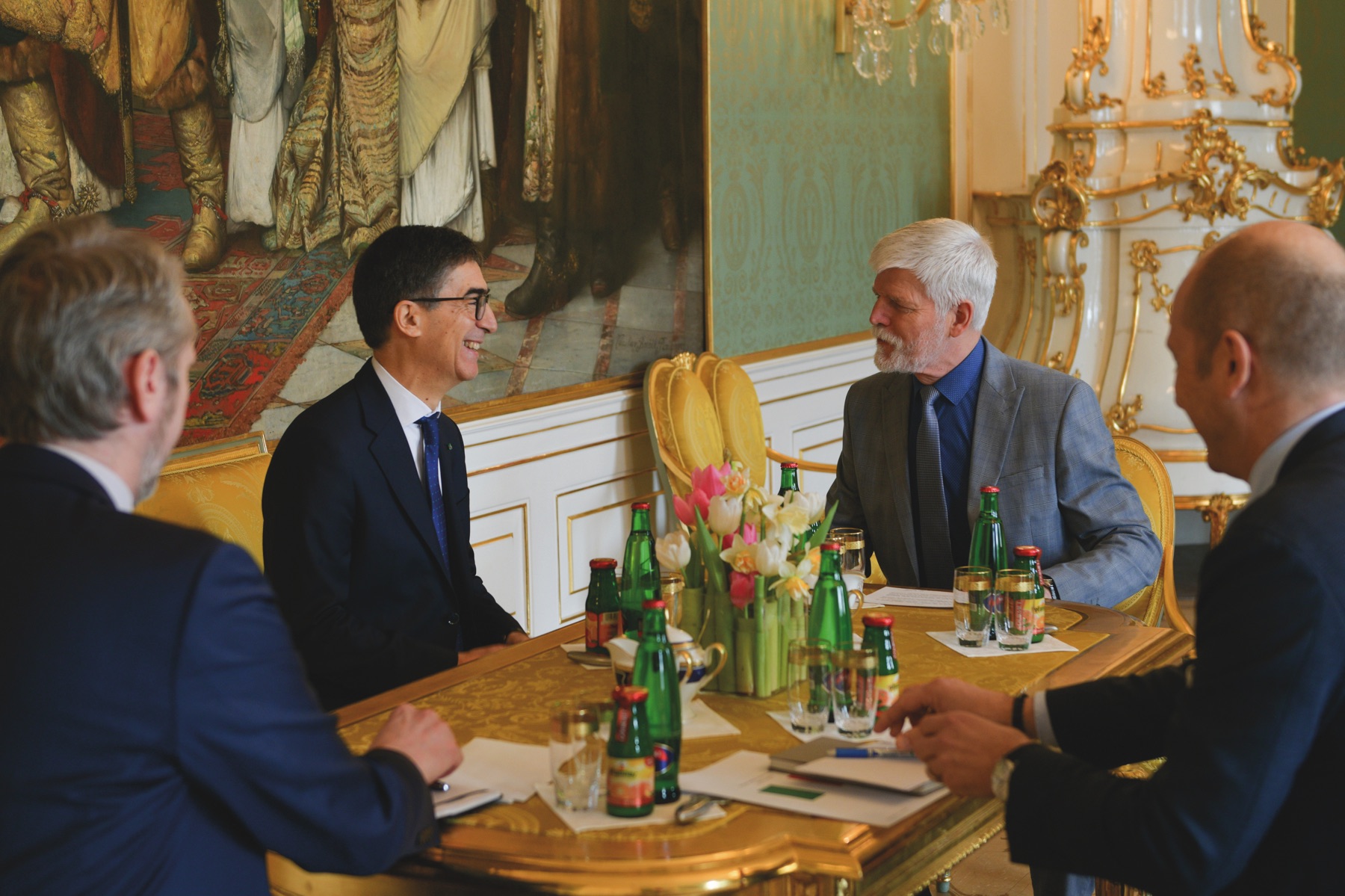
What is the current status of Czech-Italian relations?
Readers may think ambassadors tend to exaggerate, but my honest answer is: more than excellent! They have always been very good, but I believe we are experiencing a truly magical moment in our relationship.
The visit of President Mattarella, at the invitation of President Pavel on April 9-10th, was a highlight at the highest institutional level, confirming our shared vision of the need to face together the huge challenges ahead for Europe. Prime Minister Babiš met Prime Minister Meloni in Rome at the very beginning of his mandate, and they agreed to work on an Italian-Czech Action Plan for 2026–2030, including a joint cultural year. An Action Plan is something we have with only a limited number of countries, and it shows how strongly we feel about our cooperation.
As two industrial countries, we share a number of priorities in Europe – energy and competitiveness, to name just two – and of course we see enormous potential in our bilateral economic cooperation. I will mention only four areas among others: defence, energy, space, and transport infrastructure. These are fields in which we have first-class industrial actors eager to work together, and governments ready to facilitate that cooperation.
This interview is done on the occasion of your national day. What are you wishing for your country?
My wish for the Italian Republic – born eighty years ago out of the ashes of the Second World War – is that, together with our EU partners, allies and friends around the world, we may be resilient in the face of the huge challenges Europe is facing.
And to the Czech Republic?
To the Czech Republic I extend the same wishes as to my own country – not only out of the personal fondness I am developing for it, but also because in Europe we truly need each other.
We need to be resilient and act together to support our security and prosperity. This is the only way to preserve the very uniqueness we cherish in each of our countries. Together we stand; divided, we would all decline very rapidly.