
DESIGNED BY MCA ATELIER, MANAGED BY PRAGUE 3, FUNDED BY PRAGUE CITY HALL, ENJOYED BY LOCALS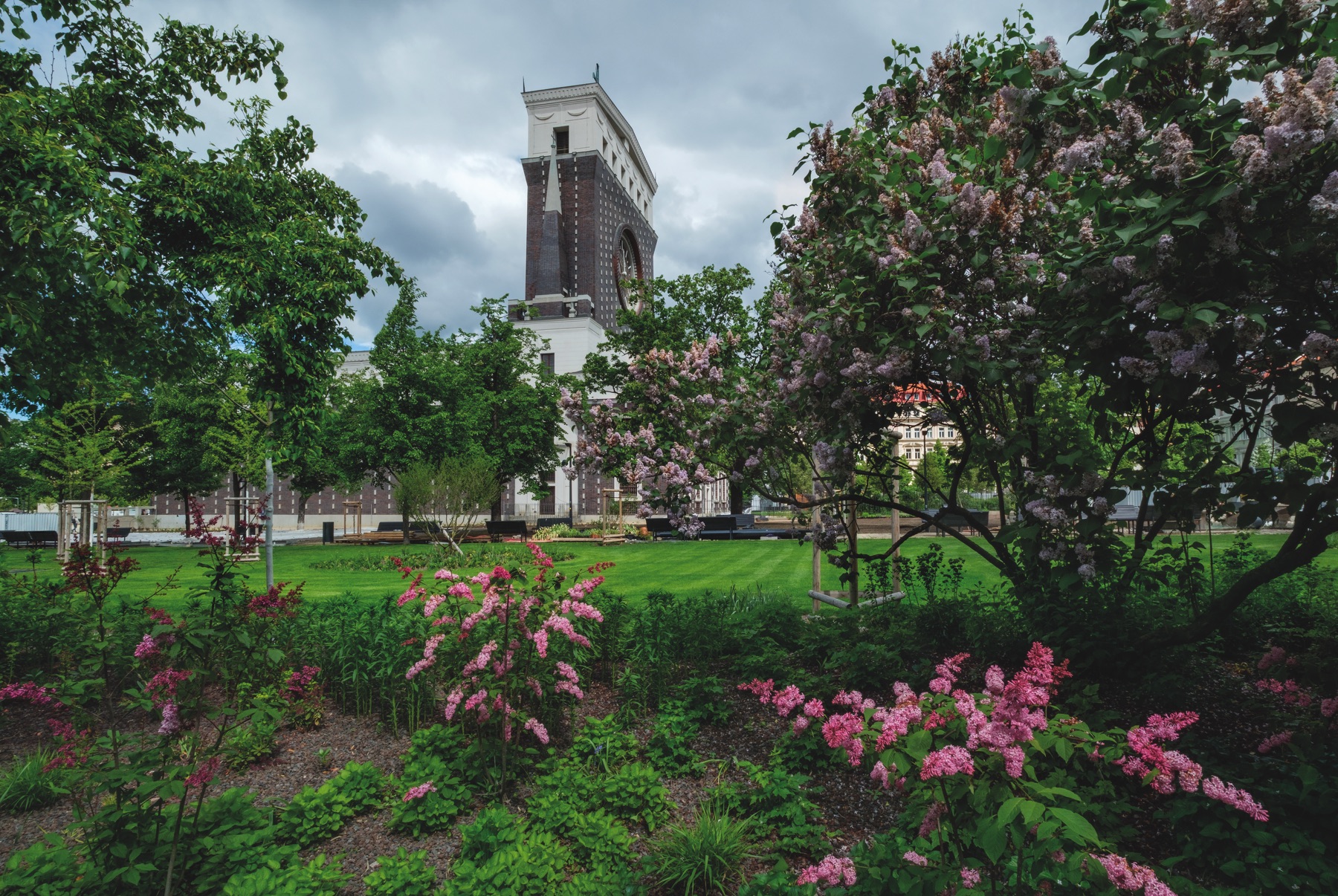
Text: Martina Hošková and M. Zisso; Photo: Ester Havlová
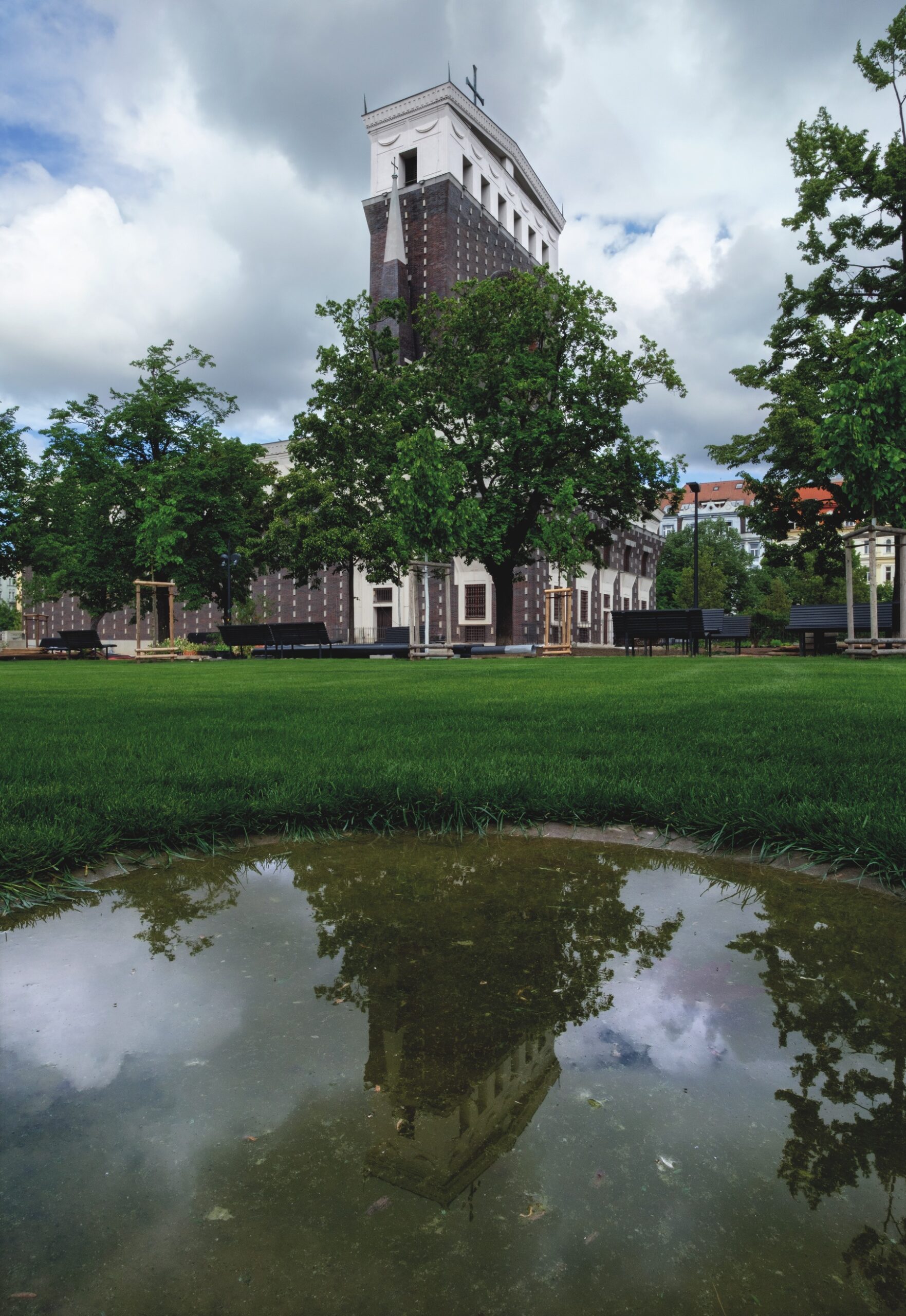
The revitalization of Jiřího z Poděbrad Square, or Jiřák as the locals call it, will add 120 new trees, modern street furniture, water features, and technology hidden beneath the surface. This symbolic gateway to Prague 3 has been given a new look, transforming into a greener space prepared for daily use, large public events, and the challenges of climate change.
The project introduces new technological solutions while returning to the original urban ideas associated with the Church of the Most Sacred Heart of Our Lord and the legacy of its architect, Josip Plečnik. One of the most significant changes is the transformation of the square into a space where almost every corner is accessible for relaxation or picnics. This more open layout is complemented by a new playground, drinking fountains, misting nozzles, and new furniture. New lawns, which are expected to last the entire season thanks to special seeds, irrigation, and care, will make the stay more pleasant.
While the ratio of grassy areas to paved surfaces is approximately 30 percent smaller, shading from tree canopies will increase significantly. The main paved area will provide an extraordinary space for cultural events and markets, where vendors will now have utility connections in multiple locations.
The goal of the revitalization was to create a friendlier and more vibrant environment. “The space must be able to offer more opportunities – from an individual visit with a dog to social events,” says architect Miroslav Cikán, who designed the new look with architect Pavla Melková at MCA Atelier. The aim is to allow everyone to find an opportunity for “pleasant habitation” under the shade of trees, in a café, or on the lawn, effectively slowing visitors down and encouraging them to stay.
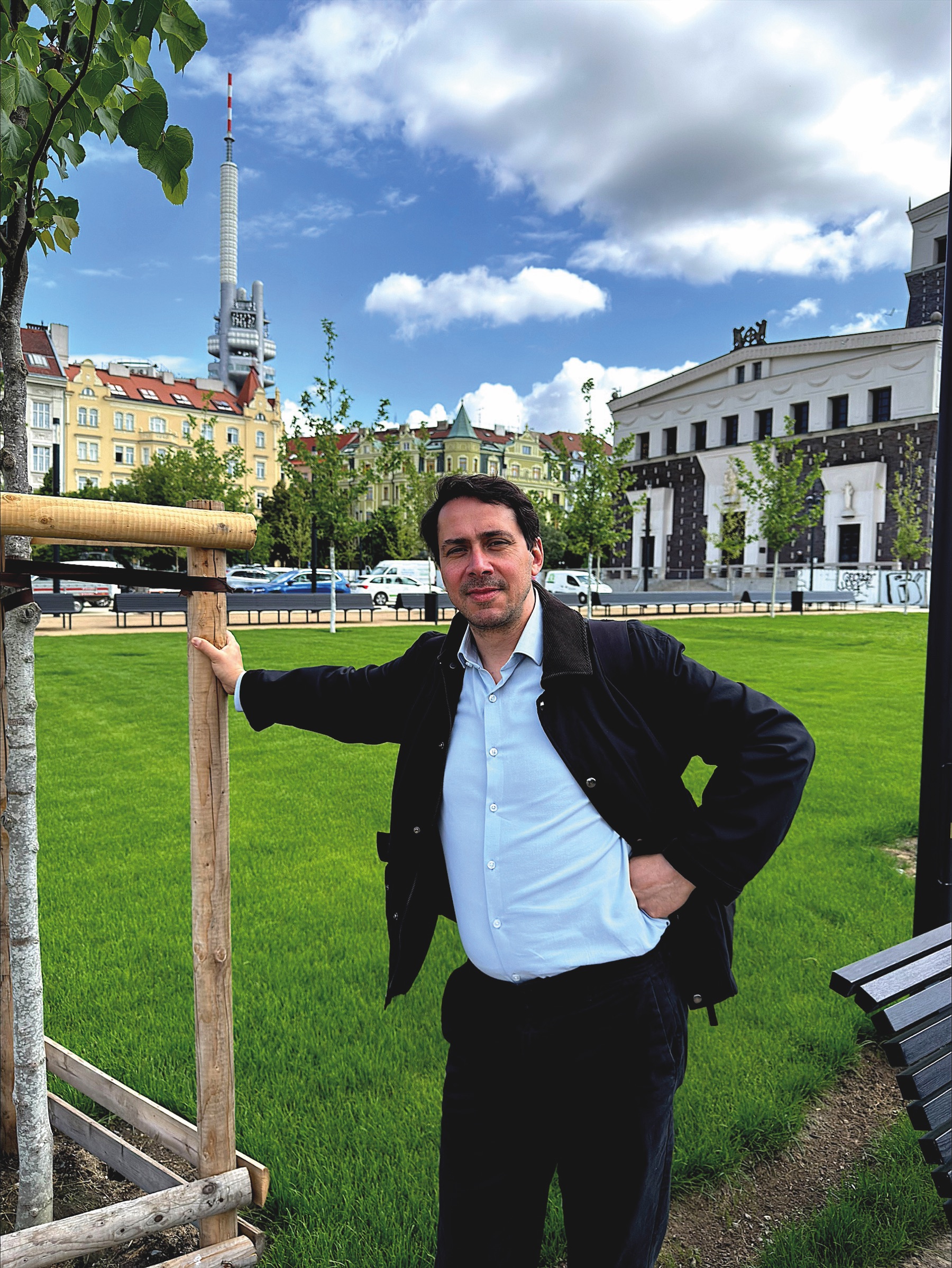
Michal Vronský, Mayor of Prague 3
The leadership of the Prague 3 District has similar expectations. “For me, Jiřák is the archetype of a square – there is a church, a school, a market, shops… it is unique among other large Prague squares for its neighbourhood character,” says Mayor Michal Vronský, emphasizing that the space should primarily serve as a place for people to spend their time.
During the reconstruction, the square remained closed to protect the newly established greenery and lawns. “If we opened only a part, all the pressure would be concentrated there, and there was a risk we would soon have to repair the lawns again,” explains Roman Janda from the Prague City Hall. The total cost of the revitalization reaches approximately 570 million crowns (including VAT), a figure significantly affected by inflation and necessary interventions in the metro structures beneath the square, such as a special concrete slab protecting an old ventilation shaft.
While Prague 3 managed the preparation and design, the Prague City Hall financed the actual construction. Councillor Jiří Ptáček noted that they successfully convinced the city leadership that the square is a significant space for the entire capital. Although the invested sum is high, the cost per square meter is roughly half compared to the revitalization of the lower part of Wenceslas Square.
Architects Melková and Cikán drew inspiration from the historical layers of the site and from Plečnik’s work, specifically his paving designs for Prague Castle. The square’s version consists of large-format granite tiles set into a special permeable substrate that allows water to soak in and later evaporate, preventing the square from becoming an undesirable heat island.
A newly renovated fountain by sculptor Petr Šedivý, which now includes a wading pool, is set to become a symbol of the space. It offers the first “cool step” to the residents of Prague 2, 3, and 10 as they enter the square.
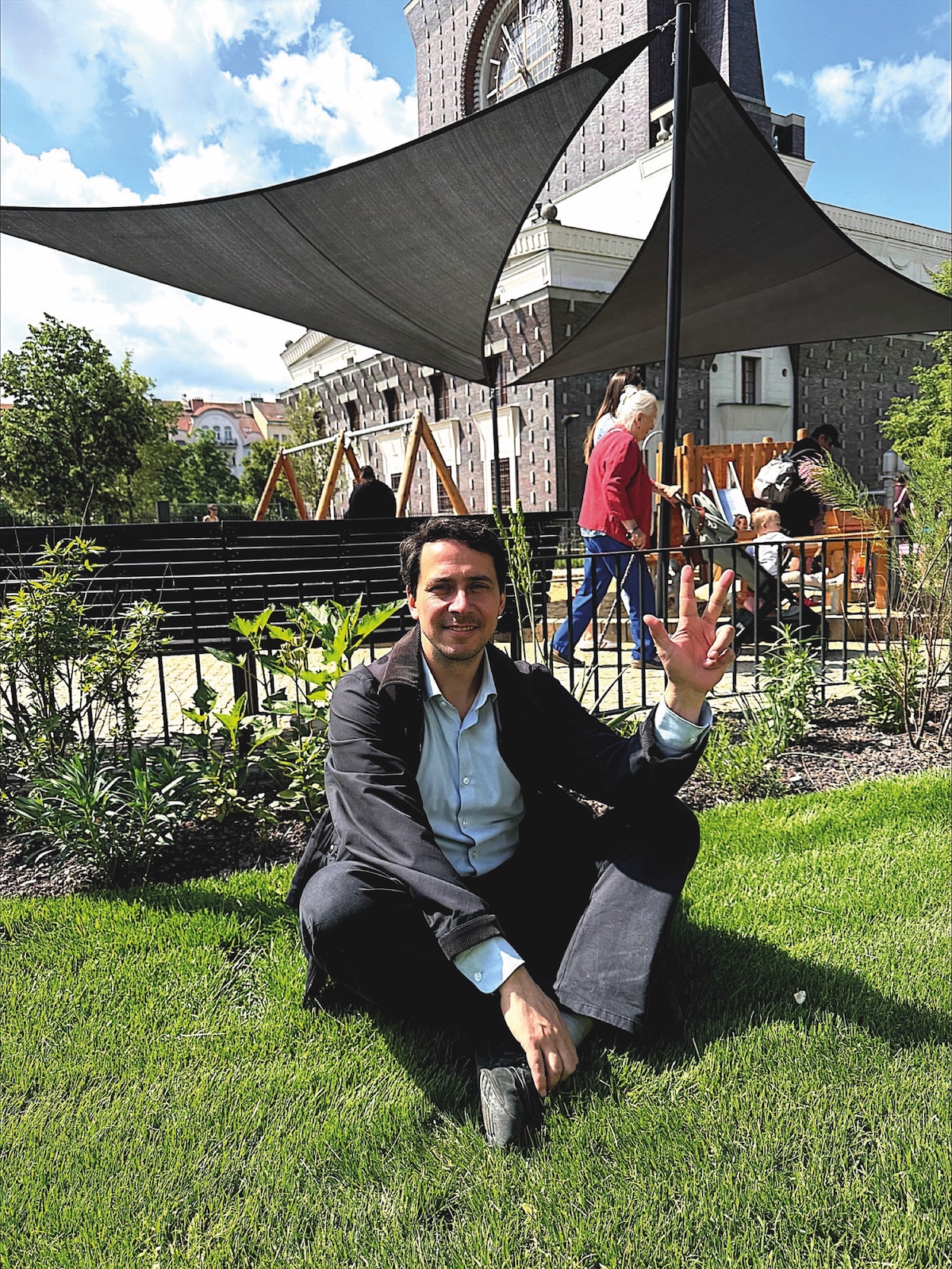
Michal Vronský, Mayor of Prague 3
Greenery plays a vital role; there are now exactly 120 more trees than before. Although 51 trees were removed at the start, they were all replaced, bringing the total number of newly planted trees to 171, including lindens, maples, and plane trees across 15 different species.
Arborist David Hora explains that this diversity helps protect the greenery from pests and climate fluctuations. The project also features blue-green infrastructure, which directs rainwater to tree roots through special underground layers of substrate containing gravel, compost, and biochar. This helps trees grow better and reduces runoff into the sewers.
Other hidden features include a 17-meter-long retention tank to manage heavy rain, as well as an accumulation tank that collects water from the church roof for irrigation. Visitors will find new drinking fountains, misting systems, and even “puddle basins” – shallow artificial reservoirs to keep water on the lawns. The street furniture has also been transformed, including atypical furniture similar to that in Vienna’s MuseumsQuartier, along with new lighting and a playground that has been in operation since April. All of this is intended to turn Jiřák into a place that primarily serves as a meeting point for residents.