

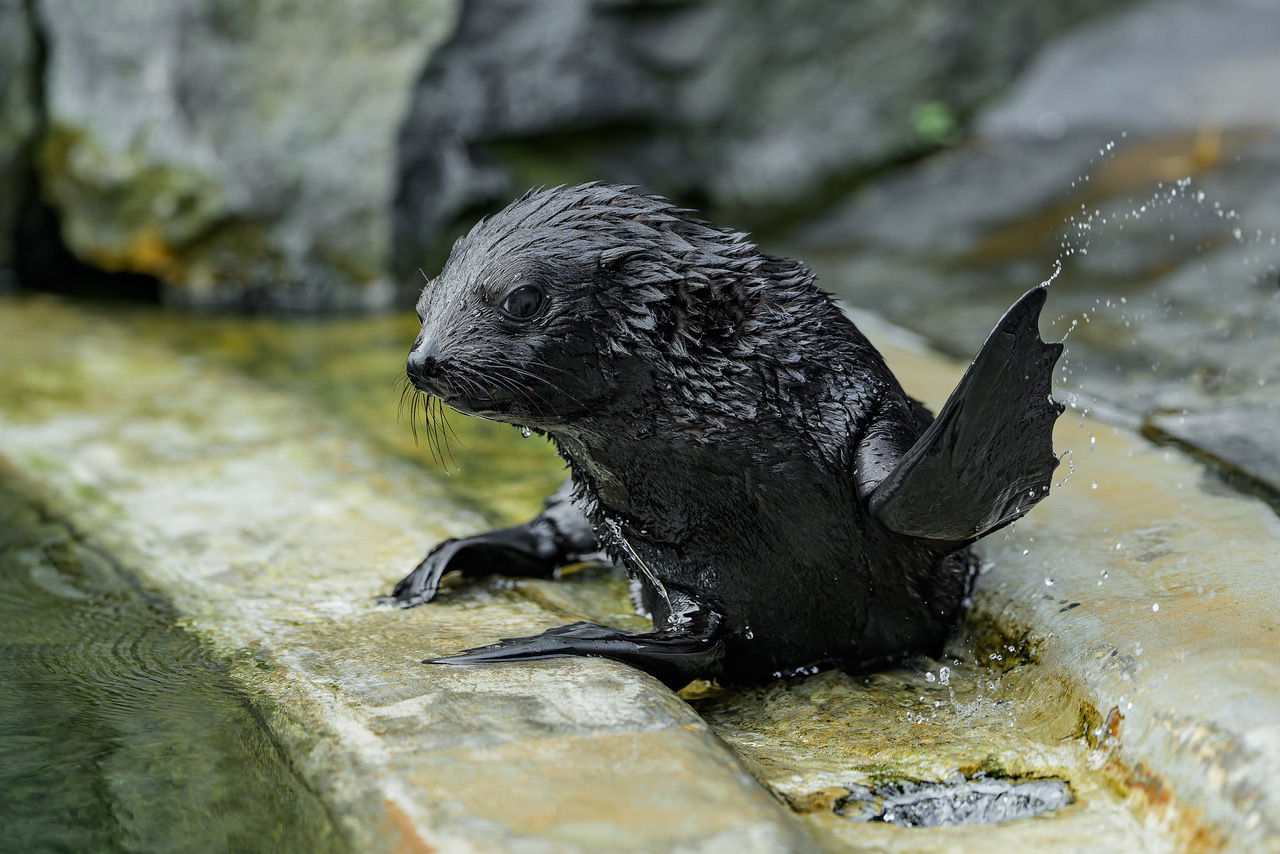
The male sea lion is still fully dependent on its mother’s milk. He will only start tasting fish next year. Photo by Petr Hamerník, Prague Zoo
A young South African sea lion, which was born at the Prague Zoo on June 5, was introduced to visitors on 19 August 2026. The male occupied the exhibit near the main entrance. The breeders gave him the name Jabulani, which comes from South African Zulu and can be loosely translated as “bringing joy”. People can see the little pinniped in the Prague Zoo after seven years. The great-grandson of the famous Gaston can be seen every morning except Fridays, when the sea lions are cleaned in the large exhibition pool.
“The first days of the cub’s life were dramatic, because the female Daisy apparently did not have enough breast milk and did not show too much interest in her offspring. The male survived only thanks to the continuous care of the veterinarian and breeders, who decided to give the otherwise tenacious cub a chance,” says Prague Zoo director Lenka Poliaková.
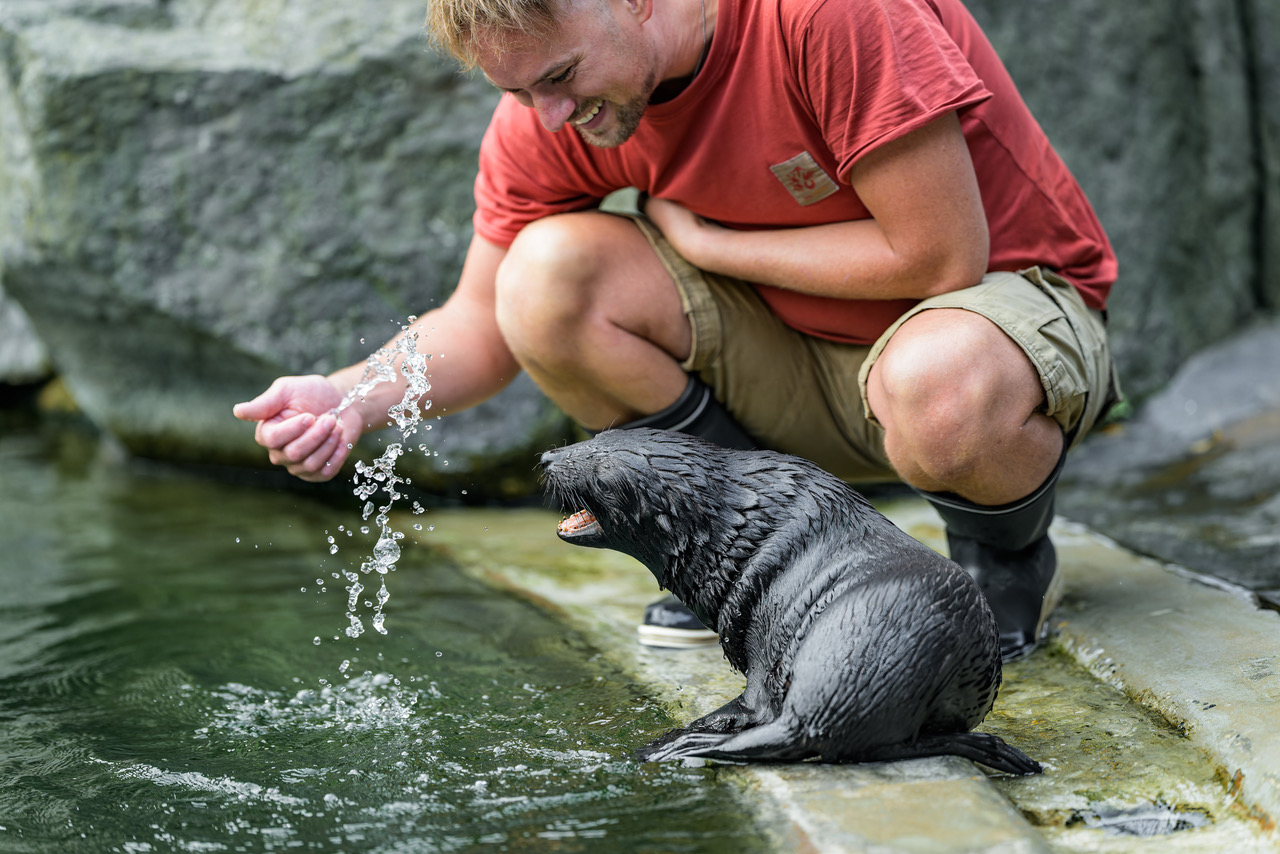
The baby sea lion is very playful. His favorite pastime is sucking his own fins or catching drops of water. In the picture with Jakub Mezei, chief sea lion breeder of the Prague Zoo. Photo by Petr Hamerník, Prague Zoo
Breeding now takes place naturally: the situation changed about a week after birth. “Daisy’s maternal instinct was awakened along with lactation, and now we can all watch how the two-month-old male explores the enclosure alongside his mother,” adds Jakub Mezei, chief sea lion keeper at the Prague Zoo.
South African sea lions are born on land and learn to swim from their mothers. Due to the local absence of a gradual entry into the water or sea tidal ponds, where the cubs get to know the water in nature, Jabulani was gradually given different-sized tubs in the background of the zoo. At the beginning of August, he already dared to go to the big pool.
“Every cub that is born in the Prague Zoo is a small miracle. And this is doubly true for sea lions, because their upbringing is not easy. I am very happy that the little male is doing well. Now he can enjoy the pool, the water, and also his new audience. I wish him good health and a lot of joy from the sea lion’s antics,” said the deputy mayor of Prague today. City of Prague for the environment, Jana Komrsková.
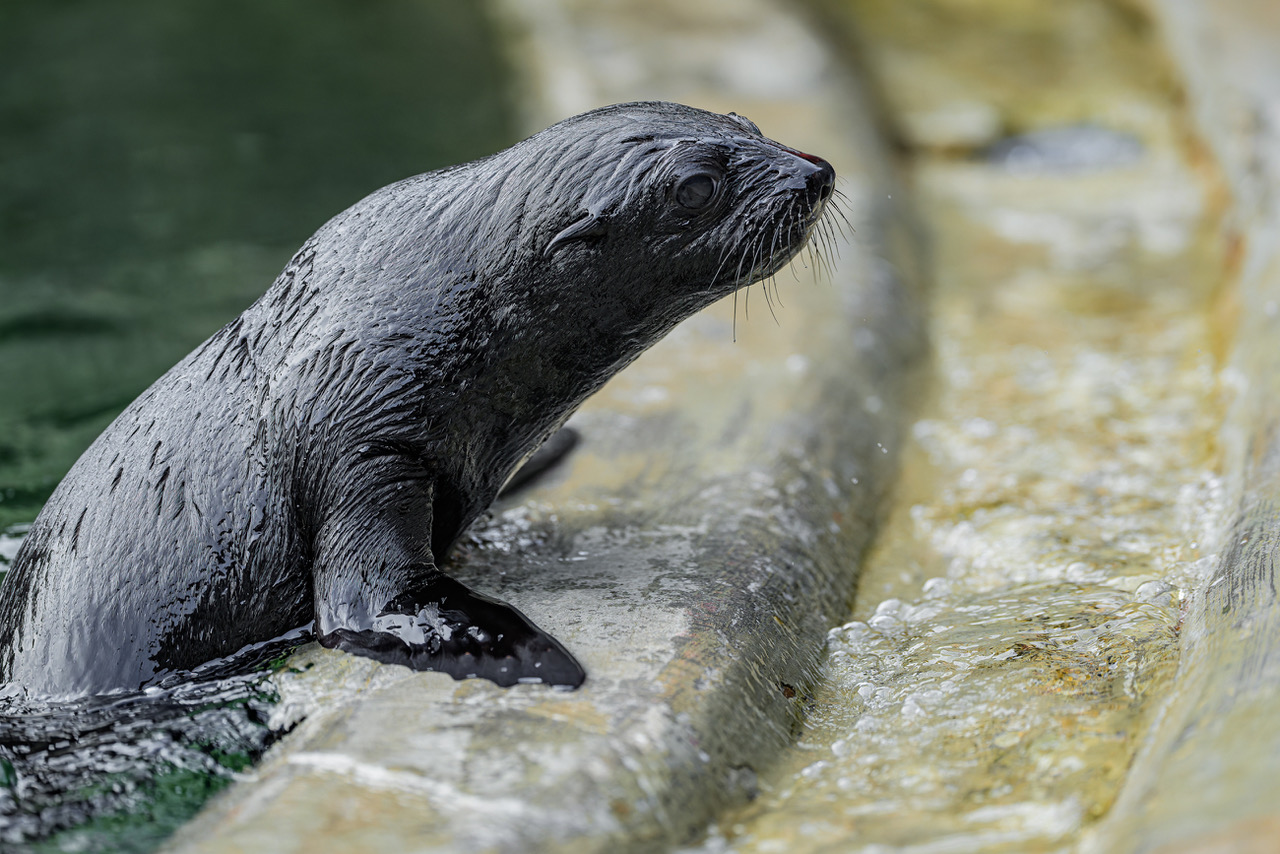
A baby sea lion climbs out of a large exposure pool. After birth, it weighed 4,510 grams, now it weighs exactly 14 kilograms, so the male has already tripled his weight. Photo by Petr Hamerník, Prague Zoo
Jabulani’s father is the male Eda, who went to the zoo in Rostock, Germany last year because of a genetic mutation. Since the Prague Zoo prides itself on successful breeding numbers, it would be very difficult to find other unrelated females for Ed. For over a year, a teenage male Oslo, originally from the Belgian Pairi Daizy, has been living in the Prague Zoo, and he is expected to become the father of more cubs in the future.
Prague Zoo currently keeps five sea lions. In addition to the male Osla, there are also females Abeba, Ronja, and the aforementioned Daisy with Jabulani. The youngest addition will find a home in another zoo in the future. Sea lions live in harems led by one dominant male.
Prague Zoo is the only breeder of South African sea lions in the Czech Republic. Currently, this species is kept in only 16 zoos in the EU. This is not much compared to other well-known sea lion species – for example, the maned sea lion inhabits 32 zoos in the EU, and the California sea lion can even be found in 64 European institutions.