

Text: H.E. Mateusz Gniazdowski, Ambassador of Poland to the Czech Republic (2022–2024); Photo Archive
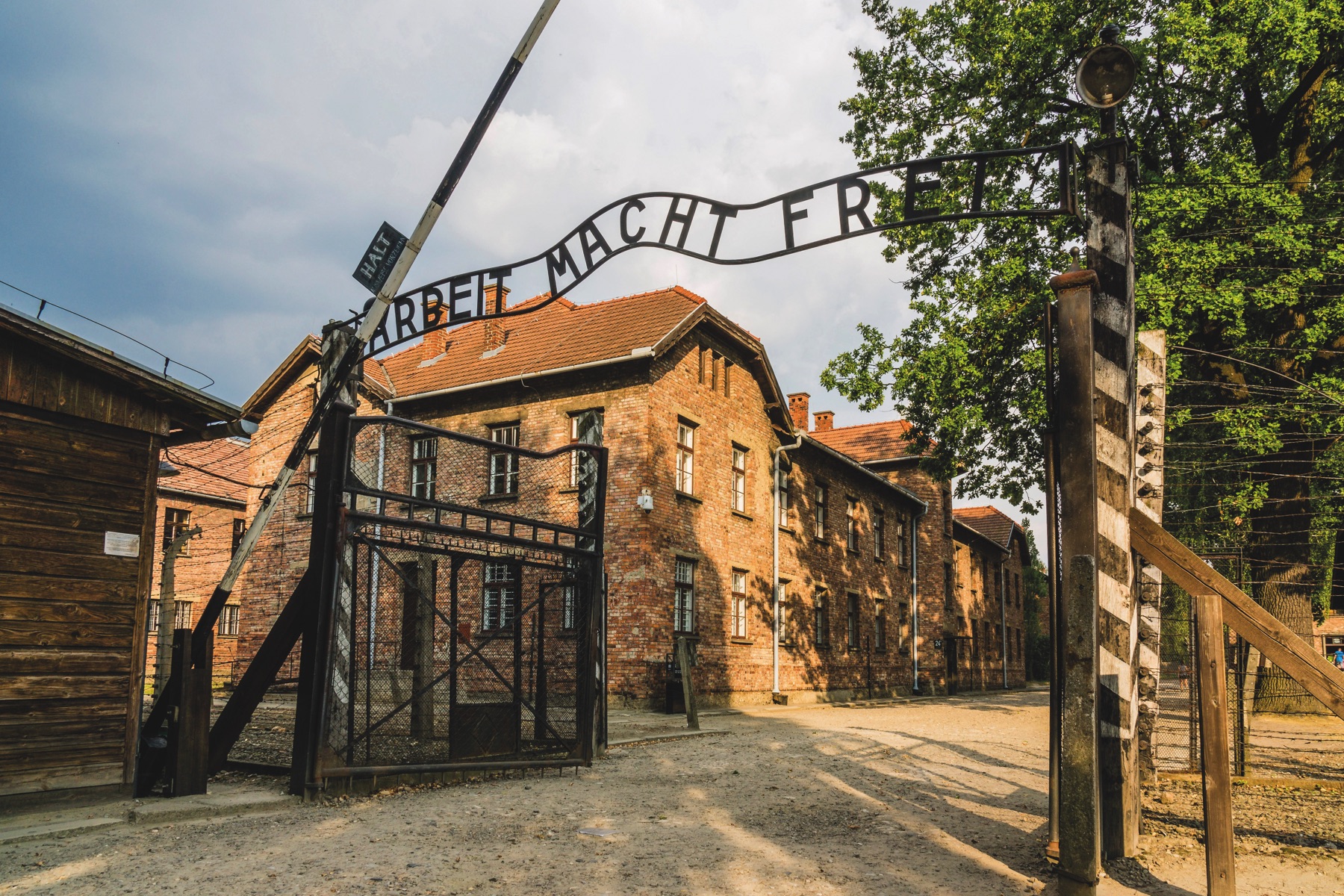
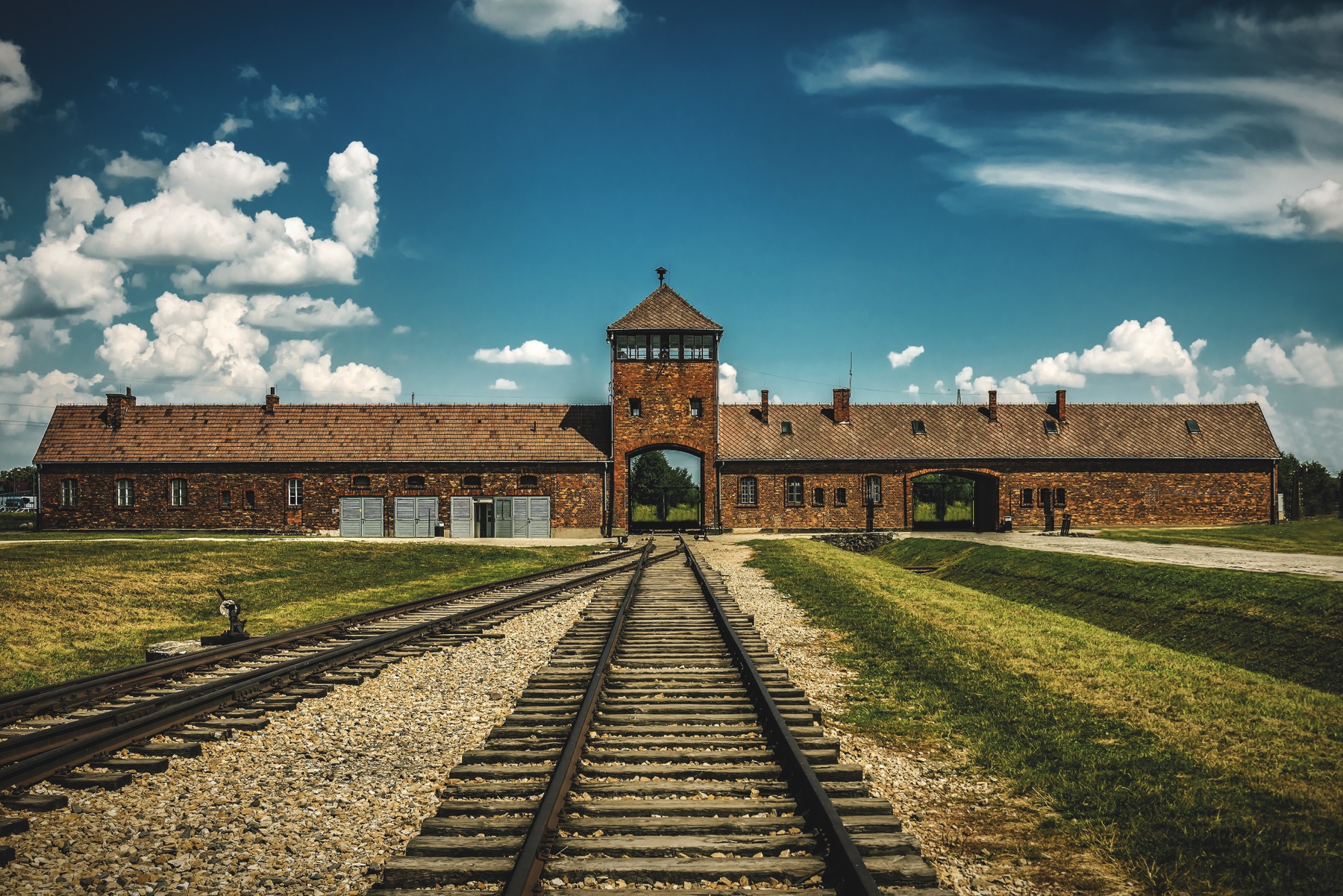
Every year on 27th January we commemorate the International Holocaust Remembrance Day. This observance was officially established by the United Nations General Assembly in 2005, on the anniversary of the liberation of the Auschwitz-Birkenau concentration and extermination camp in 1945 by soldiers of the Soviet Army. For Polish diplomacy, this date carries particular significance. Auschwitz-Birkenau, the largest German Nazi concentration and extermination camp, was established and operated by Germany on occupied Polish territory. A very large proportion of its victims were citizens of Poland. For this reason, the Polish state – including its diplomatic service – bears a special responsibility for preserving the memory of the Holocaust. Yet 27th January is not the only Auschwitz-related anniversary of particular importance for Polish diplomats serving in Prague.
The wording of the 2005 UN General Assembly resolution constitutes a clear legal and moral stance against historical revisionism and Holocaust distortion. The resolution rejects any denial of the Holocaust as a historical event, whether in whole or in part, and urges Member States to develop educational programmes that will transmit the memory of this tragedy to future generations, helping to prevent acts of genocide. This commitment is especially important today, when Holocaust distortion increasingly affects questions of responsibility and perpetration of crimes committed against Jewish communities on occupied Polish soil.
Nazi Germany established and operated six extermination camps, numerous concentration camps, and countless execution sites on occupied Polish territory. Today, the Polish state maintains museums, memorial sites, and cemeteries at many of these locations, while Polish research institutions continue their work of documenting and preserving the memory of Nazi crimes for present and future generations around the world.
The January anniversary commemorates the liberation of Auschwitz-Birkenau, an event experienced by only a small group of prisoners. On 27th January 1945, more than 7,000 prisoners who remained in the camp – including slightly over 700 children – were liberated by soldiers of the Soviet Army. Over the course of less than five years, approximately 1.1 million people were murdered in Auschwitz-Birkenau. The majority of the victims – around one million – were Jews. According to estimates by the Auschwitz -Birkenau State Museum, at least 232,000 children were murdered in the camp, most of them Jewish children.
It is often noted that the largest single group of Jewish victims consisted of Jews deported from Hungary within its wartime borders – approximately 430,000 people. This figure, however, includes around 140,000 Jews from southern Slovakia and Subcarpathian Ruthenia, more than 130,000 victims from northern Transylvania, and approximately 16,000 Jews deported from Vojvodina. Excluding these territories, which were incorporated into Hungary between 1938 and 1941, the number of Jews deported to Auschwitz-Birkenau from the territory of present-day Hungary was likely closer to 150,000.
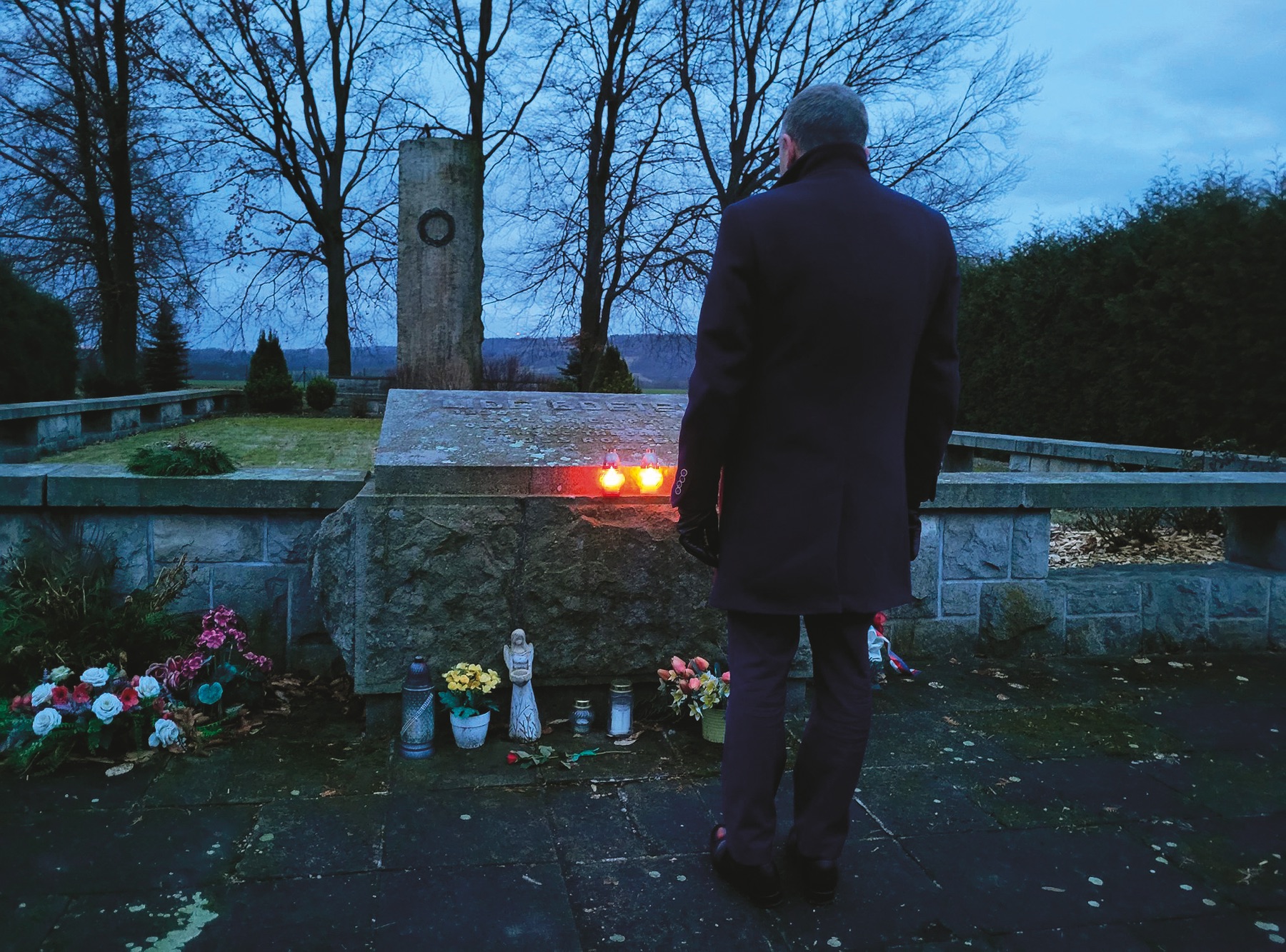
H.E. Mr. Mateusz Gniazdowski, former Ambassador of Poland to the Czech Republic,
at the grave of the victims of the death marches in Choustníkovo Hradiště
For comparison, historians estimate that approximately 300,000 Jews from the territory of pre-war Poland perished in Auschwitz-Birkenau.
Historians estimate that a total of around 375,000 citizens of Poland were murdered in Auschwitz. After Jewish victims, the secondlargest group consisted of non-Jewish Poles – approximately 75,000 people. In Poland, their memory is honoured on 14th June, observed as the National Day of Remembrance of Victims of German Nazi Concentration Camps and Extermination Camps. On that date in 1940, the Germans deported the first group of prisoners to Auschwitz: 728 Poles transferred from the prison in Tarnów, including soldiers of the September Campaign, members of underground independence organisations, scouts, students, and a small group of Polish Jews.
For Polish diplomats in Prague, anniversaries linked to Auschwitz and the destruction of Czech Jewish communities are also of great importance. Particularly moving for me were the commemorations held in 2024 marking the round anniversary of the murder of prisoners from the so-called Theresienstadt Family Camp (BIIb). The mass killings of prisoners deported from the Theresienstadt ghetto, carried out on the nights of 7–8th March and 10–12th July 1944, constitute the largest mass murder of Czechoslovak citizens during the Second World War. Of the approximately 17,500 prisoners held in the BIIb camp, only 1,294 survived.
Another important Auschwitzrelated date is 2nd August – the Roma Holocaust Memorial Day – commemorating the liquidation of the so-called Zigeunerfamilienlager, a mass crime in which Roma and Sinti from the Czech lands were also murdered.
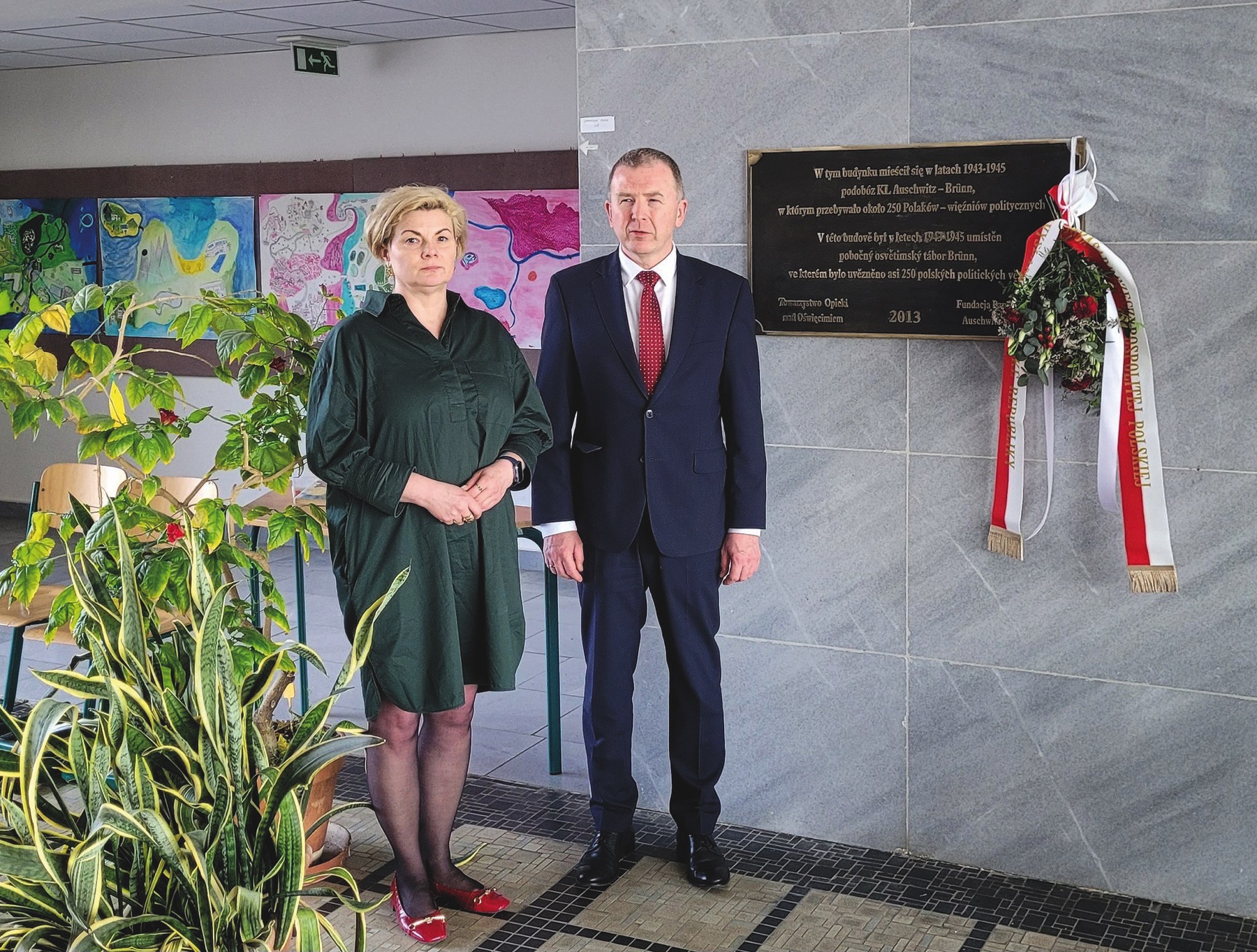
Consul General Ms. Izabella Wołłejko-Chwastowicz and former Ambassador of Poland to the Czech Republic H.E. Mr. Mateusz Gniazdowski at the memorial plaque dedicated to the victims of the Auschwitz–Brno subcamp
For Poles, Auschwitz-Birkenau is associated with an almost countless number of anniversaries connected to the lives and deaths of its victims. Among them is Saint Maximilian Kolbe, who voluntarily gave his life in the camp for a fellow prisoner.
This year, on 14th August, we will mark the 85th anniversary of his death. An equally important place in the memory of Auschwitz is held by Witold Pilecki, a Polish cavalry officer and resistance fighter who in 1940 voluntarily allowed himself to be arrested in order to infiltrate AuschwitzBirkenau. Inside the camp, he organised an underground resistance network and sent some of the first eyewitness reports on the Holocaust to the Allies. After escaping in 1943, he continued fighting in the Polish underground, took part in the Warsaw Uprising, and after the war was arrested, tortured, and executed by the communist authorities in 1948. On 13th May 2026, we will commemorate the 125th anniversary of his birth.
Polish diplomats serving in the Czech Republic should also remember other anniversaries linked to Auschwitz and the martyrdom of Polish citizens on present-day Czech territory. One of the lesser-known sites of memory is an Auschwitz subcamp in Brno, which operated between 1943 and 1945 on the premises of the Bishop’s Grammar School. The camp was located in an unfinished building taken over by the Germans for the construction of the SS and Police Technical Academy. The majority of the prisoners held there were Poles.
A major challenge – including for diplomacy – in commemorating the victims of former German Nazi extermination camps is the dignified remembrance of the victims of the so-called death marches. In the winter of 1944–1945, thousands of prisoners from German camps, primarily located in Silesia, were “evacuated” – which in reality meant that they were sent to further extermination through exhaustion, forced labour, and murder. Many thousands died on the present-day territory of the Czech Republic. A large proportion of these victims came from Polish lands. Some of these execution sites are commemorated annually. Representatives of the Polish Embassy regularly take part in ceremonies in Krupka, at the mass grave of 313 prisoners. Many such sites exist across the Czech Republic, particularly in the border regions that were annexed by Germany in 1938. It is worth recognising local communities and individuals who keep the memory of these victims alive. In connection with the anniversary of the February death marches, I visited the cemetery in Choustníkovo Hradiště and lit a light of remembrance at the mass grave where, on 18–19th February 1945, German police murdered at least 145 prisoners from a transport evacuated from the Gross-Rosen concentration camp.
Many victims of these crimes will remain forever in anonymous graves. Others, however, may still be identified through scholarly research, including archaeological investigations, and the circumstances of their deaths clarified. In the case of Choustníkovo Hradiště, for example, one may find digitised documents of German security formations, made available in recent years by the Polish Pilecki Institute. Many such sites require conservation and restoration. The death marches from German camps and their tragic toll on Czech lands remain an important subject for further international historical research and commemoration.
This example from one of the many sites of memory linking our nations also highlights the continuing need for proper documentation of these crimes, for restoring names – and often graves – to the victims, as well as for preserving the memory of both the victims and the perpetrators for future generations.