

Knowledge of history helps me find solutions
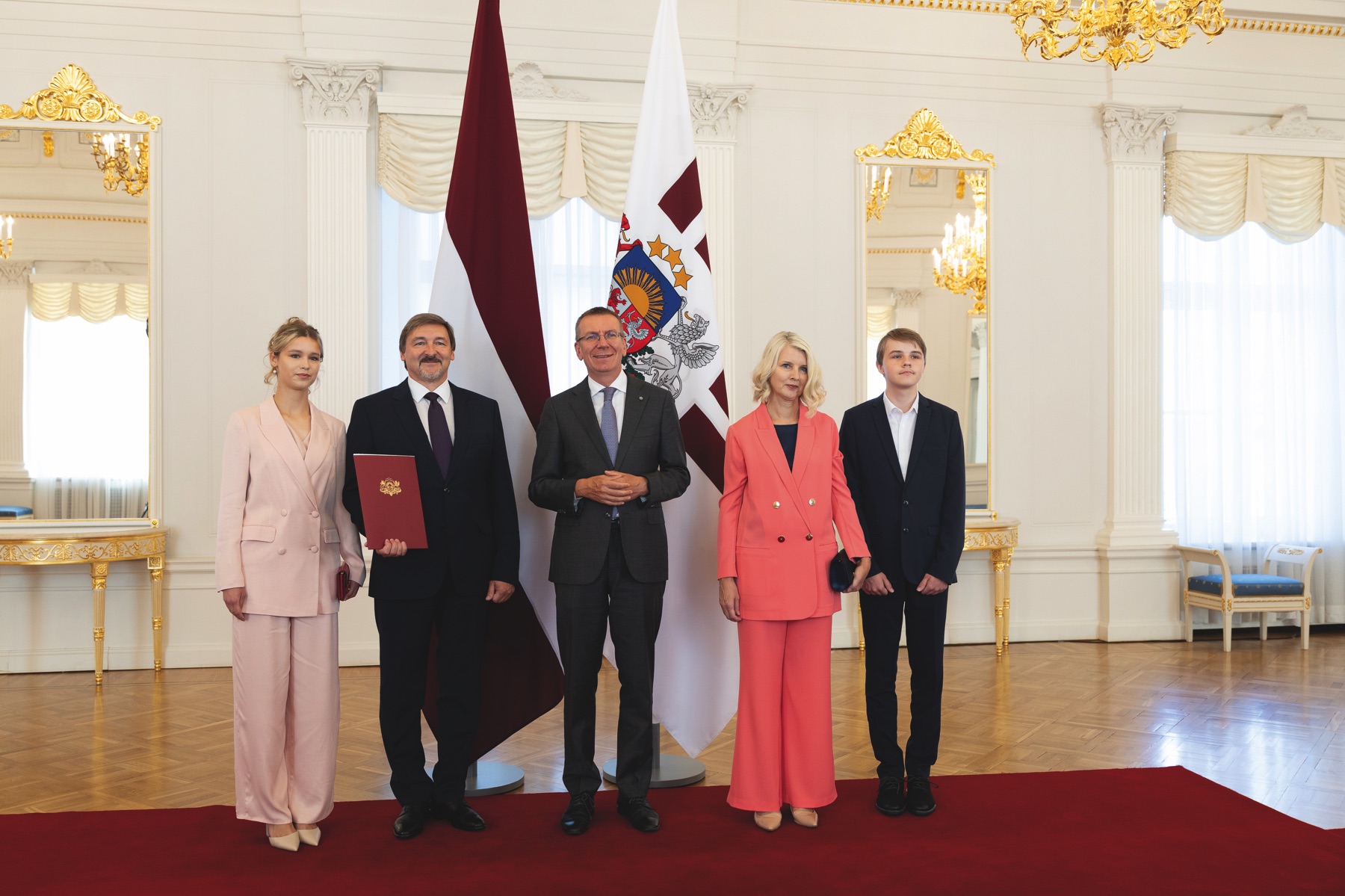
Latvia´s President Mr. Edgars Rinkēvičs (in the middle) with H.E. Mr. Vilmars Heninš, Ambassador of Latvia to the Czech Republic and his family
Photo: Ilze Salnāja, Ministry of Foreign Affairs of Latvia
Text: Martina Hošková and M. Zisso; Photo: Archive
Can you tell us about yourself?
I was born in Riga, the capital of Latvia, where I also completed my studies at the Faculty of History and Philosophy at the University of Latvia, earning a master’s degree in history. I began considering studying history while still in high school, and this knowledge was – and continues to be – very useful in my active diplomatic career. It helps me better understand the structure of things and find solutions, especially in today’s geopolitically turbulent times. While still at university, I joined the Latvian diplomatic service, where I’ve worked continuously for 32 years. I’ve also danced Latvian folk dances for many years, as nearly every Latvian either dances in a folk group, sings in a choir, or plays a musical instrument. We have a unique tradition: every five years, the Latvian Song and Dance Festival brings together thousands of dancers and singers in a shared celebration. This tradition began in 1873, long before Latvia declared statehood, and is included in UNESCO’s Representative List of the Intangible Cultural Heritage of Humanity.

President of Latvia Edgars Rinkēvičs presents credentials to H.E. Mr. Vilmars Heninš, Ambassador of Latvia to the Czech Republic
Photo: Ilze Salnāja, Ministry of Foreign Affairs of Latvia
Can you tell us more about your country?
Latvia’s statehood is just over 100 years old, but its people have a long history, deep roots, and a rich spiritual heritage. Latvians are resilient and determined. Despite foreign occupations and many trials, we have preserved our language, culture, and identity. Today, Latvia is a free and democratic country, a member of NATO and the European Union, and ranks among the top 40 countries globally in terms of development. It is a nation with an equal and democratic society built on knowledge, entrepreneurship, and creativity. Latvia is a respected and reliable international partner, and will become a non-permanent member of the UN Security Council next year. Latvia’s priorities include defending a rules-based international order, supporting Ukraine against Russian aggression, promoting women’s rights and empowerment, and seeking joint solutions to emerging security threats such as cyber and hybrid challenges.
How did you become an ambassador?
I joined the Latvian diplomatic service in 1993, shortly after Latvia regained independence following fifty years of Soviet occupation. At that time, the diplomatic service was being rebuilt from scratch. I was still a third-year history student when I received an unexpected offer from my professor – who was also the Deputy Foreign Minister – to join the Foreign Service. I began my career as a senior desk officer on Russian affairs, and returned to this topic several times over the years. In the diplomatic service, I’ve held many positions: head of the CIS division, head of the Central European division, press secretary of the Ministry of Foreign Affairs, twice director of the Bilateral Relations Department, foreign affairs adviser to the Prime Minister, and director of the Policy Planning Department. I’ve served in several foreign postings before being appointed Ambassador of the Republic of Latvia to the Czech Republic. I’ve climbed nearly every step of the career ladder to reach the ambassadorial post.
You have been in the Czech Republic for about a year. Can you share some of your impressions?
This is my second time serving in the Czech Republic as a diplomat. I first worked here twenty years ago as deputy head of mission. I have the warmest memories from that time, so when the Foreign Minister offered me the chance to return as ambassador, I didn’t hesitate for a moment. Comparing the Czech Republic now to twenty years ago, I can say with satisfaction that it has made great strides in socio-economic development while continuing to charm with its cultural and historical heritage. Czech people have preserved many of their customs and traditions. I’m fascinated that many still read books on public transport, love their dogs dearly, and maintain an active lifestyle – especially travelling on weekends. And, of course, Czech beer and ice hockey need no explanation.
How many countries have you served in so far?
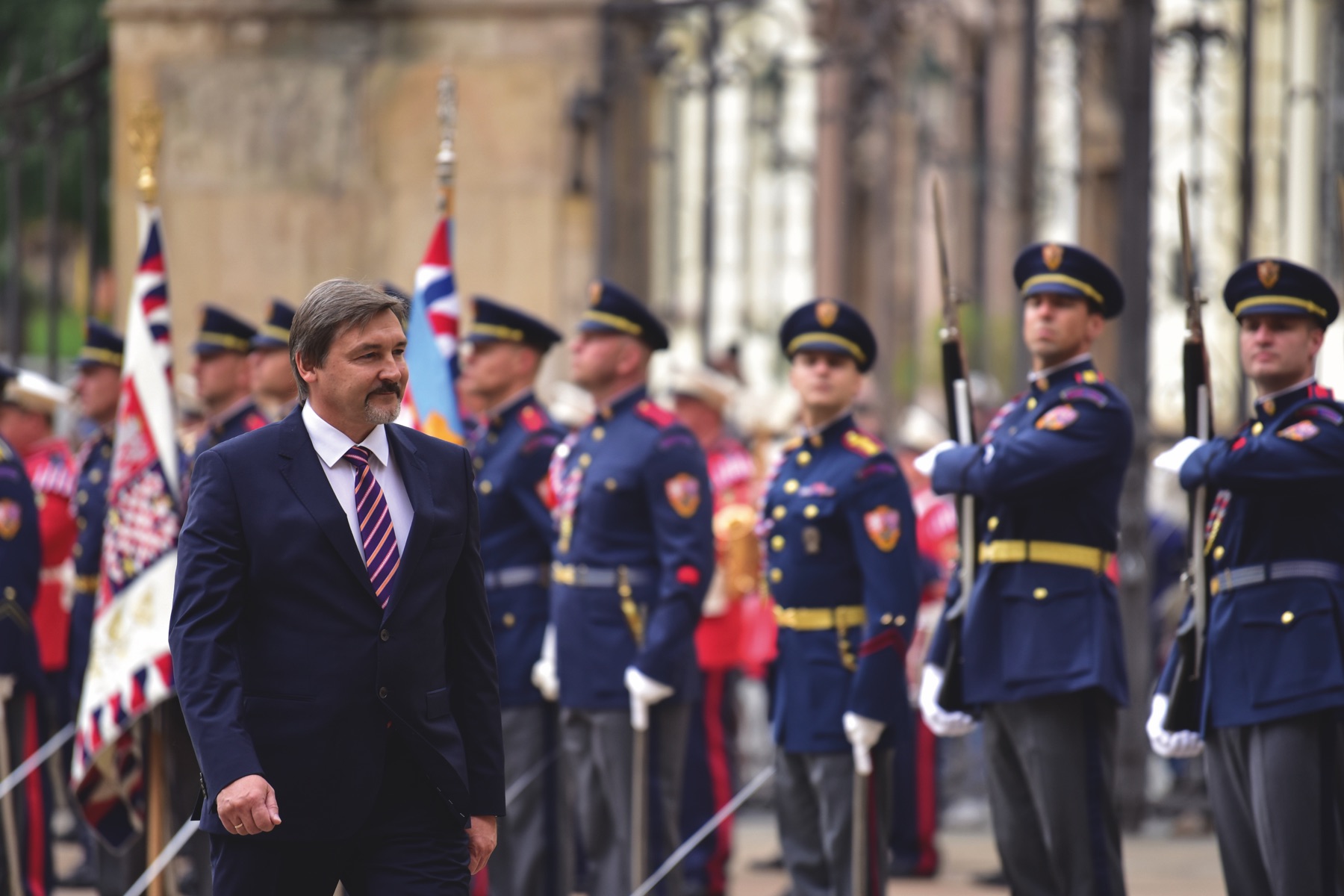
As mentioned earlier, I’ve spent half of my diplomatic career working in Latvian embassies abroad. My first posting was to Moscow, where I served as First Secretary at our embassy in Russia. Then came Prague, followed by another posting to Moscow as deputy head of mission. My first ambassadorial appointment was to Hungary, where I was also a non-resident ambassador to Croatia, Slovenia, and Montenegro. Since last autumn, I’ve been back in Prague.
Does living an ambassador’s lifestyle come easily to you?
The ambassador’s lifestyle is very dynamic. You must be able to adapt to the daily rhythm of the country of residence while essentially being on duty 24/7. As an ambassador, you need to stay informed about developments in Czechia, build and maintain contacts, organize events that promote your country, and participate in political, economic, and cultural events organized by the country of residence. You also need to engage with the Latvian diaspora in the Czech Republic. Looking at my weekly calendar, I sometimes find myself thinking, “Another week without a free evening.” That’s why it’s important to find a balanced approach and make time for hobbies – and most importantly, for family, which has always been my greatest support in fulfilling diplomatic duties abroad.
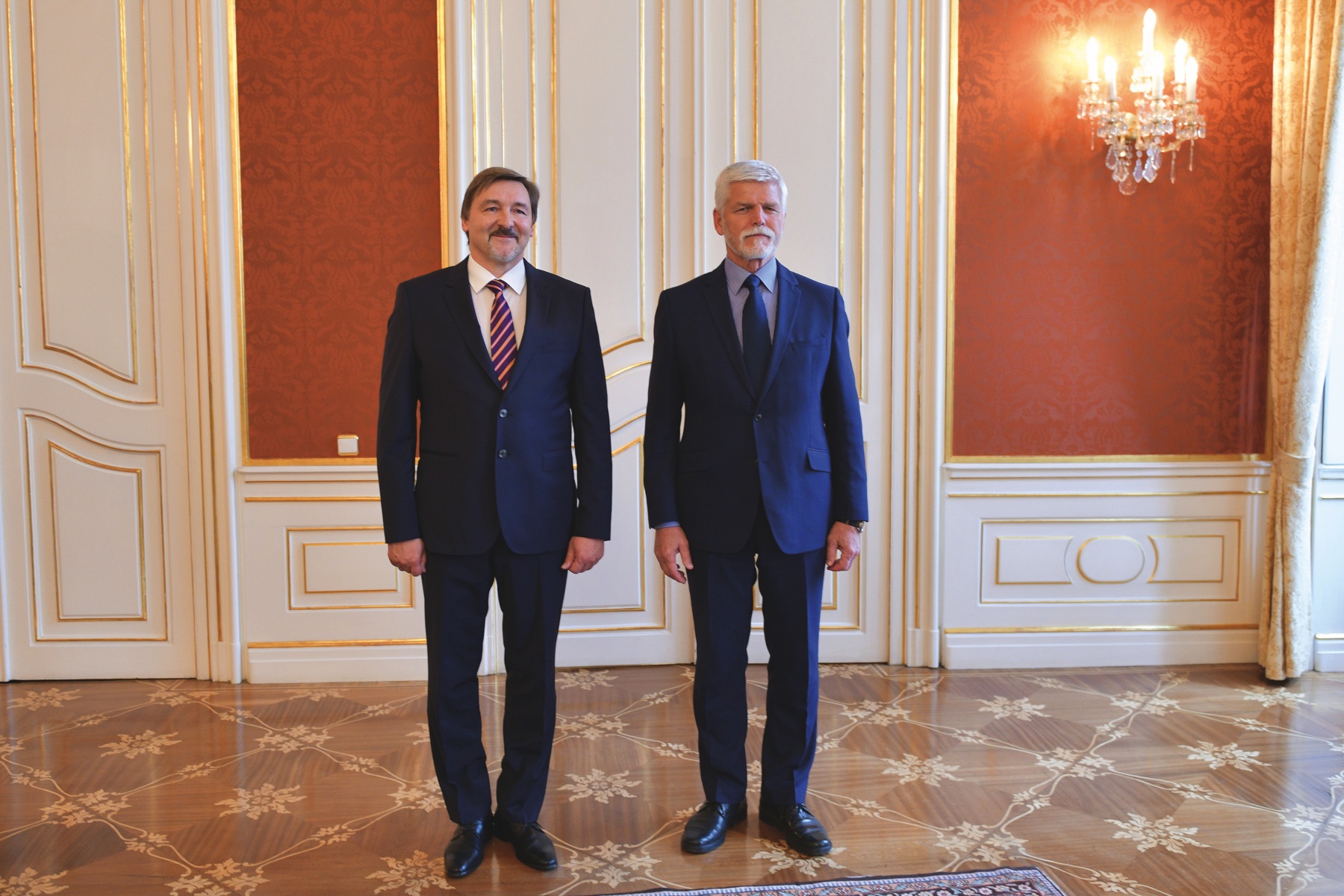
Mr. Petr Pavel, President of the Czech Republic with H.E. Mr. Vilmars Heninš, Ambassador of Latvia to the Czech Republic
When you manage to get some free time outside of work, what do you enjoy doing?
As I mentioned, I’m a historian by education, so I really enjoy exploring local history and culture. On weekends, I try to visit one of the Czech castles or manors, which offer a wide variety of architectural styles. The Czech Republic is one of the few countries where military conflicts have spared its rich heritage of castles and manors, including their interiors. Each time, I discover that there are still hidden gems, and I encourage my colleagues to enjoy this opportunity while working in the Czech Republic. Czech nature also offers great opportunities for long walks, which are a wonderful way to stay fit.
Latvia has potential as an interesting holiday destination for Czech people. How do you promote your country?
Tourism is one of the most important elements in international relations – it promotes economic cooperation and strengthens people-to-people contacts. Being here, I’ve seen that this sector has huge potential for bilateral cooperation, so it’s one of my priorities. This year, we’ve already organized a major tourism seminar in Prague, and arranged a visit to Latvia for Czech tourism professionals and media representatives, which received great feedback.
Prague and the Czech Republic have always been popular destinations for Latvians, while Latvia still seems like an undiscovered land for many Czechs. First and foremost, we can offer the sea – with nearly 500 km of sandy beaches. In recent years, improved road infrastructure has significantly shortened the distance between the Czech Republic and Latvia, and therefore there is no longer much difference between traveling to the Adriatic or the Baltic Sea. Our national airline, airBaltic, also provides regular direct flights between Riga and Prague. In addition to beaches, we offer diverse outdoor activities, which Czechs enjoy, as well as many interesting and unique tourist attractions. One of these unique attractions is the UNESCO World Heritage Site of the Latvian capital Riga with its Historic Centre, including the old town and Art Nouveau quarters. Another UNESCO gem is the town of Kuldīga, known for its authentic 18th and 19th century architecture. There, you can also find the widest waterfall in Europe – the Venta Rapid, which is nearly 250 meters wide. I also must mention Rundāle Palace – Latvia’s mini-Versailles with its French-style garden, a fully restored Baroque and Rococo masterpiece by the famous Italian architect Francesco Rastrelli. Last but not least, if you want to experience something truly Latvian, you must attend the Midsummer celebration (Līgo Eve and Jāņi Night), when Latvians wear national costumes, dance and jump over bonfires, wear flower crowns, eat caraway-seed cheese and drink beer, sing folk songs, and decorate everything with herbs and branches.
In my opinion, Latvia is a wonderful holiday destination – ideal for vacations or short breaks. We offer high-quality service, we’re not overcrowded with tourists, and our summers are still very enjoyable temperature-wise. Welcome to Latvia!
What is the current state of Czech-Latvian relations?
I would describe the bilateral relations between Latvia and the Czech Republic as excellent. Latvia and the Czech Republic have consistently been like-minded countries in assessing current international challenges, firmly standing for the defence of democratic values and the observance of international law. We have worked together to strengthen global and regional security and have provided strong and selfless support to Ukraine in its fight against Russian aggression.
The bilateral relationship between our countries has been very dynamic – marked by regular political dialogue, exchanges of visits at various levels, active economic cooperation, development of cultural ties, and strong people-to-people contacts. Security and defence remain one of the cornerstones of our cooperation. This includes strengthening NATO’s Eastern flank, the participation of the Czech contingent in NATO’s enhanced forward presence and air policing missions, as well as support for Ukraine through joint initiatives such as the Latvia-led drone coalition and the Czech artillery ammunition initiative for Ukraine. A positive indicator is the steadily growing trade turnover, which shows that the potential for cooperation is far from exhausted. There are also frequent exchanges of cultural performances, as well as cooperation between municipalities. A significant element in strengthening relations in the fields of culture and education is the opportunity to study Latvian at Charles University in Prague, where teaching began back in 1923, as well as at Masaryk University in Brno. Similarly, there are opportunities to study Czech at the University of Latvia.
This interview is conducted on the occasion of your national day. What are your wishes for your country and for the Czech Republic?
Latvia and the Czech Republic share many similar historical experiences. Both countries declared their independence in 1918, and endured multiple occupations before regaining their statehood. Our nations have always expressed a deep longing for freedom and independence – both Latvians and Czechs have always been fighters for their homeland. Therefore, I would like to wish for both Latvia and the Czech Republic to continue building on democracy, develop their economies and ensure the well-being of their people, remain strong members of the European Union and NATO, and promote security and stability around the world. In Latvia, we have a saying: “May Latvia live as long as the sun!” – and that is exactly what I wish for the Czech Republic as well.