

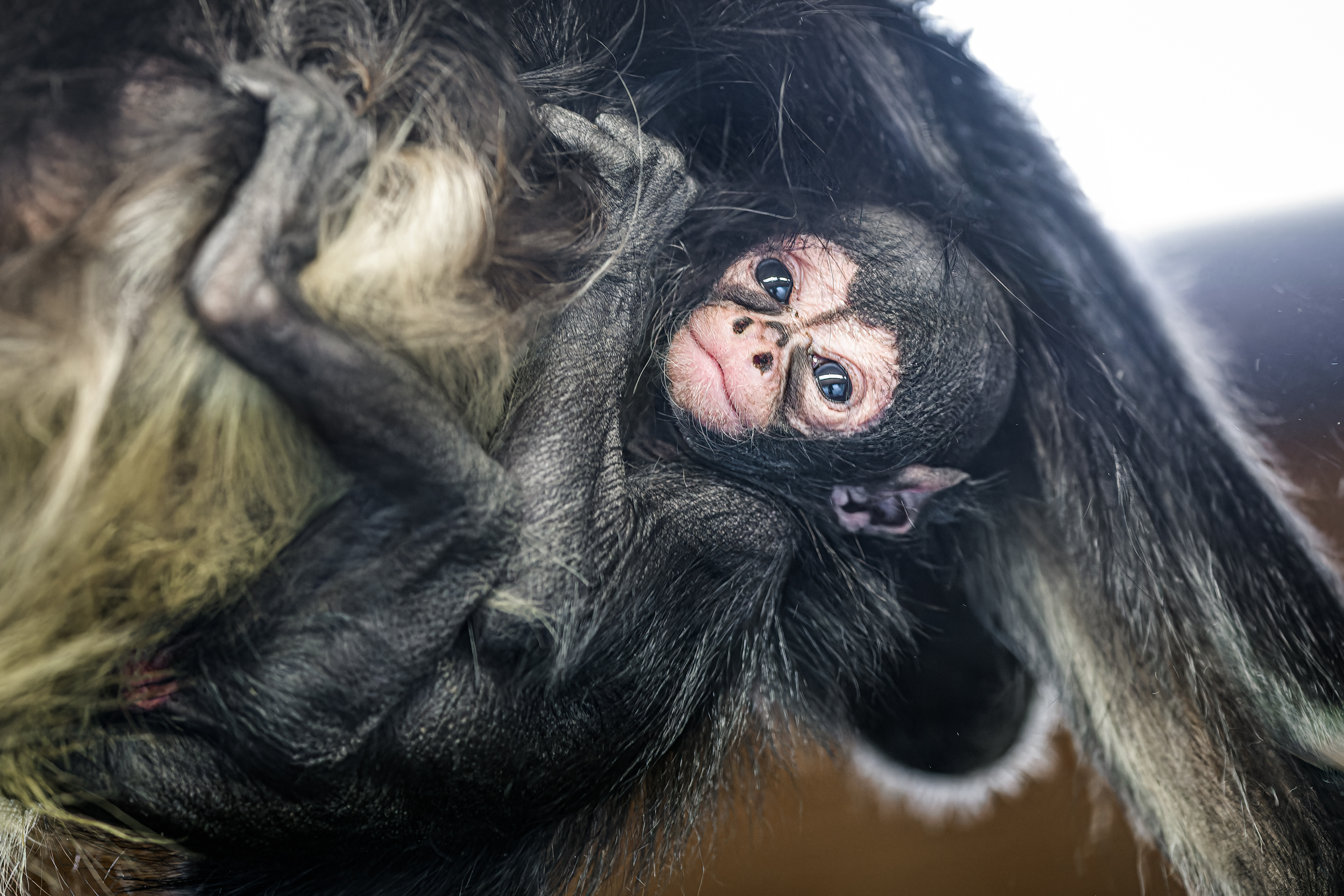
A chapan cub was born in the Prague Zoo on Monday, April 13. The picture shows it at exactly one week of age. Photo Petr Hamerník, Prague Zoo
The Prague Zoo welcomed a baby Central American Mexican capuchin. The little primate is doing well, sucking its mother’s milk and not letting go of its mother’s belly. It can be seen on the Monkey Islands in the zoo’s lower section. The Mexican subspecies is threatened with extinction, making these capuchins among the rarest mammals kept at the Prague Zoo. They can only be found in three institutions in Europe. In 21 years of breeding here, eight breedings have been successful. This year’s addition is the first promising cub since 2022.
“The little chapan looks viable, is receptive, and shows interest in its surroundings. It also observes the behavior of its mother, on whose breast milk it is now 100% dependent. The female is very protective and does not let anyone near the cub yet,” says Jan Mengr, curator of primates at Prague Zoo, adding that the sex of the cub is still unknown.
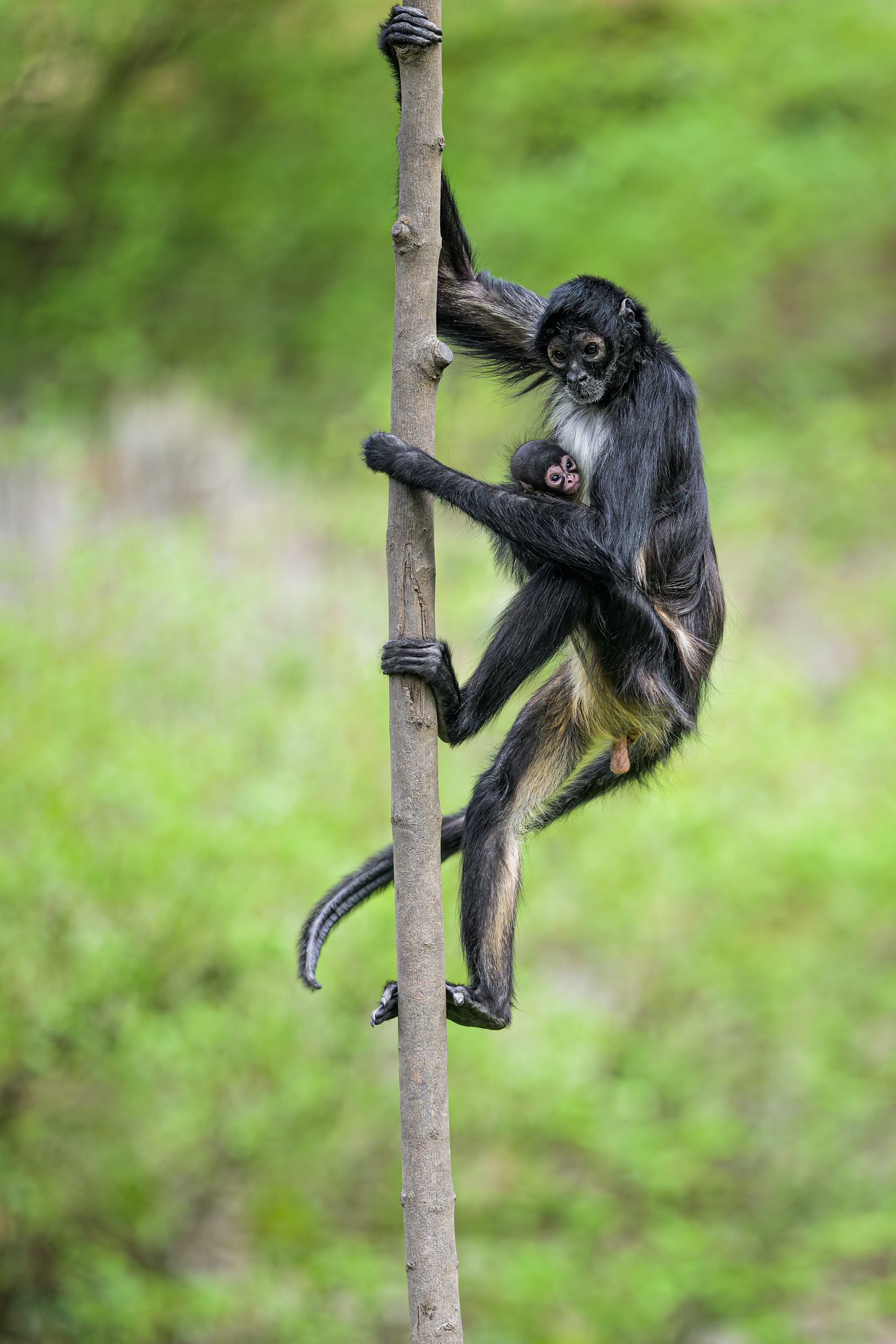
When a female with a cub on her belly skillfully climbs high or jumps between branches, many a visitor to Prague Zoo is left breathless. However, the cub’s grasping reflex seems to be fine and therefore there is no danger to it. Photo Petr Hamerník, Prague Zoo
Chapans are referred to in Spanish or English as “spider monkeys”, thanks to their agility and prehensile tail, which can resemble a supernumerary limb from afar. They are found in more than ten species in forests from southern Mexico to Brazil. The Central American Mexican chapan is found in Mexico, Belize, El Salvador, Guatemala, and Honduras. They are most threatened by human-caused habitat loss. Current estimates suggest that their population could be reduced by up to half by 2060.
The gradual disappearance of the chapanas from the wild is also due to their hunting for the illegal trade. In southern Mexico, for example, roadside vendors can be found selling caged chapanas for sale as “pets.” The animals’ slow reproduction rate also contributes to the problem. Females give birth to only one cub every two to four years.
“The previous Prague cubs, an almost six-year-old female and a three-year-old male, are still in the group. The male, in particular, is showing himself to be an inquisitive adolescent and often plays with his older sister. In addition to the parental pair – the dominant male, who has a dark face, and the experienced mother, who has a light face with dark eyes, there is another unrelated, blue-eyed female in the group,” advises primate keeper Nikola Kučerová, on how to find your way around the six-member troop of capuchins at Prague Zoo. Capuchins are diurnal monkeys and are active throughout the entire opening hours of the Prague Zoo. In April and May, it welcomes visitors from 9 a.m. to 6 p.m. These primates spend most of their time in an outdoor enclosure on one of the Monkey Islands, specifically among gharials and tapirs. They are given leafy greens and primate pellets three times a day. The food ration is then diversified with dried fruit and various types of nuts – hazelnuts, peanuts, walnuts, and pecans.
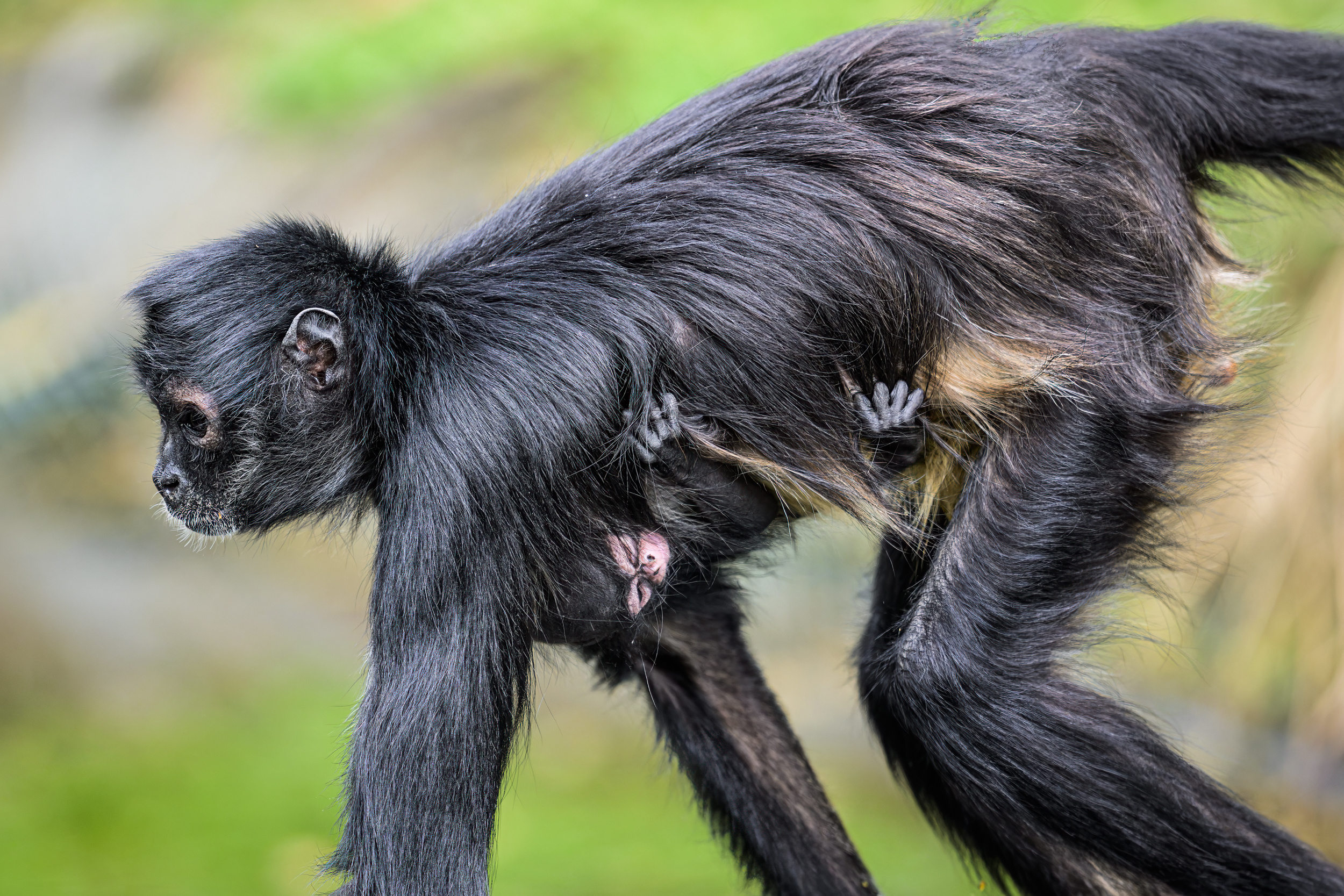
Focusing on the dominant female’s belly – that’s the key to spotting a baby Mexican capuchin. Photo Petr Hamerník, Prague Zoo
Prague Zoo is the most successful European breeder of Central American Mexican chapans. Their breeding here began in 2005, and the first cub was born in 2007. Since then, the group of chapans has been growing regularly every three to four years.
Video: Close-up footage from Prague Zoo keeper Nikola Kučerová’s mobile phone