

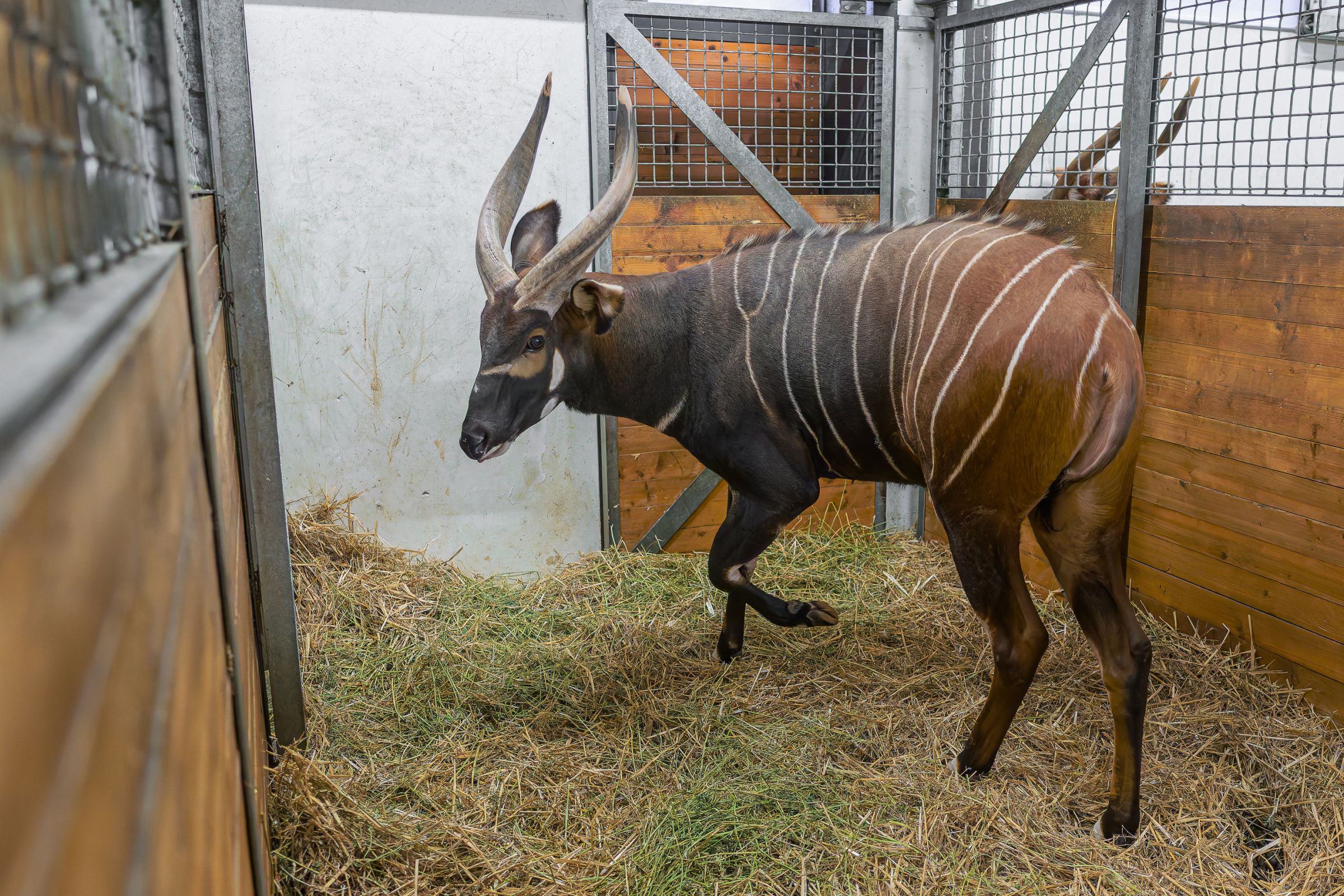
Prague male mountain bongo Mau before leaving for Safari Park Dvůr Králové. Photo Petr Hamerník, Prague Zoo
Four male mountain bongos, one of the most endangered large mammals, are preparing to be transported from Europe to Kenya. It is in the Aberdare Mountains that the last few dozen of these antelopes survive in the wild. The aim is to strengthen the remaining population with genetically valuable individuals. The transport, which will take place at the turn of April and May, is being organized by Safari Park Dvůr Králové on behalf of the European Association of Zoos and Aquariums (EAZA). Five candidates for reintroduction have already arrived at the East Bohemian zoo, where pre-departure quarantine is underway. They come from Prague Zoo, the National Zoo Bojnice, Frankfurt Zoo, Tierpark Berlin, and Givskud Zoo.
The transport of critically endangered mountain bongos to Kenya is being prepared by the project partners in an extremely turbulent geopolitical time, while maintaining the approach of maximum caution. The project was officially sponsored by the President of the Czech Republic, Petr Pavel.
“For several years, Prague Zoo has been supporting not only the restoration of the natural environment, but also research and monitoring of bongos in cooperation with the Mount Kenya Wildlife Conservancy. The current transport of bongos to Kenya is a great example of the true mission of modern zoos and a reminder that conservation efforts know no national or continental borders. Together with our visitors and participants in experience programs with bongos bred in Prague, we can share this powerful story and thus gain further support for the protection of these exceptionally charismatic mammals. In many ways, it is a closing of the imaginary circle in which ex situ conservation, in situ conservation and public education are interconnected,” says Barbora Dobiášová, curator of ungulates at Prague Zoo.
The animals are heading to Kenya as a contribution of the European Breeding Programme (EEP) to expanding the genetic diversity of the population in Africa. On site, they should ensure viable offspring for future return-to-the-wild projects. The knowledge of 98 percent of the pedigrees of the EEP-reared bongs indicates a high level of genetic diversity, i.e. low levels of inbreeding. This EEP is therefore one of the most tightly controlled population-conservation initiatives for antelopes in the world.
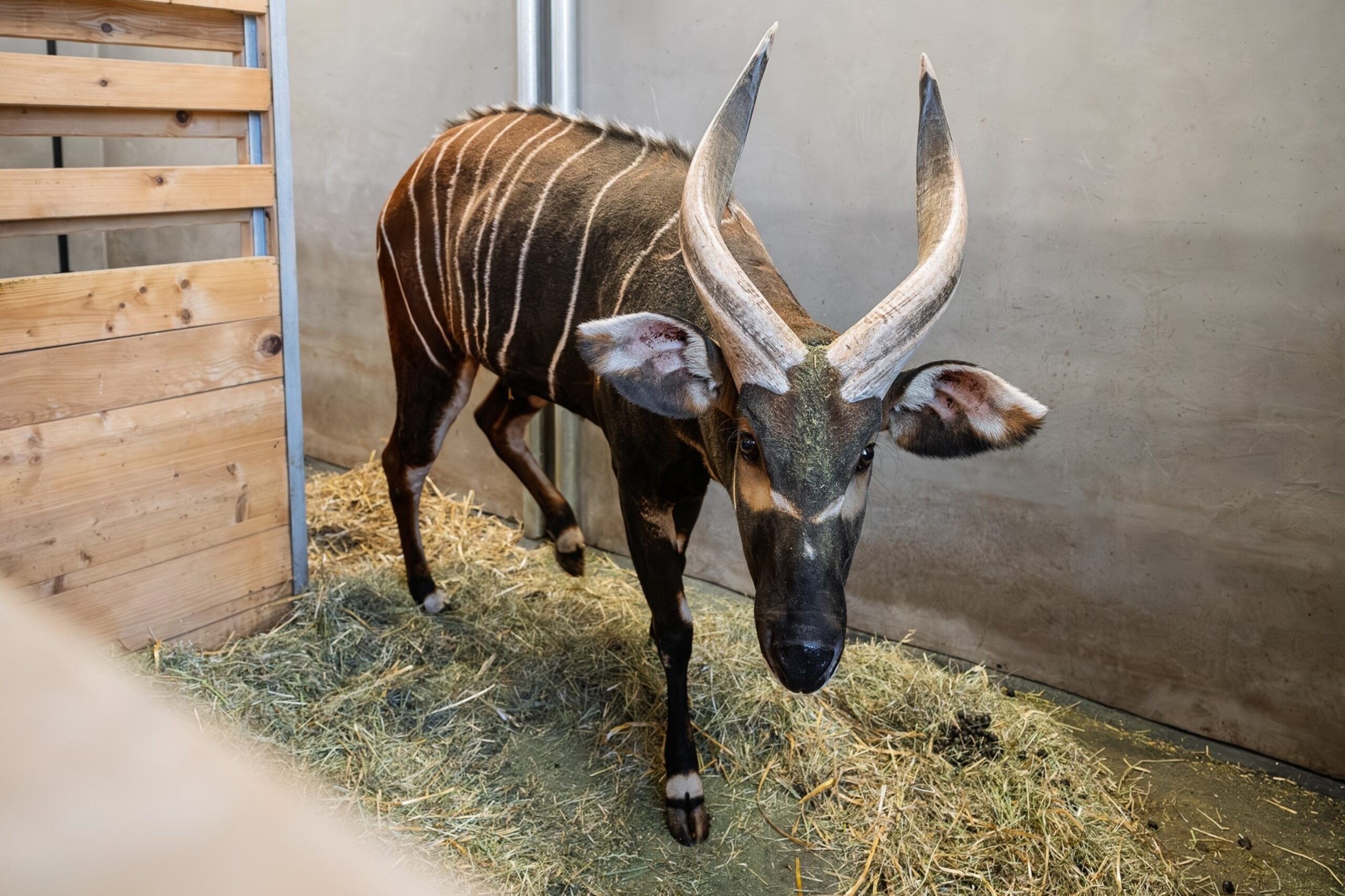
The first moments of the Prague male mountain bongo in Safari Park Dvůr Králové, where he is undergoing pre-departure quarantine. From the East Bohemian Zoo, he will probably head to Kenya at the end of April. Photo Helena Hubáčková, Safari Park Dvůr Králové
The selection of males was carried out by the EEP coordinator based on strict scientific criteria. These included factors such as genetic representation, average relatedness, suitability for age and temperament. All selected individuals are, on the other hand, already sufficiently represented in the European population, which means that their transfer will not threaten the viability of the European population under human care, while at the same time maximizing the conservation benefit in Kenya.
“Safari Park is one of the first parks in Europe to start breeding mountain bongos. The first animals were imported directly from Kenya by Josef Vágner. Since 1974, 110 cubs have been born here, and all the bongos selected by the EEP coordinator after European zoos for transport to Kenya have royal blood. They are symbolically returning home after more than half a century. Safari Park has been developing activities in Kenya for a very long time, and its experience is the reason why it was entrusted with organizing such a significant transport. The fact that we have a special quarantine facility built for similar purposes also plays an important role. By returning the bongos to Kenya, we continue to fulfill our mission,” says Přemysl Rabas, director of Safari Park Dvůr Králové.
Veterinary preparation for transport is extensive and based on the principle of precautionary measures. Each animal undergoes a comprehensive disease screening in accordance with the Kenya Directorate of Veterinary Services import requirements, including a strict quarantine period during which the animals will undergo further health checks before being shipped.
Upon arrival at Nairobi airport, the four males will be formally received by the Kenya Wildlife Service (KWS). Under strict veterinary supervision, they will be transported in a convoy of vehicles to the Mount Kenya Wildlife Conservancy (MKWC). At MKWC, each animal will undergo acclimatization and close monitoring before being gradually integrated into the conservancy’s breeding program.
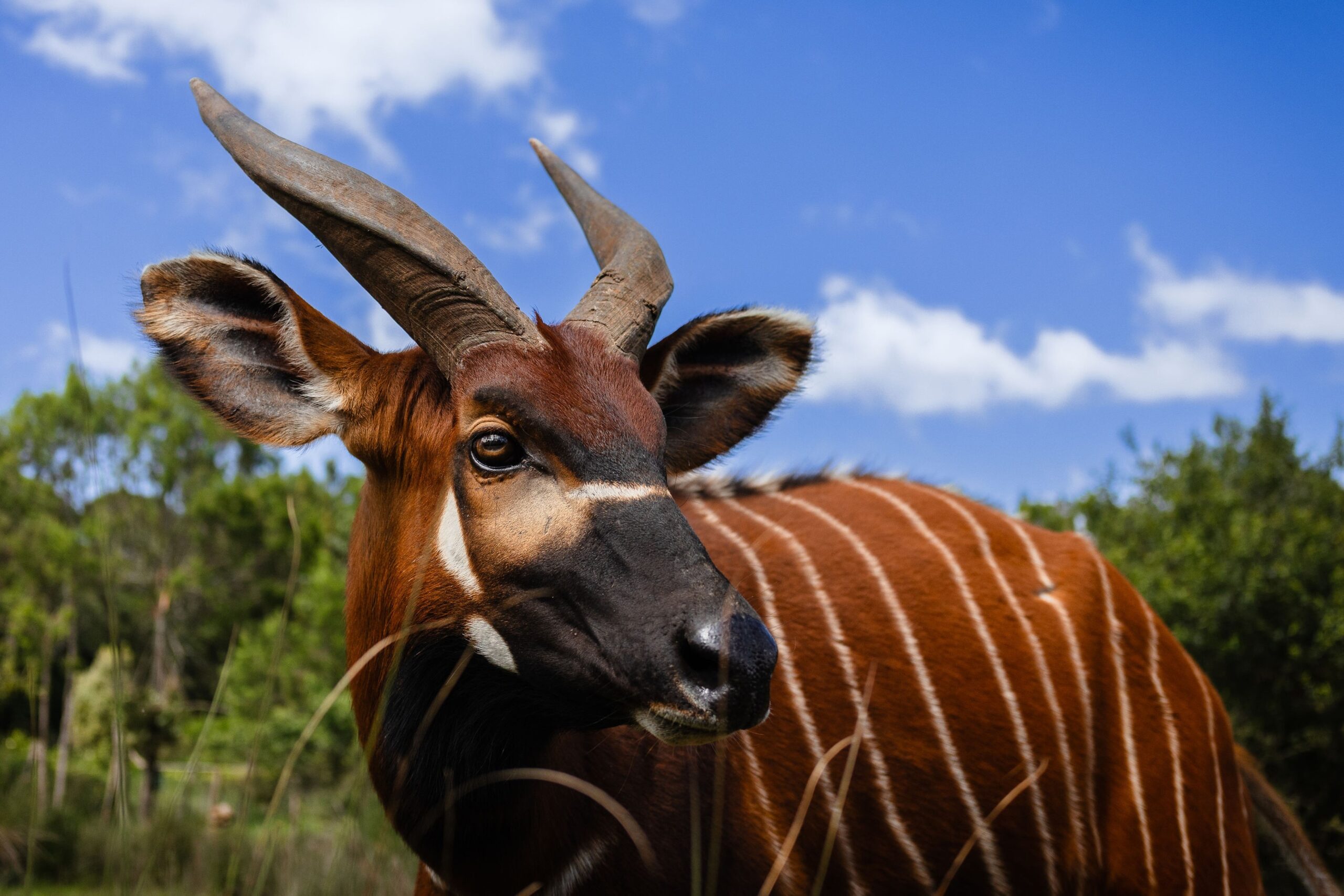
Portrait of one of the most endangered large mammals on the planet, the mountain bongo, taken in Kenya. Photo Anthony Ochieng Onyango
“These males are a key part of our reintroduction program. Having reached the milestone of 100 mountain mau born at the Mount Kenya Wildlife Conservancy, we are now focusing on long-term growth in line with the national target of reaching at least 750 individuals by 2050. Acquiring these genetically valuable males will strengthen our breeding structure, accelerate population growth, and these individuals will play a vital role in building a resilient population capable of supporting the return of the species to the wild and its long-term survival in the Kenyan forests,” says Robert Aruho, Director of the Mount Kenya Wildlife Conservancy.
This reintroduction is a prime example of international cooperation and combines cutting-edge ex situ population management with long-term, scientifically based efforts to save one of the most endangered ungulate species. Prague Zoo and Safari Park Dvůr Králové will provide further information on the next steps, including the transport itself.