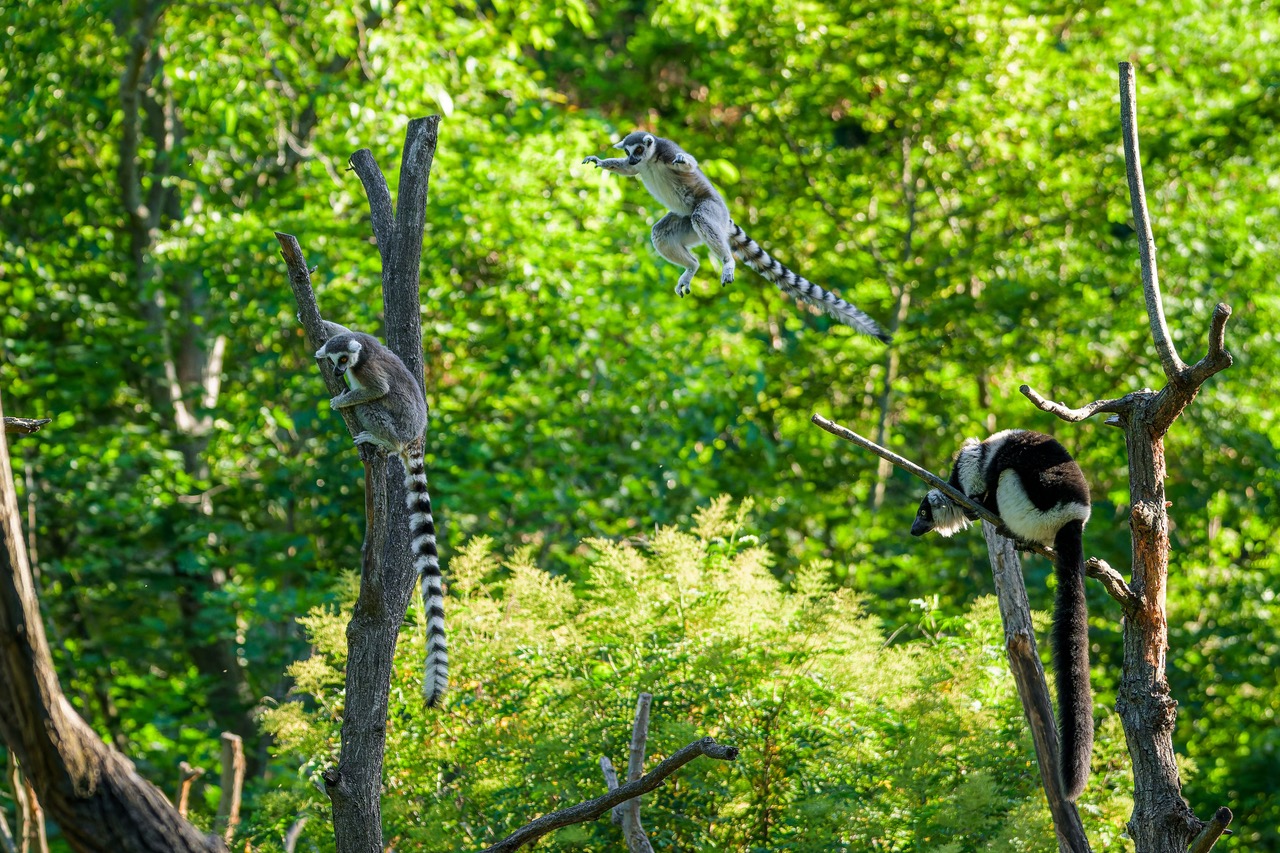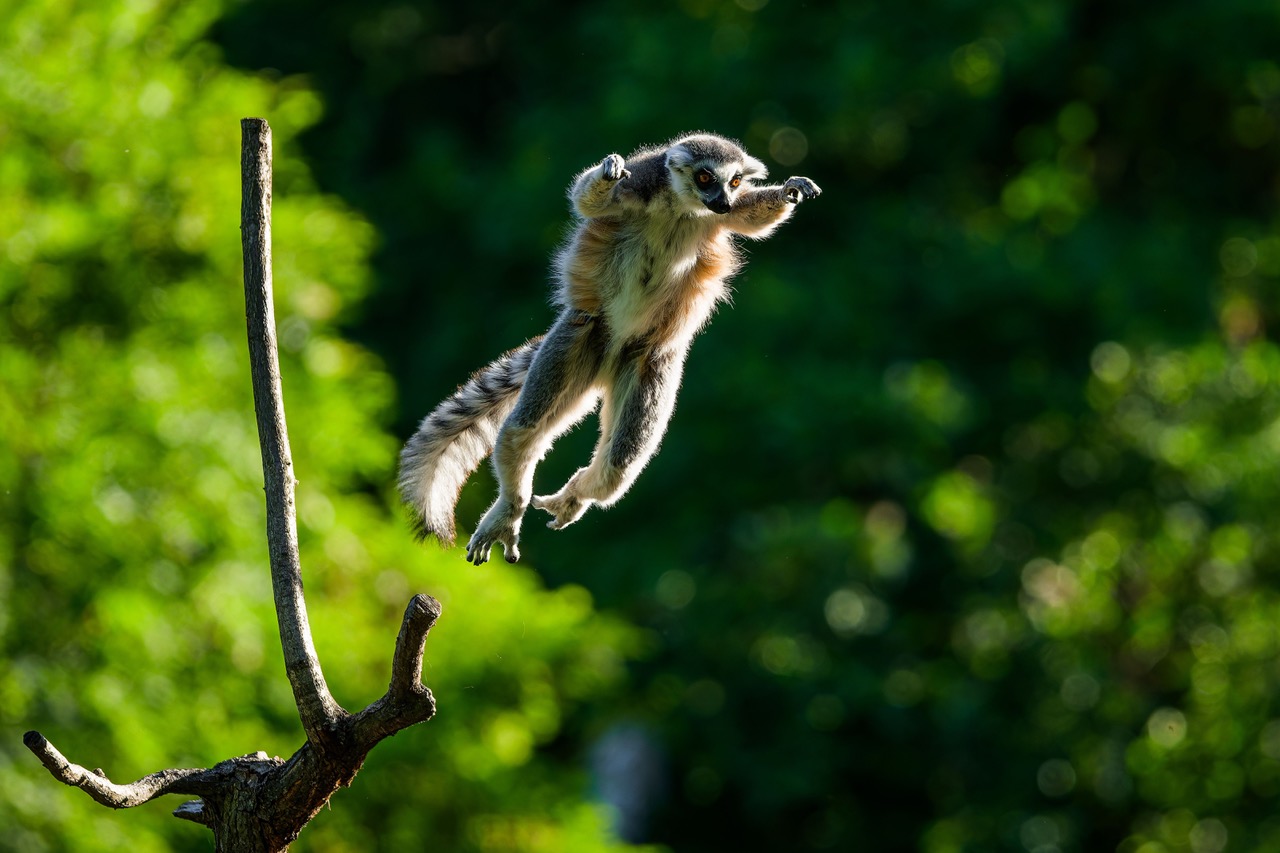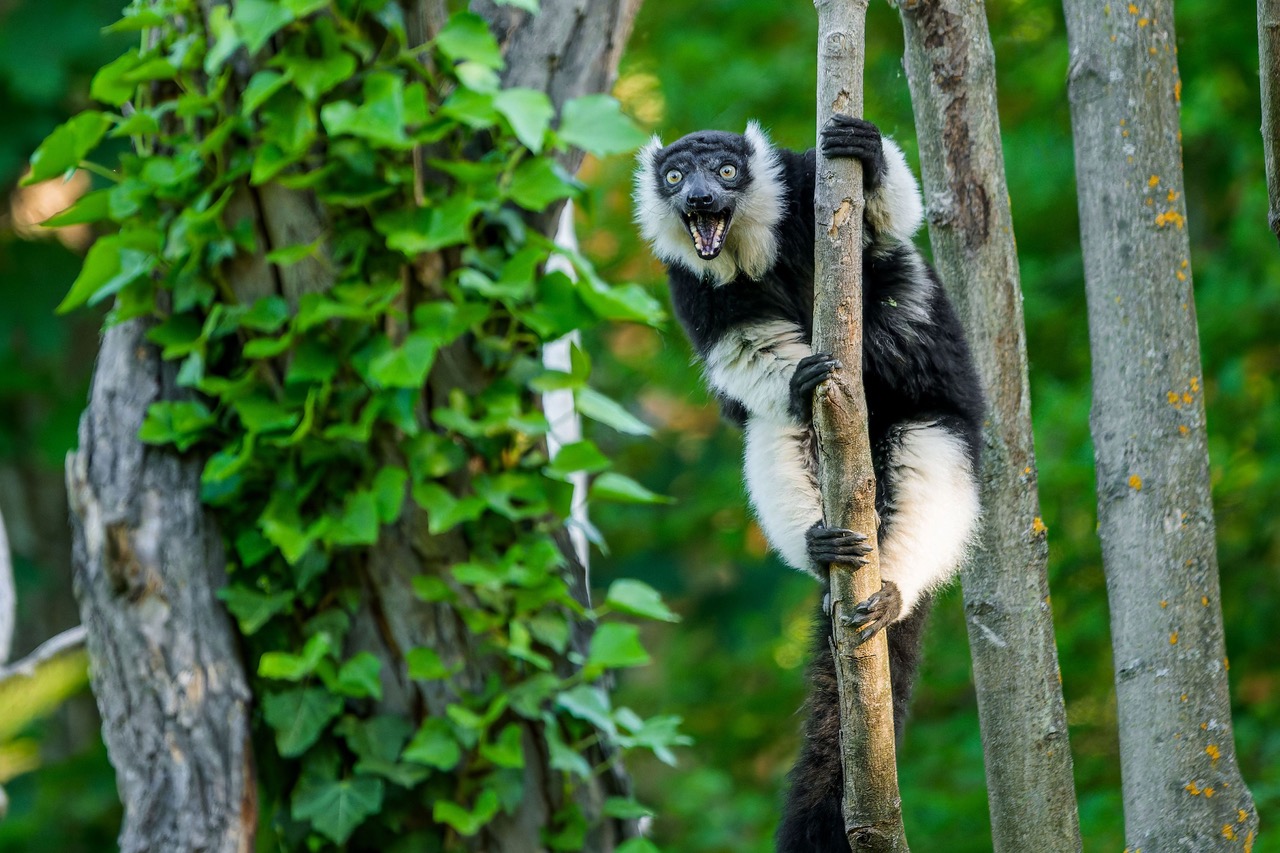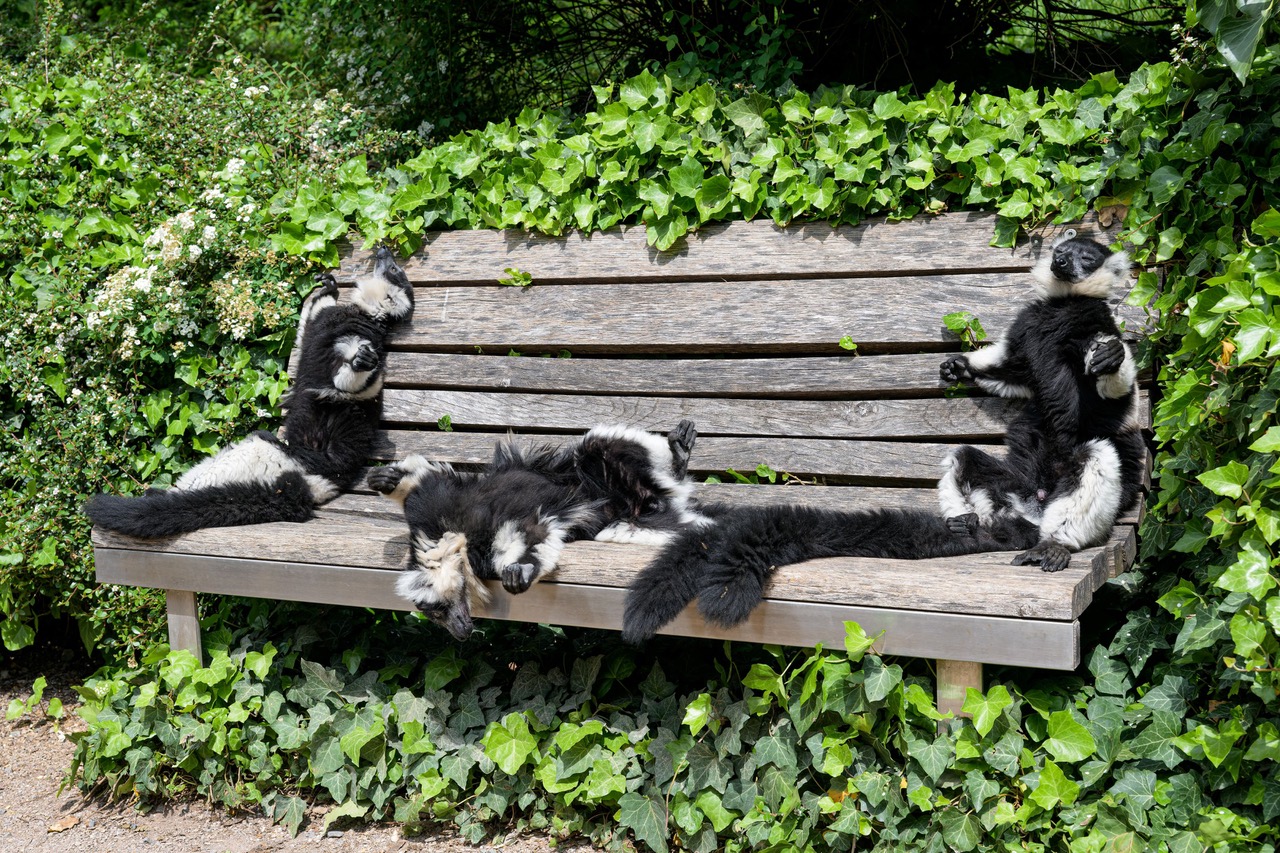

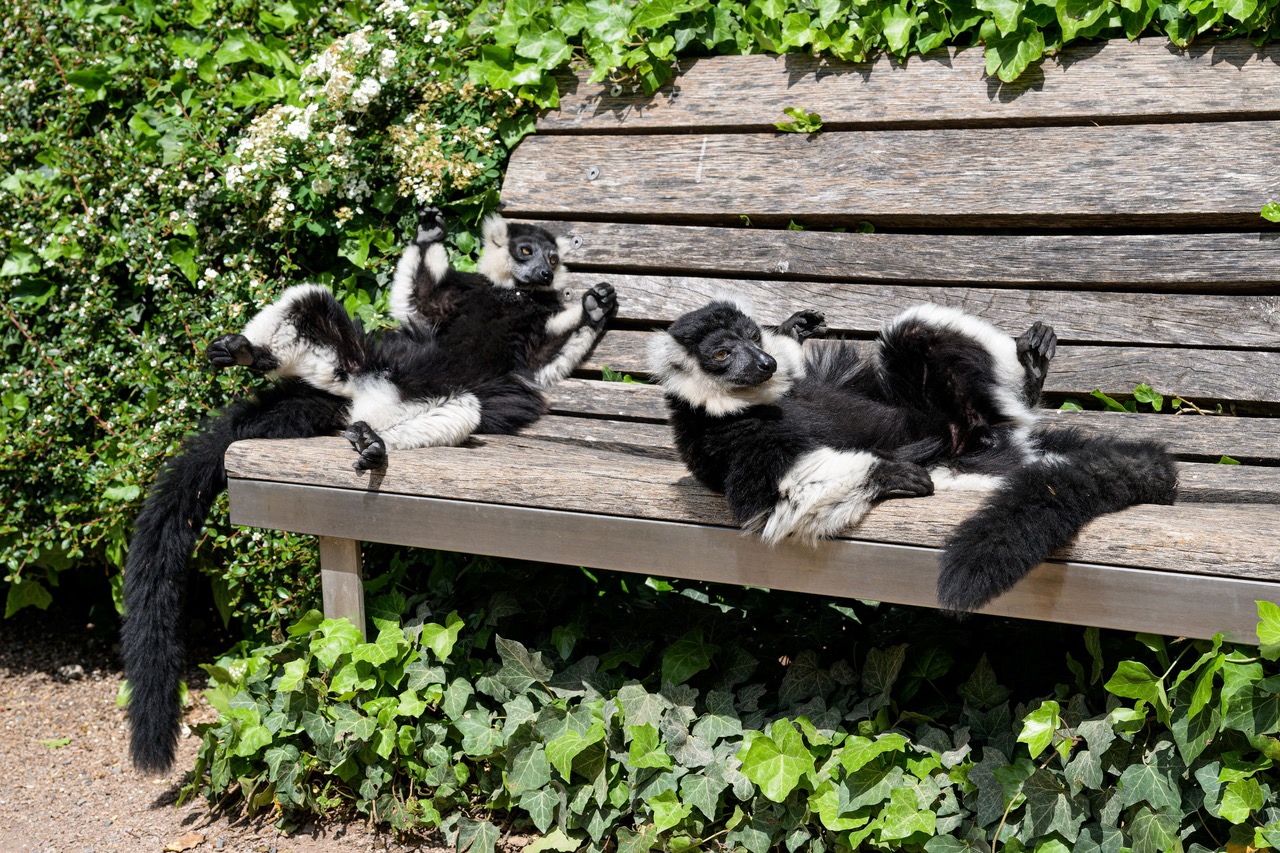
Instead of visitors, the white-banded ring-tailed lemurs have been lounging on the benches lately. While the ring-tailed lemurs most often catch rays while sitting, the white-banded ring-tailed lemurs can assume various positions. Photo Petr Hamerník, Prague Zoo
A new environment, strange smells and sounds – and above all, unfamiliar roommates. The white-banded vari, one of the largest and loudest lemurs, settled in their new home surprisingly quickly.
Previously, visitors to Prague Zoo would see them opposite large turtles, but now they share a walk-through exhibit at the main entrance along with ring-tailed lemurs. Both Madagascan primates move freely around the island among people and can be observed from close quarters.
“We were relieved that we managed to bring the groups together. The experiences of other institutions sometimes suggested the opposite,” says Jan Mengr, curator of primates at Prague Zoo. “Coexistence is going beyond expectations. Each troop has its own ‘home’, where they do not let each other in, and most of the time they ignore each other in the enclosure.”
Getting to know each other on Lemur Island took place gradually. The white-banded ring-tailed lemurs spent the first fortnight in the hinterland, from where the ring-tailed lemurs could observe them. Then they had their first walks on the island, and then both groups took turns on it. Surprisingly, their first meeting together in the enclosure went well.
“The ring-tailed lemurs quickly settled in on the island and especially liked sunbathing on the benches,” describes Prague Zoo primate keeper Nikola Kučerová. “The ring-tailed lemurs, on the other hand, like to climb trees and bushes. Sometimes both species run into each other; light skirmishes only occur when I bring food.”
The Prague Zoo wants to dedicate the free enclosure for the white-banded ring-tailed lemurs to another Madagascar endemic species in time.