

Text: M. Zisso; Photo: Archive
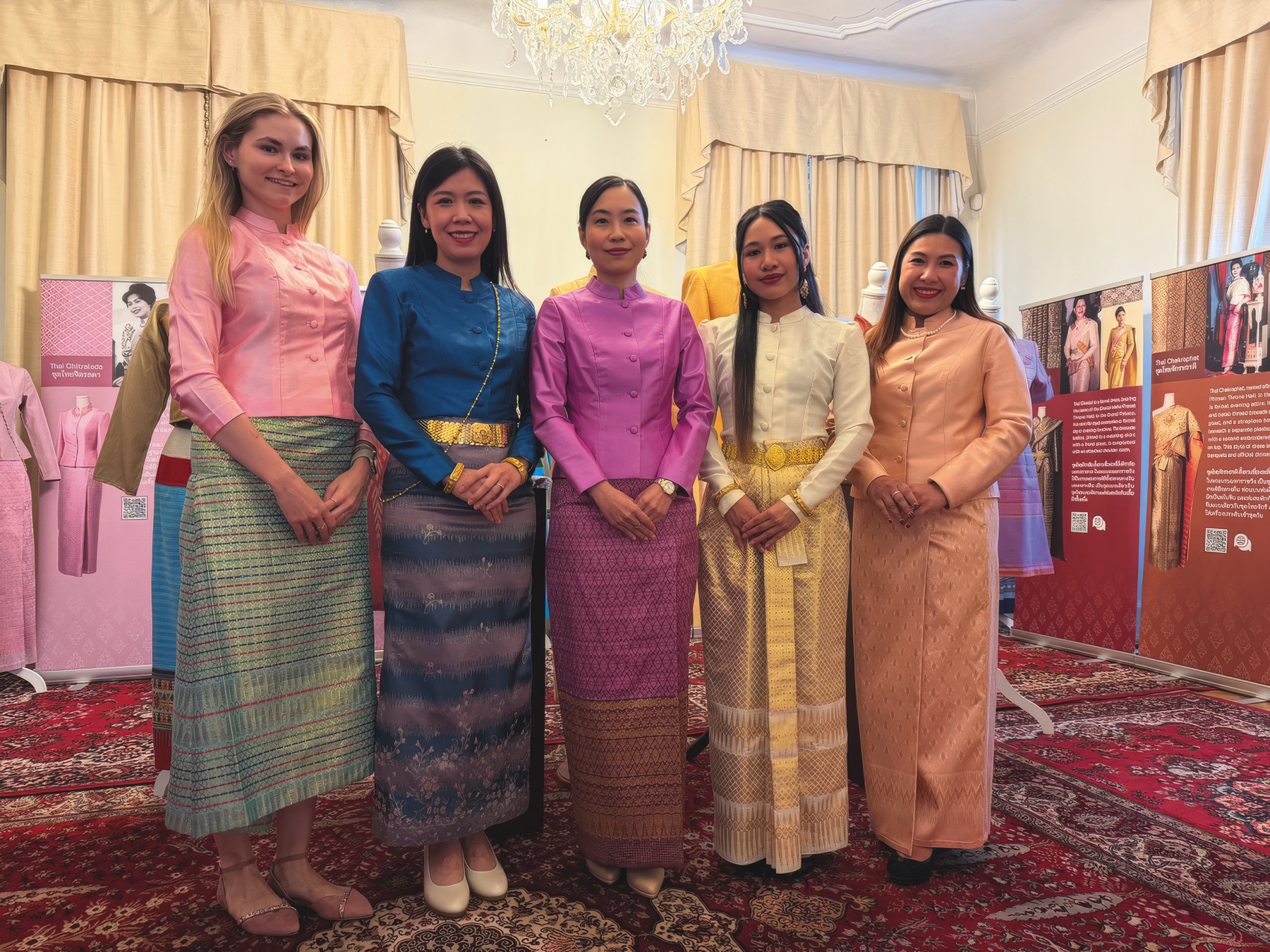
The Royal Thai Embassy in the Czech Republic recently organized a unique exhibition of Thai National Dress – Chud Thai (ชุดไทย).
I would like to express my gratitude to H.E. Mr. Pichit Boonsud, the Ambassador of the Kingdom of Thailand to the Czech Republic, and his team for their help in bringing you this special article.
Chud Thai (ชุดไทย) literally translates to “Thai outfit” or “Thai dress”. It refers to the traditional and official national costume of Thailand, worn by men, women, and children. Developed in the 1960s by H.M. Queen Sirikit The Queen Mother of the Kingdom of Thailand, these classic ensembles are primarily reserved for weddings, religious ceremonies, and royal events. Each style is used for different occasions, and the ensembles can be layered with rich symbolism.
What contributes to the elegant silhouettes is the rich and luminous textiles like Thai silk and metal-thread brocade from which they were crafted. The women’s styles are most famous, often consisting of a wrapped skirt (pha nung) and an elegant shoulder sash (sabai).
Eight official formal styles known as Thai Ruean Ton, Thai Chitralada, Thai Amarin, Thai Boromphiman, Thai Chakri, Thai Dusit, Thai Siwalai and Thai Chakraphat were established by H.M. Queen Sirikit The Queen Mother in the 1960s, blending historical elegance with contemporary silhouettes for modern weddings, temple visits, and royal ceremonies. These dresses have come into regular use by the public.
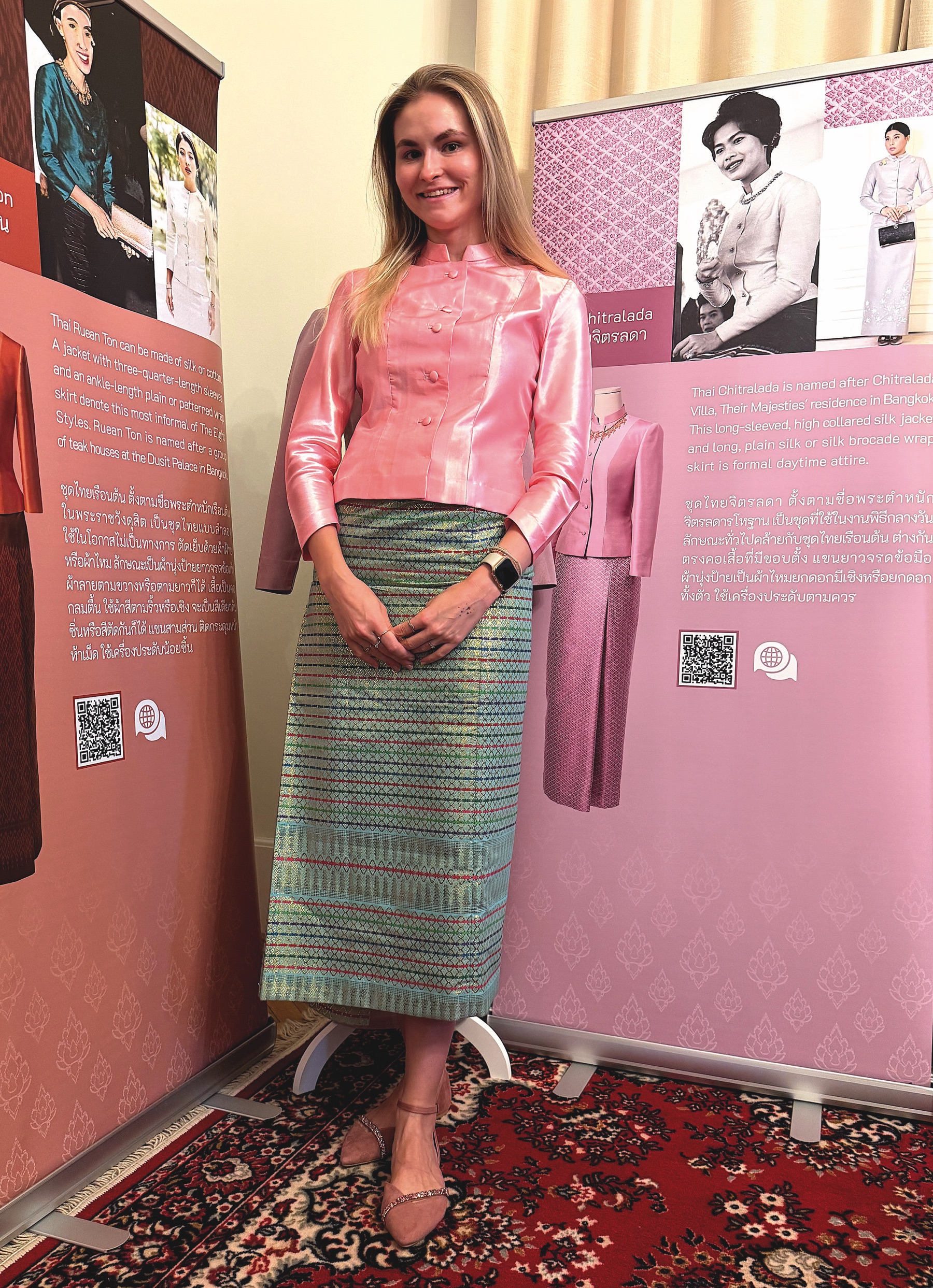
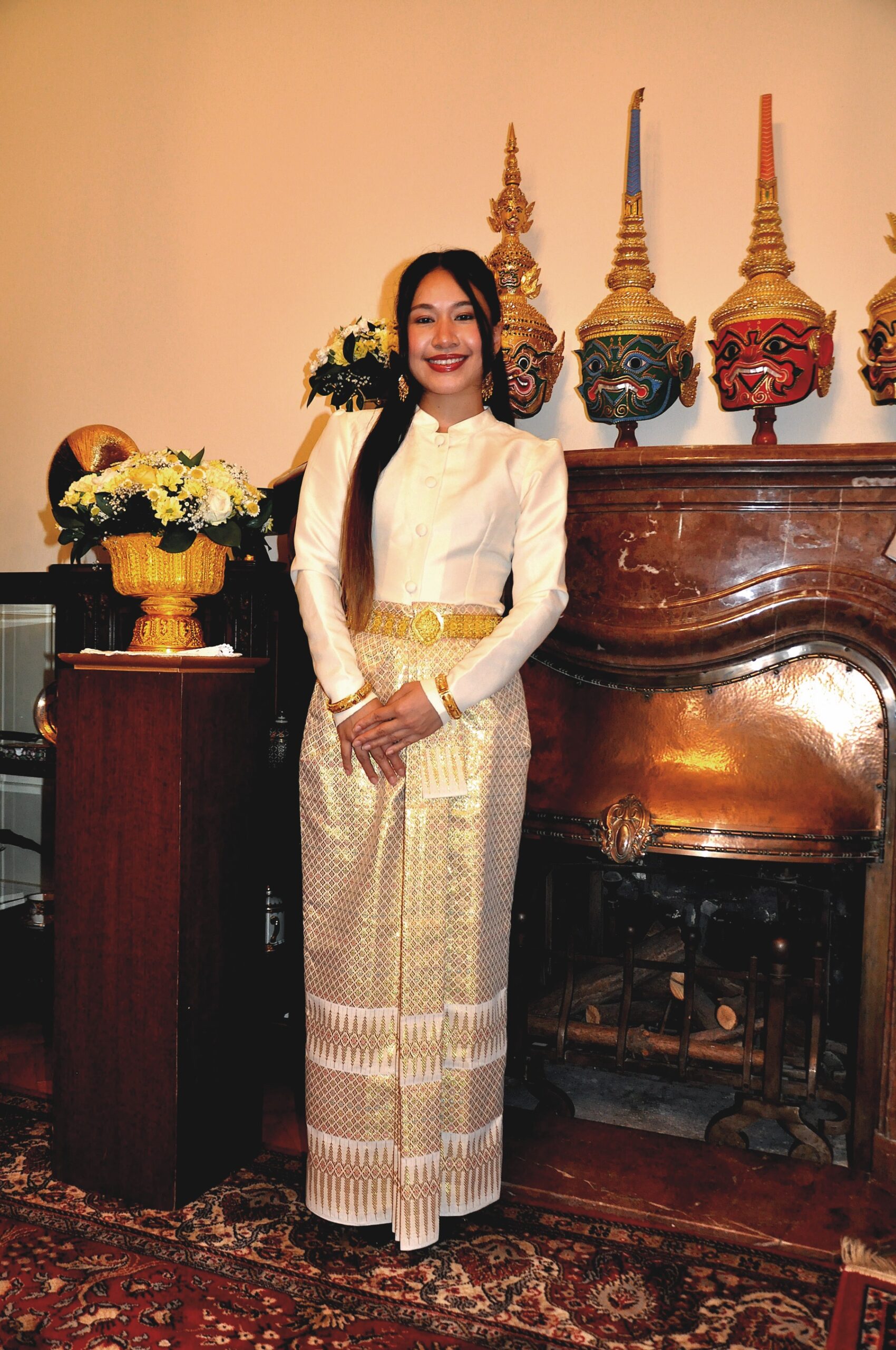
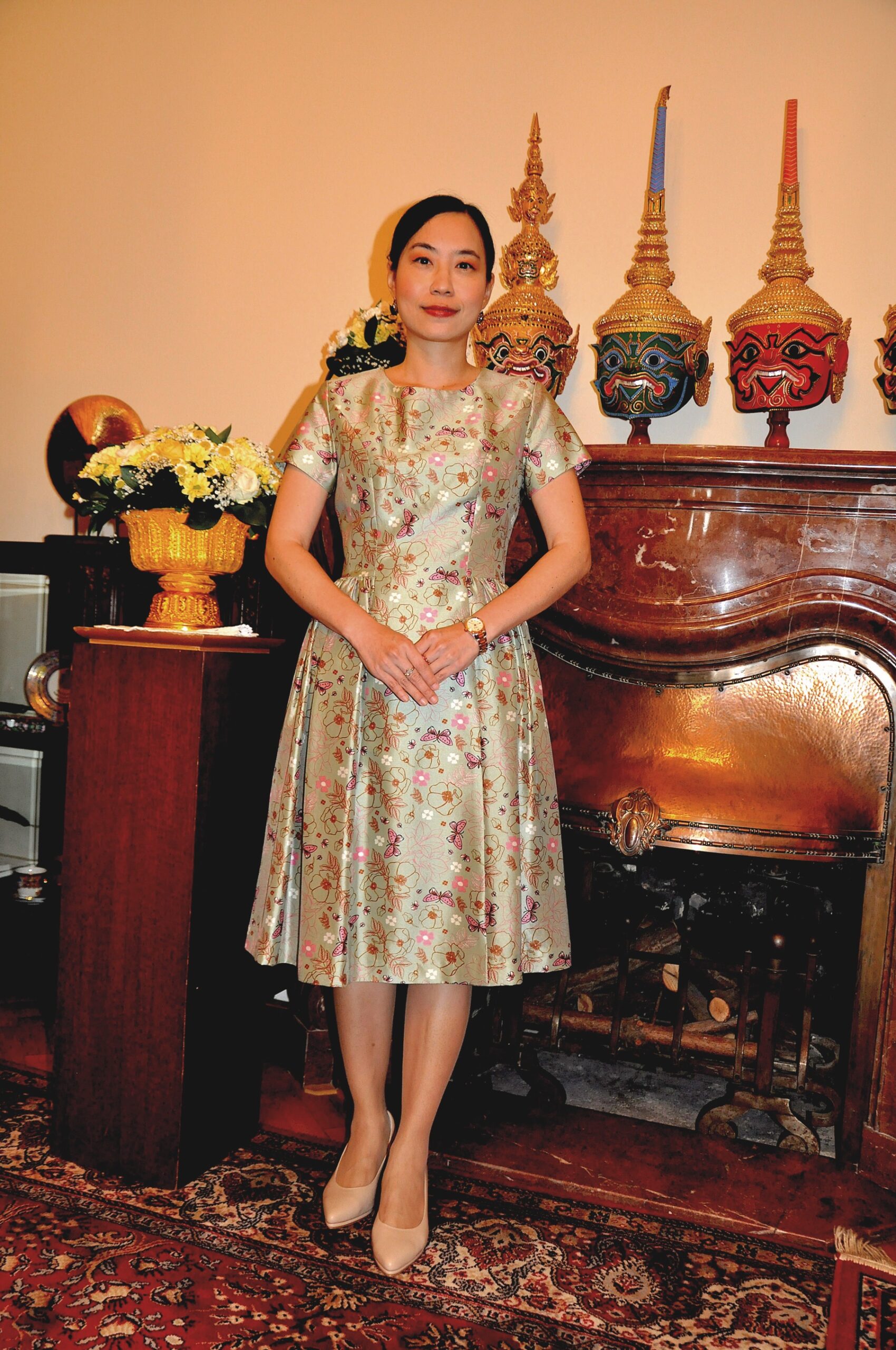
Thai Chitralada
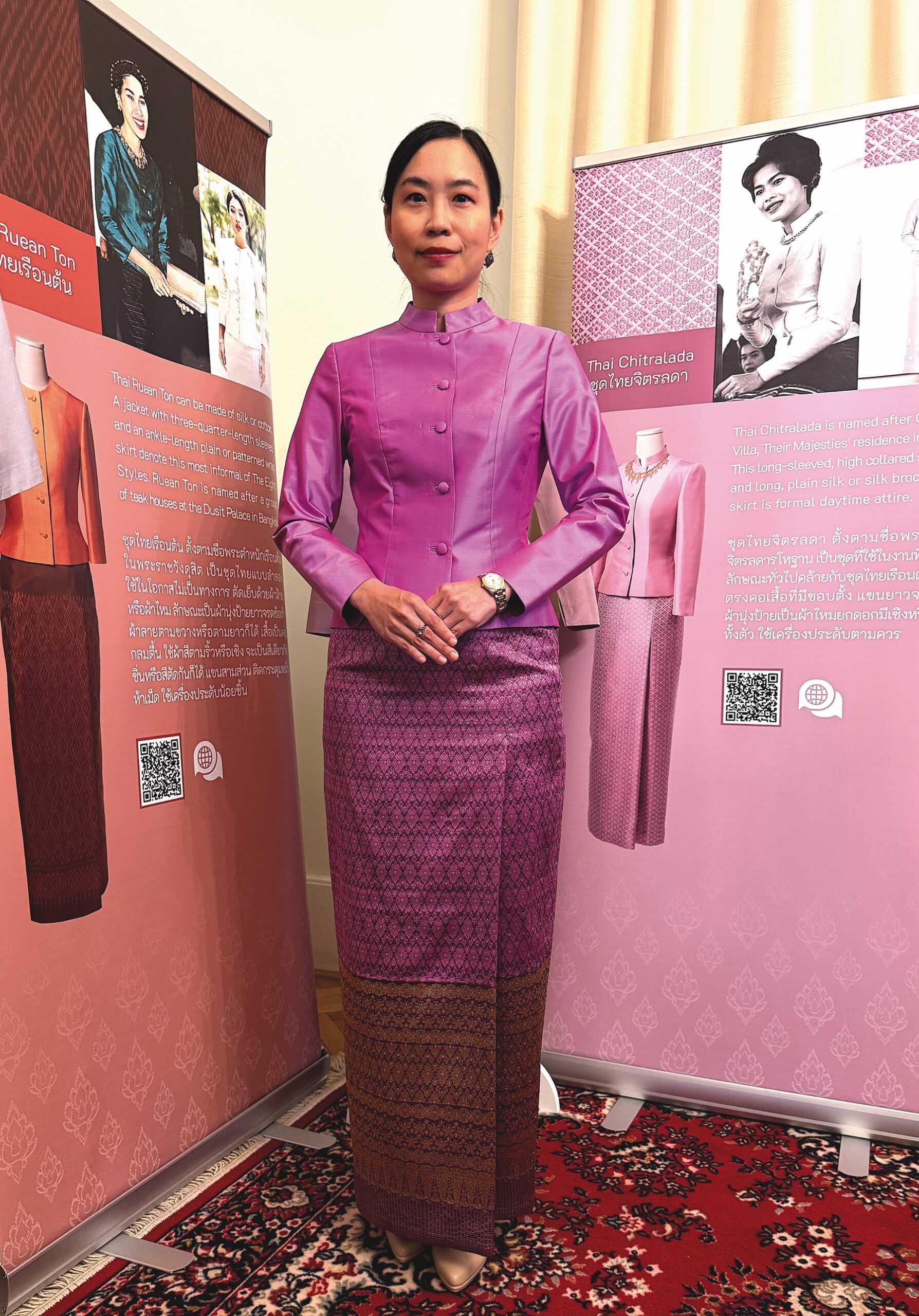
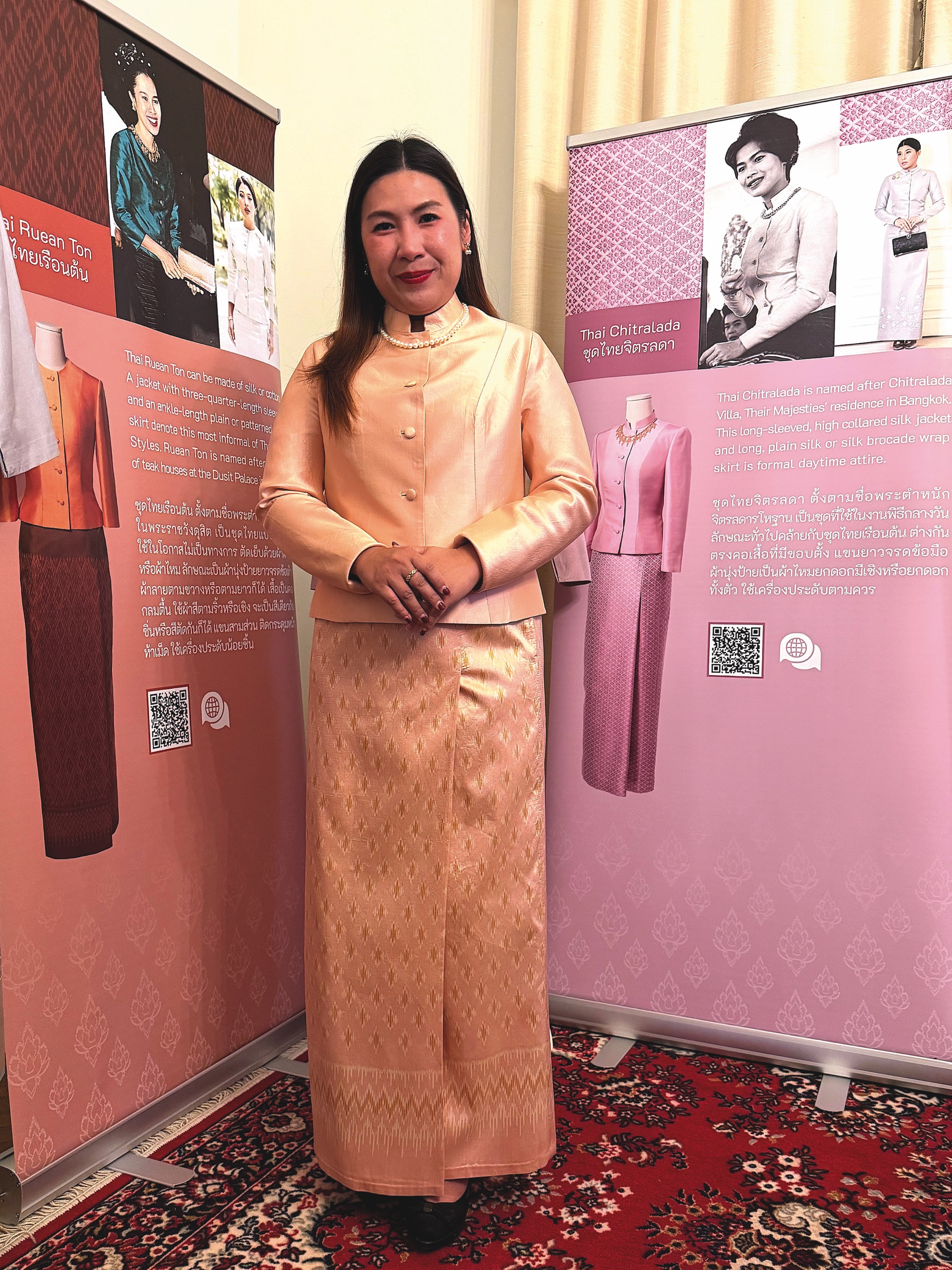
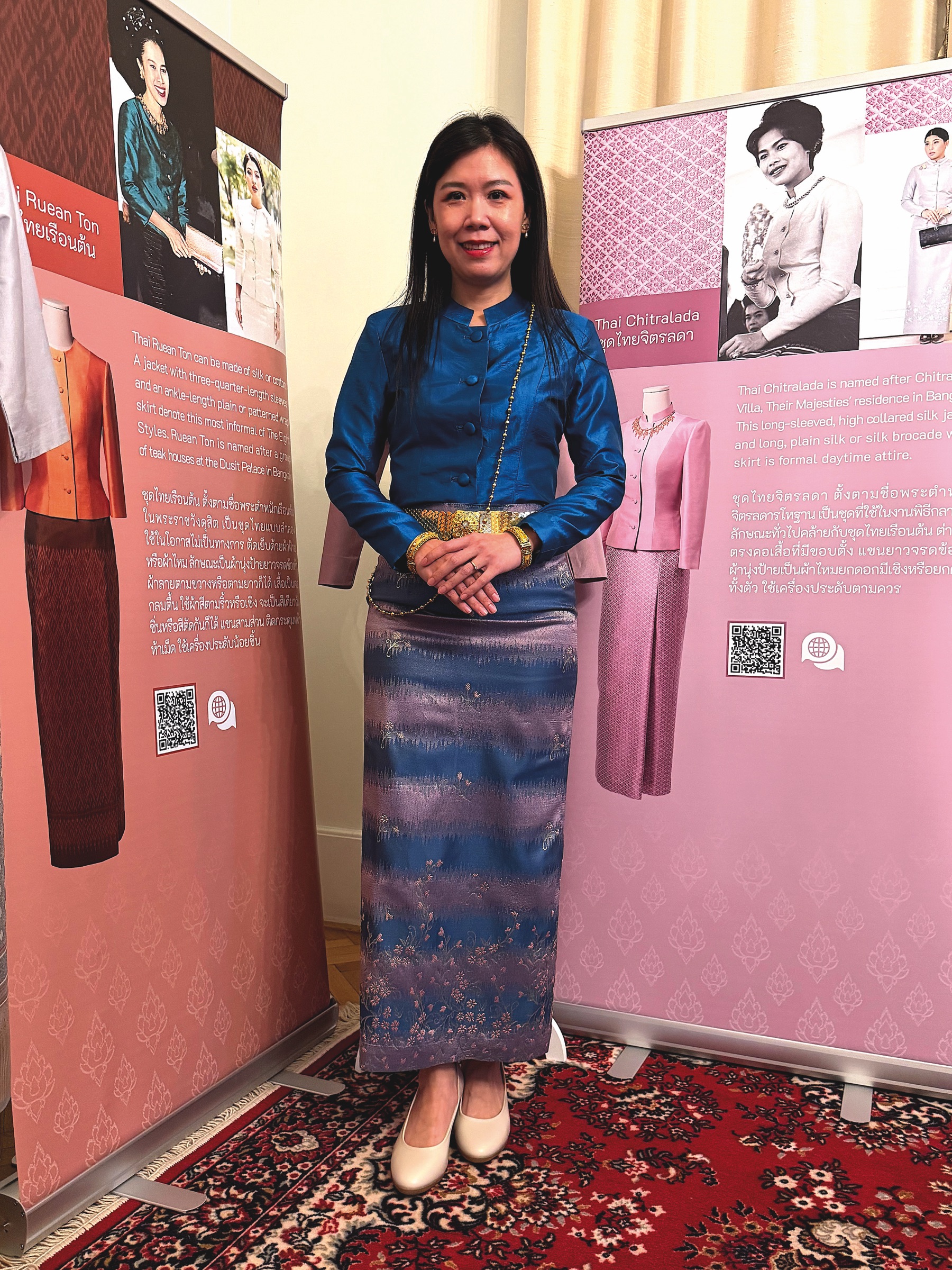
Thai Chitralada is named after Chitralada Villa, Their Majesties’ residence in Bangkok. This long-sleeved, high-collared silk jacket and long, plain silk or silk brocade wrap skirt is formal daytime attire. Two beautiful Thai Chitralada dresses in lotus petal and yellow color that the Embassy put on display were tailor-made from Thai silk, namely Lamphun Brocade Silk or Lamphun Yok Dok Silk textile, and they have carefully and exquisitely been weaved by Thai female inmates at the Chiang Mai Women’s Correctional Institution. This vocational rehabilitation program has been launched under the Royal Project entitled “Kamlangjai” (or “Inspire”) of H.R.H. Princess Bajrakitiyabha Narendiradebyavati Kromluangrajasarinisiribajra Mahavajrarajadhita with the aim of lending a helping hand to those in need of opportunity in the Thai society. The program teaches imprisoned women traditional, highly intricate weaving techniques and provides them with certified job skills and income to support their reintegration into society.
In light of H.R.H. Princess Bajrakitiyabha Narendiradebyavati’s advocacy for women empowerment and penal reform – as clearly illustrated by the above Royal Project – the Royal Thai Government, in 2010, proposed a draft resolution to the United Nations General Assembly to establish guidelines to address the specific needs of women in the criminal justice system. This draft resolution entitled “the UN Rules for the Treatment of Women Prisoners and Non-custodial Measures for Women Offenders” was adopted on 21 December 2010 and known globally as “the Bangkok Rules”.
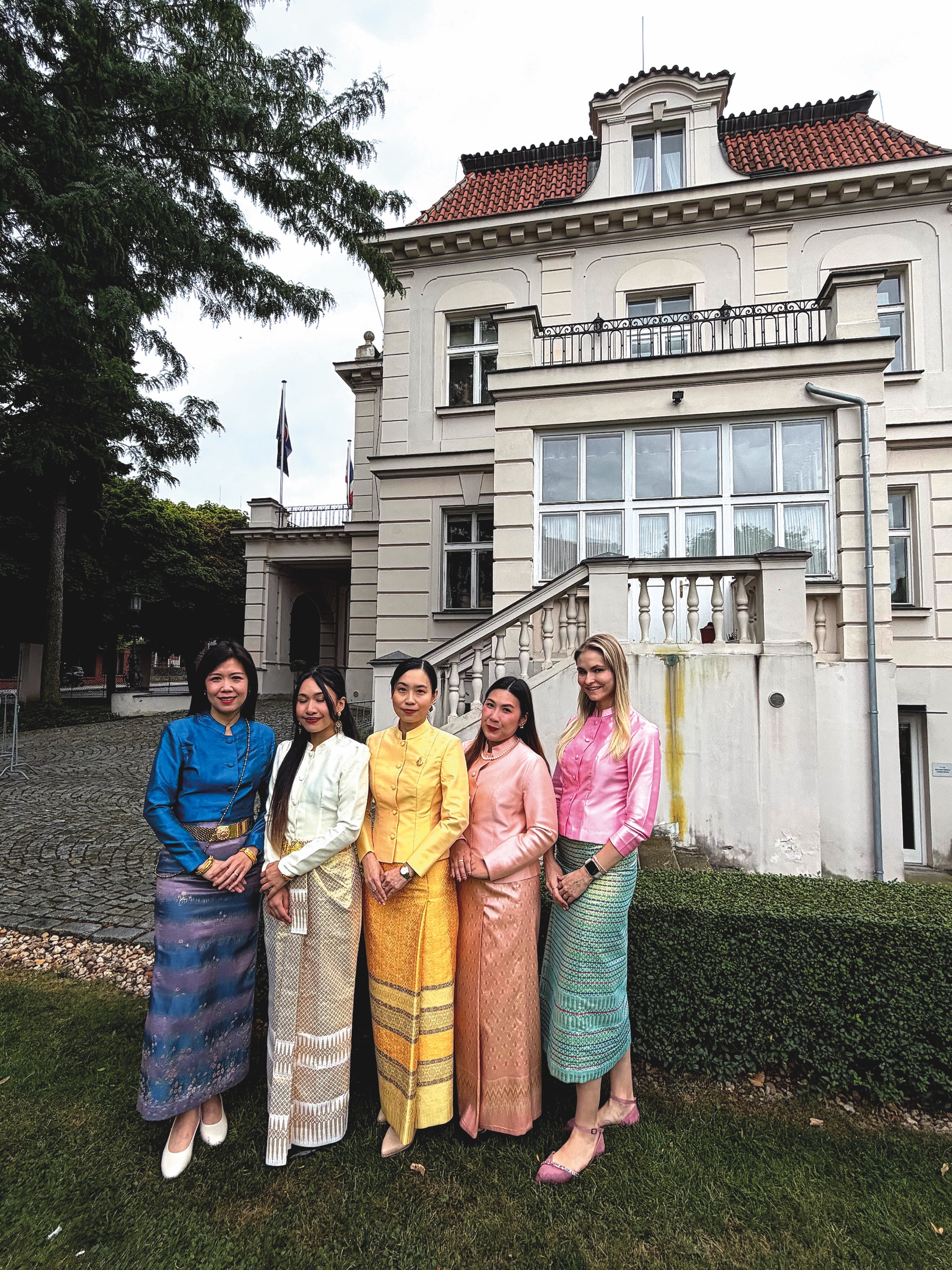
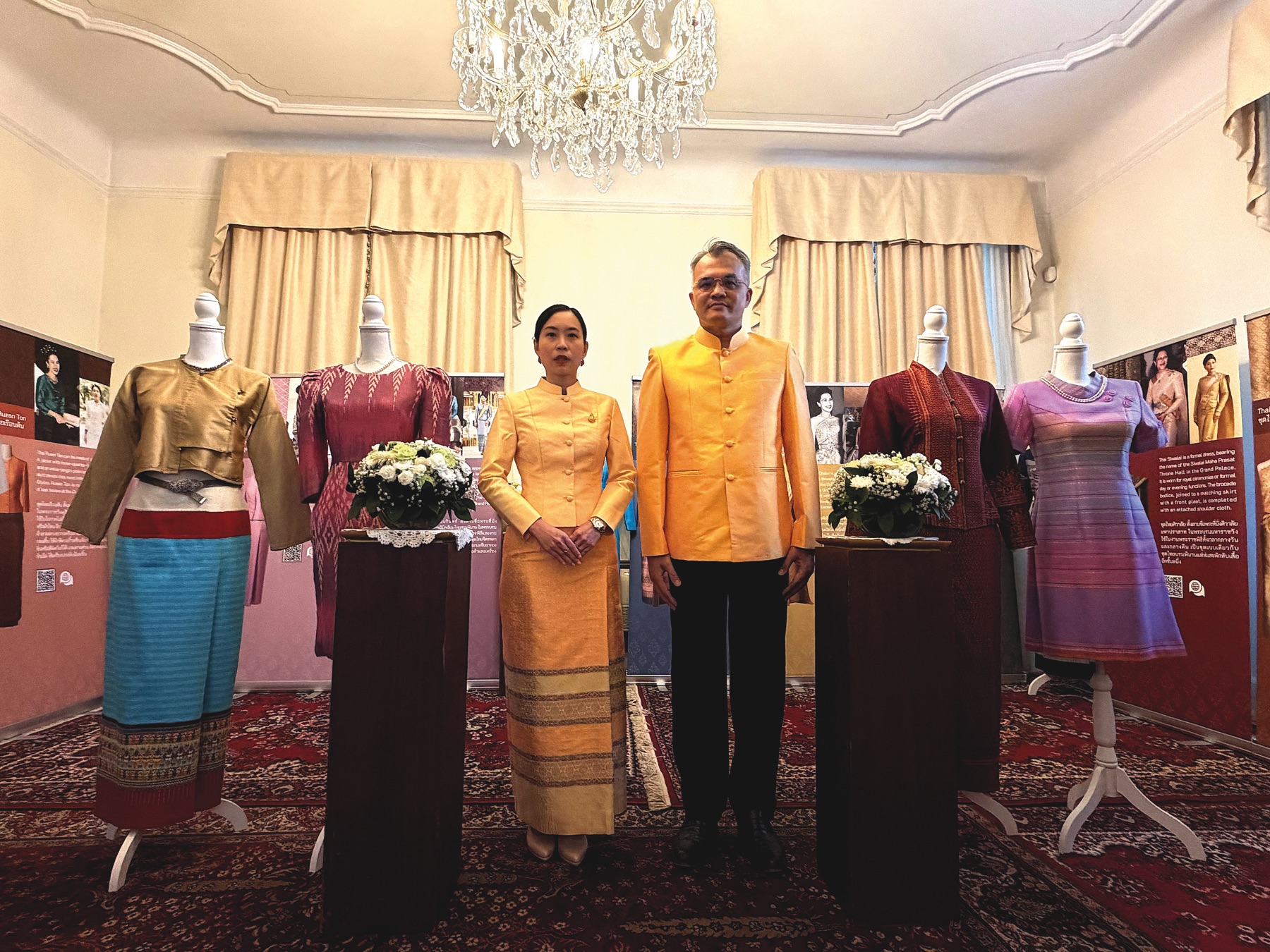
Suea Praratchathan for men and Thai Chitralada for women
In 1979, H.M. King Bhumibol Adulyadej The Great graciously bestowed upon Thai men a national attire commonly known as the “Suea Praratchathan”. The shirt features a high collar, five front buttons, and Thai textile. It is available in both short-sleeved and long-sleeved styles and can be worn with trousers in modest, formal colors. For significant ceremonial occasions, a waist sash may be added to complete the full formal attire.
The vivid yellow long-sleeved shirt, as shown in the picture, was made of handwoven silk from Baan Krua community in Central Bangkok. Baan Krua is a historic, canal-side weaving village of Cham Muslims, whose weavers partnered with American entrepreneur Jim Thompson in 1951 to revive the Thai silk industry. This extraordinary yellow silk was created by Mr. Niphon Manuthas, the 77-year-old owner of the only weaving business in operation at Baan Krua. Mr. Niphon graduated from Germany and studied textile and adapted his knowledge to create soft yellow silk which has natural colors from silkworms and a special touch. It was later given the name “Sirindhorn Yellow” by H.R.H. Princess Maha Chakri Sirindhorn.
Considering the history and legacy of Chud Thai which is deemed one of the most outstanding cultural heritage and pride of the nation, the Royal Thai Government has nominated “Chud Thai: Knowledge, Craftsmanship, and Practices of the Thai National Costume” for inscription on the UNESCO Representative List of the Intangible Cultural Heritage of Humanity in 2026.