

To know someone is to love them
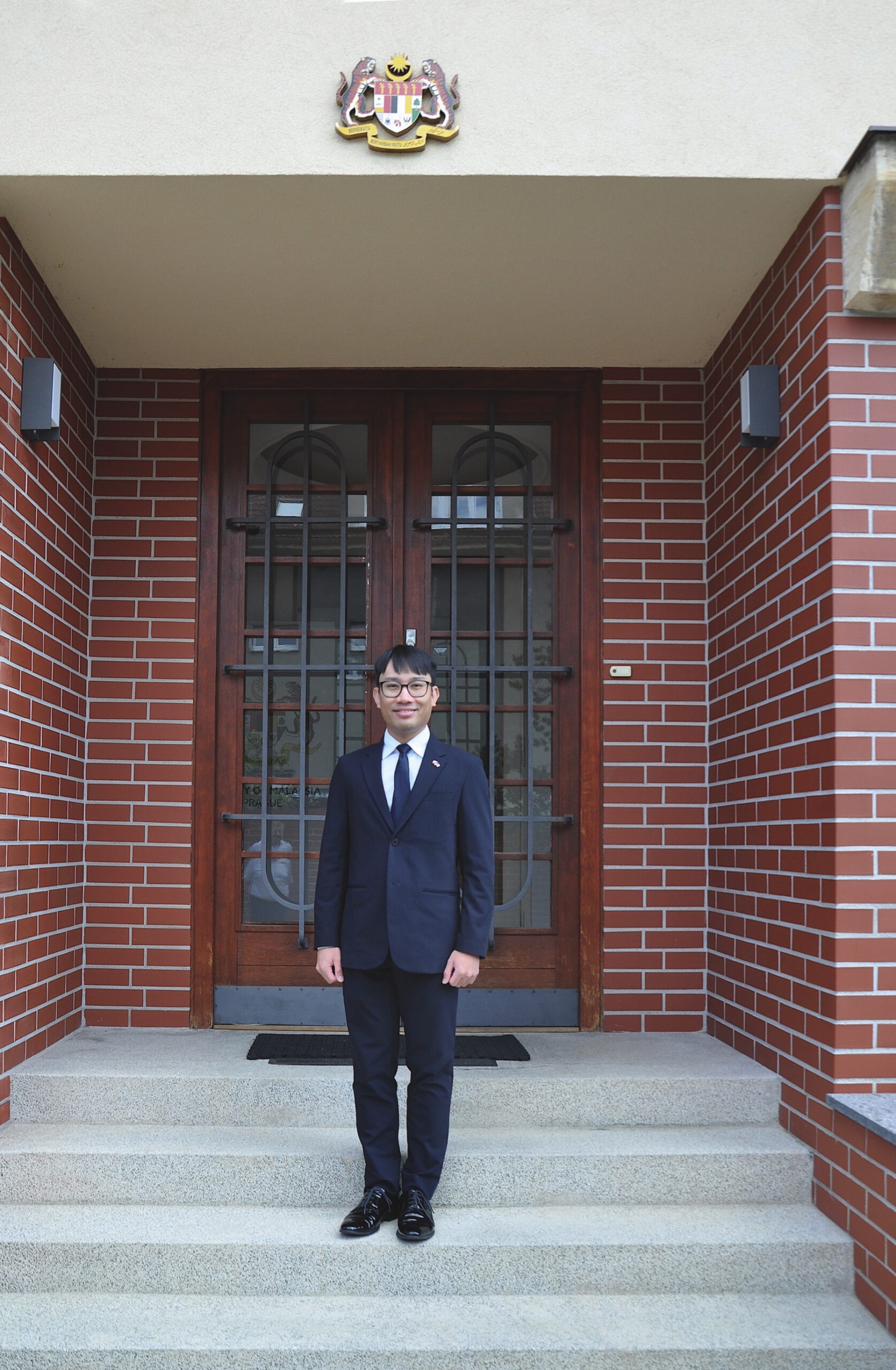
Mr. Amirul Zaki bin Fadzir, Chargé d’Affaires a.i. of Malaysia
Text: Martina Hošková and M. Zisso; Photo: Archive
Could you tell us a little about yourself?
I am the younger of two siblings, and the only one in my family who chose the path of law and diplomacy. I studied law and began my career with a brief engagement at the UNHCR before moving into private legal practice, where I specialised in litigation. Those early years taught me to think critically, communicate clearly, and appreciate different perspectives – skills that have proved invaluable in diplomacy.
I later joined Malaysia’s Ministry of Foreign Affairs and served in several capacities, including at the Southeast Asia Regional Centre for Counter-Terrorism (SEARCCT) and the National Authority for the Chemical Weapons Convention (NACWC), before receiving my first overseas posting to Prague. Looking back, it has been an unexpected but very rewarding journey. Every stage has prepared me for the next, and I still feel that I am learning something new every day.
Can you tell us a bit about your country?
Malaysia is a country shaped by both its people and geography. Situated at the heart of Southeast Asia, along the Strait of Malacca and the South China Sea, we have been connected to the world through trade for centuries. That openness has shaped Malaysia into a multicultural nation where different cultures, religions, and traditions live side by side in harmony.
As a trading nation, Malaysia plays an important role in global supply chains, particularly in semiconductors, palm oil, and liquefied natural gas. However, beyond our economic achievements, I believe our greatest strength lies in our diversity – it is what gives Malaysia its unique identity, and what many visitors remember the most after experiencing our country.
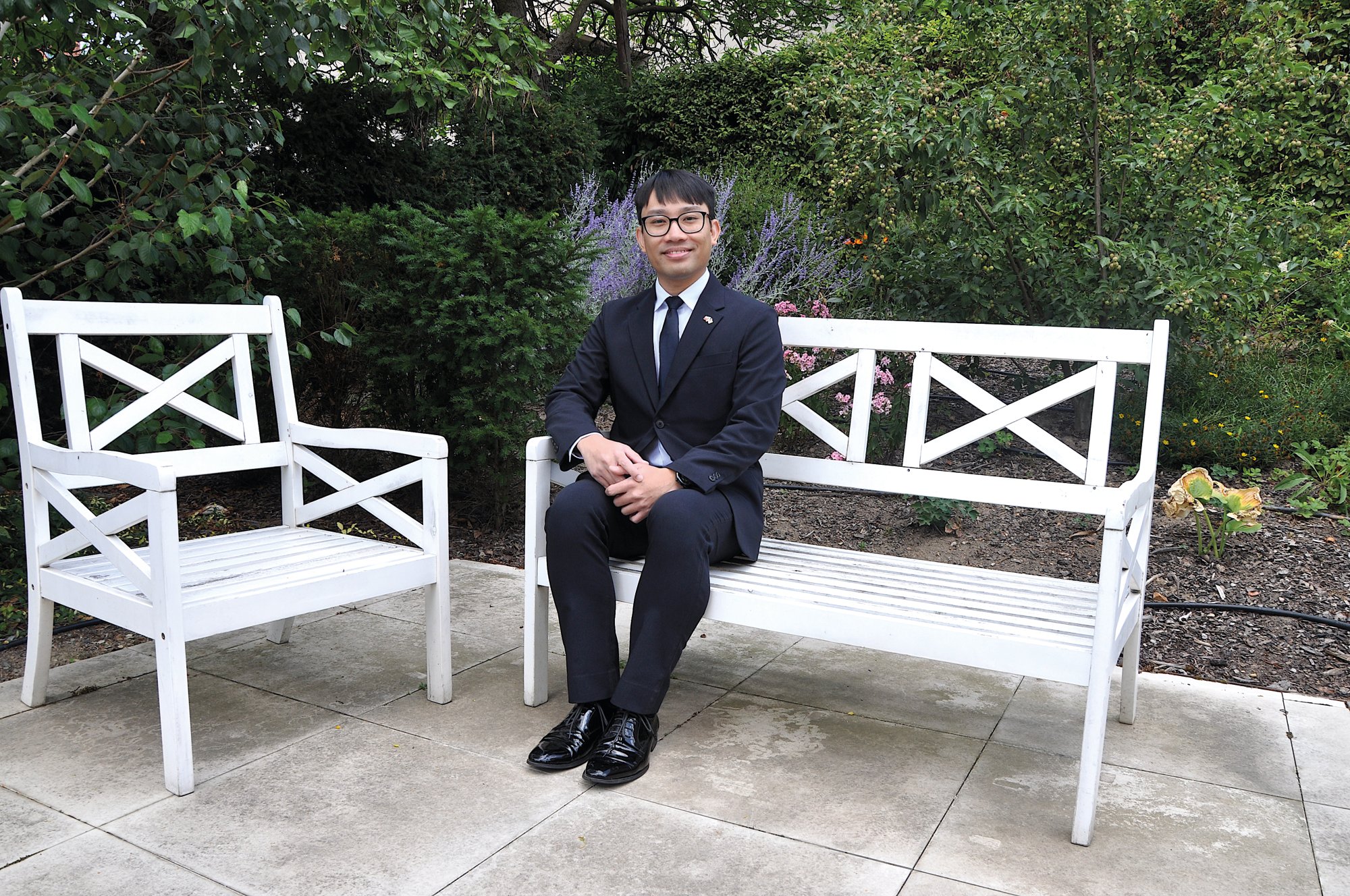
Mr. Amirul Zaki bin Fadzir, Chargé d’Affaires a.i. of Malaysia
What inspired you to become a diplomat?
I have always been curious about people and different cultures. There is a Malaysian proverb that I often reflect on: “Tak kenal maka tak cinta”, which can be translated as “To know someone is to love them.” I think that saying captures the essence of diplomacy.
I also wanted to serve my country in a meaningful way. Diplomacy allows me to build bridges, encourage a dialogue, and help others gain a better understanding of Malaysia. Coming from a legal background, I enjoy analysing issues, finding a common ground, and working towards practical solutions.
It is also a profession that constantly presents a challenge. No two days are ever the same, and that is one of the things I enjoy the most about this career.
You have been in the Czech Republic for two years, including more than a year as the Chargé d’Affaires a.i. What are your impressions so far?
Prague is my first overseas posting, so it will always hold a special place in my heart.
Like many visitors, I was immediately captivated by the city’s beauty and history. Beyond that, I was impressed by how well organised everything is, and by the balance the Czech Republic has found between preserving its heritage and embracing modern development.
Over the past two years, I have also come to appreciate the warmth and sincerity of the Czech people. Whether through official engagements or everyday conversations, I have always found people to be welcoming and genuine. Those personal connections are often what makes a diplomatic posting truly memorable.
Where did you serve before coming to Prague?
As I have already mentioned, the Czech Republic is my first overseas diplomatic posting. Before coming to Prague, I served in various divisions within Malaysia’s Ministry of Foreign Affairs, working on regional and international issues.
Beginning my overseas diplomatic career here has been both a privilege and an excellent learning experience.
How does the diplomatic profession fit into your lifestyle?
It suits me very well because I genuinely enjoy meeting people and learning from them.
One of the privileges of this profession is that it allows you to engage with people from every walk of life – government officials, business leaders, academics, students, artists, and members of civil society. Every conversation offers a different perspective, and I believe that is one of the most rewarding aspects of diplomacy.
At the end of the day, diplomacy is really about people and the relationships we build.
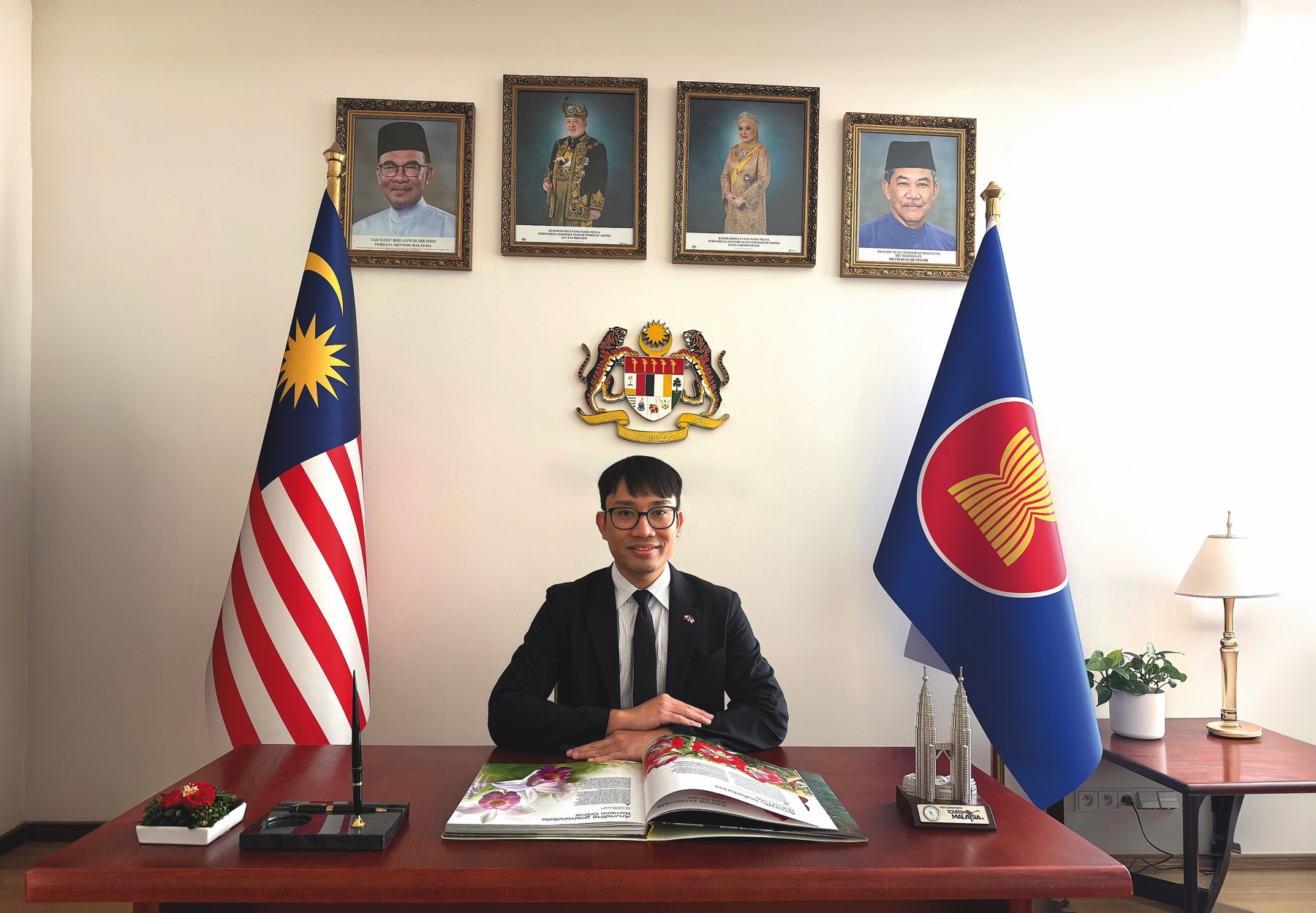
Mr. Amirul Zaki bin Fadzir, Chargé d’Affaires a.i. of Malaysia
What would you consider your greatest professional adventure so far?
Taking on the role of the Chargé d’Affaires a.i. at a relatively young stage in my career has certainly been my greatest professional adventure.
Leading an embassy carries a significant responsibility. You are not only representing your country but also overseeing the work of the entire mission. It has challenged me in many ways, but it has also given me invaluable experience and a much broader perspective on leadership, teamwork, and diplomacy.
On the other hand, what is the most unusual thing you have ever dealt with?
Fortunately, nothing too unusual comes to my mind.
One thing I have learned is that diplomacy is full of surprises. You learn to expect the unexpected, and often it is the small, unplanned moments – rather than the major events – that stay with you the longest.
What would you say is the most difficult part of being a diplomat?
I would not necessarily describe it as difficult, but it certainly requires patience, flexibility, and careful judgement.
Diplomacy is about balancing different expectations while maintaining trust and strong relationships. Whether we are working with governments, businesses, academics, or our own Malaysian community abroad, everyone naturally has different priorities. Our role is to listen, understand different perspectives, and find a common ground wherever possible.
That is both the challenge and the beauty of diplomacy.
How do you like to spend your time outside of work?
I enjoy reading, exercising, and building scale models. Model building is particularly relaxing because it requires patience, focus, and attention to detail – qualities that are equally valuable in diplomacy.
Whenever the time permits, I also enjoy travelling around the Czech Republic and discovering its history, architecture, and beautiful landscapes.
Malaysia has a great potential as a holiday destination for Czech travellers. How do you encourage people to visit?
I usually tell people that Malaysia offers an incredible variety of experiences within one country.
You can experience vibrant modern cities with iconic landmarks such as the Petronas Twin Towers and Merdeka 118 (the second tallest building in the world). At the same time, you can explore rainforests that are around 130 million years old (making them among the oldest tropical rainforests on Earth), relax on beautiful islands with crystal-clear waters, enjoy world-class diving, mountain climbing, or discover extraordinary wildlife. Malaysia is recognised as one of the world’s 17 megadiverse countries, so nature lovers are truly spoilt for choice.
Our multicultural heritage is another unique attraction. Visitors can experience different traditions, festivals, and cuisines, often within the same city.
And, of course, Malaysian hospitality is something we are especially proud of. We always want visitors to feel at home and leave with wonderful memories of our country.
Do you also promote Malaysia here in Czechia?
Absolutely. A recent example is the ASEAN Plus Film Festival, held at the Municipal Library in Prague.
Malaysia’s featured film, Babah, was part of this year’s program. It offers a wonderful opportunity to experience Malaysian storytelling and gain a deeper appreciation of our culture through cinema.
I am really glad that many Czech friends have shown interest in the festival.
The EU recently recognised the Malaysian Sustainable Palm Oil certification. Why is this recognition important?
This recognition is significant because it acknowledges Malaysia’s commitment to producing palm oil in a sustainable and responsible manner.
Malaysia maintains approximately 54-55% forest cover, demonstrating our commitment to balancing economic development with environmental conservation. As the world’s second-largest producer of palm oil, it is important that our products meet internationally recognised sustainability standards.
The EU’s recognition of the Malaysian Sustainable Palm Oil (MSPO) certification strengthens the confidence in our sustainability efforts and supports compliance with the EU Deforestation Regulation (EUDR). We hope it will further enhance trade and cooperation between Malaysia and the European Union.
How would you describe Czech-Malaysian relations today?
The relationship between Malaysia and the Czech Republic is warm, friendly, and continues to develop positively.
Our cooperation extends across many areas, including trade, investment, education, tourism, and people-to-people exchanges. We also value the Czech Republic’s role within the European Union and appreciate its constructive support in strengthening Malaysia-EU relations.
This interview is being published around your National Day. What are your wishes for Malaysia and for the Czech Republic on this occasion?
Malaysia celebrates its Independence Day on 31st August, followed by Malaysia Day on 16th September.
This year’s National Day theme, “Malaysia MADANI: Kesejahteraan Dinikmati”, reflects our aspiration for shared prosperity and inclusive development.
My hope is that Malaysians will continue to cherish our diversity, strengthen our unity, and work together to build an even brighter future for the generations to come.
For the Czech Republic, I wish continued peace, prosperity, and happiness. I also hope that the friendship between our two countries will continue to grow, creating an even stronger cooperation and closer people-to-people ties in the years ahead.