
Europe has always managed to pull together in times of crisis
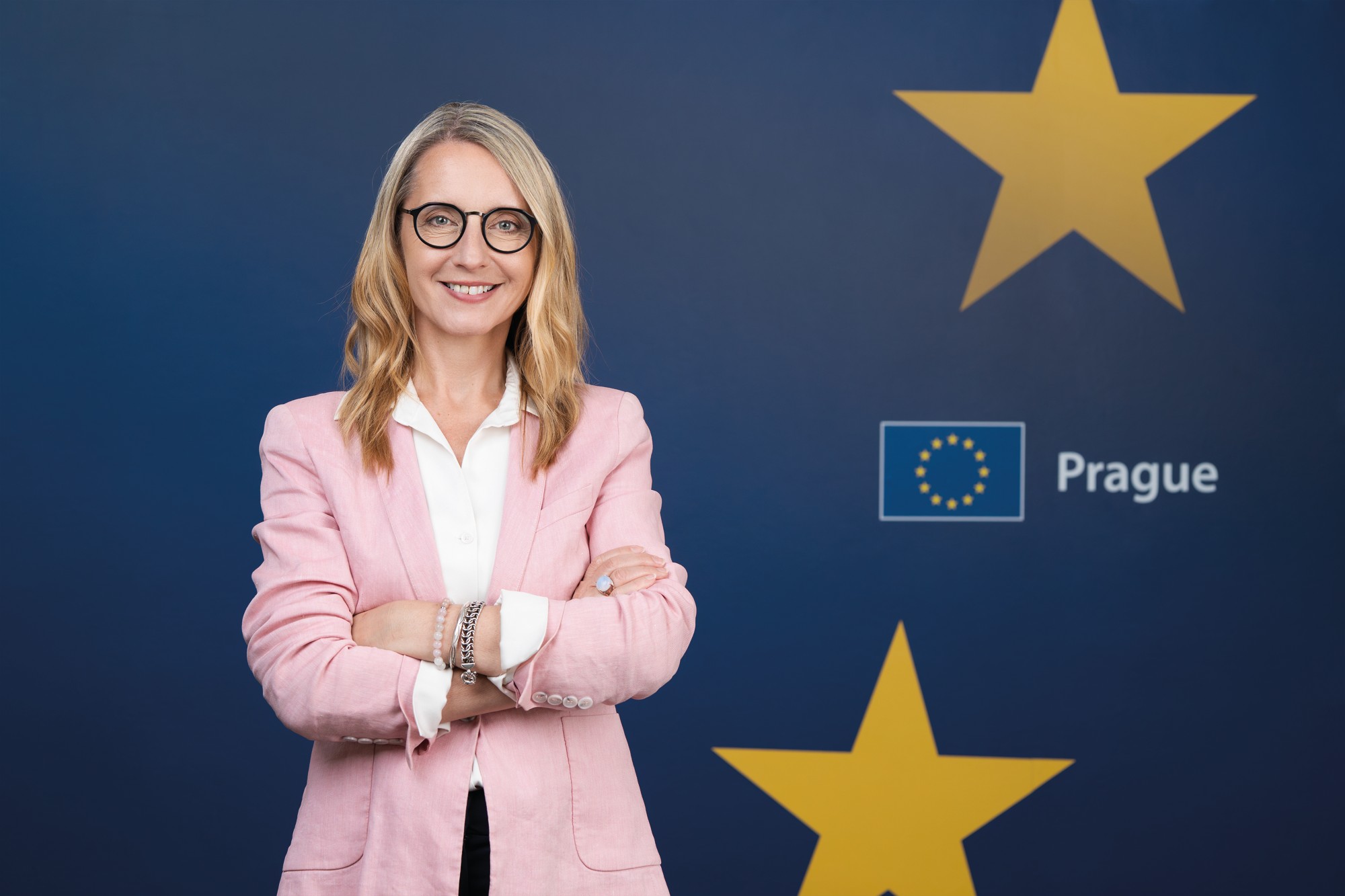
Monika Ladmanová, Head of the Representation of the European Commission in the Czech Republic
Text: Martina Hošková and M. Zisso; Photo: Archive
Can you walk us through the key milestones in your career that led you to your current role as the EU Representative?
I grew up in communism, and shortly after the Velvet Revolution in 1989 started my law school studies. This shaped my future path a lot. After graduation, I decided to join the non-profit sector, which was something very new in a country that was transforming itself from socialism to capitalism. For all of us at that time, the ‘90s were a great opportunity to be part of this unimaginable and extraordinary transition. My focus was on democracy, and on how to apply changes to the legal order in order to transform the system into a democratic one. Part of this became the accession process of the Czech Republic into the European Union.
This led me to various areas where I actively advocated for legislative transition, such as human rights, equality, non-discrimination, justice, and the rule of law. Everything was new and exciting; the mood in society was exceptional, driven by optimism and euphoria. I am very glad I could be part of it. I spent fifteen years in the leadership of the Open Society Fund Prague, a foundation focused on projects aimed at strengthening democracy, eliminating discrimination, combating corruption, and building resilience.
When Věra Jourová became European Commissioner for Justice, Consumers, and Equality, she invited me to join her team in Brussels. I stayed in her Cabinet when she later secured the position of Vice-President for Values and Transparency. Her entire mandate covered the exact areas I had been working on since the beginning of my career. It was another immense opportunity for me, to help prepare and shape European policies. After this experience, in 2022, I became the Head of the Representation of the European Commission in the Czech Republic.
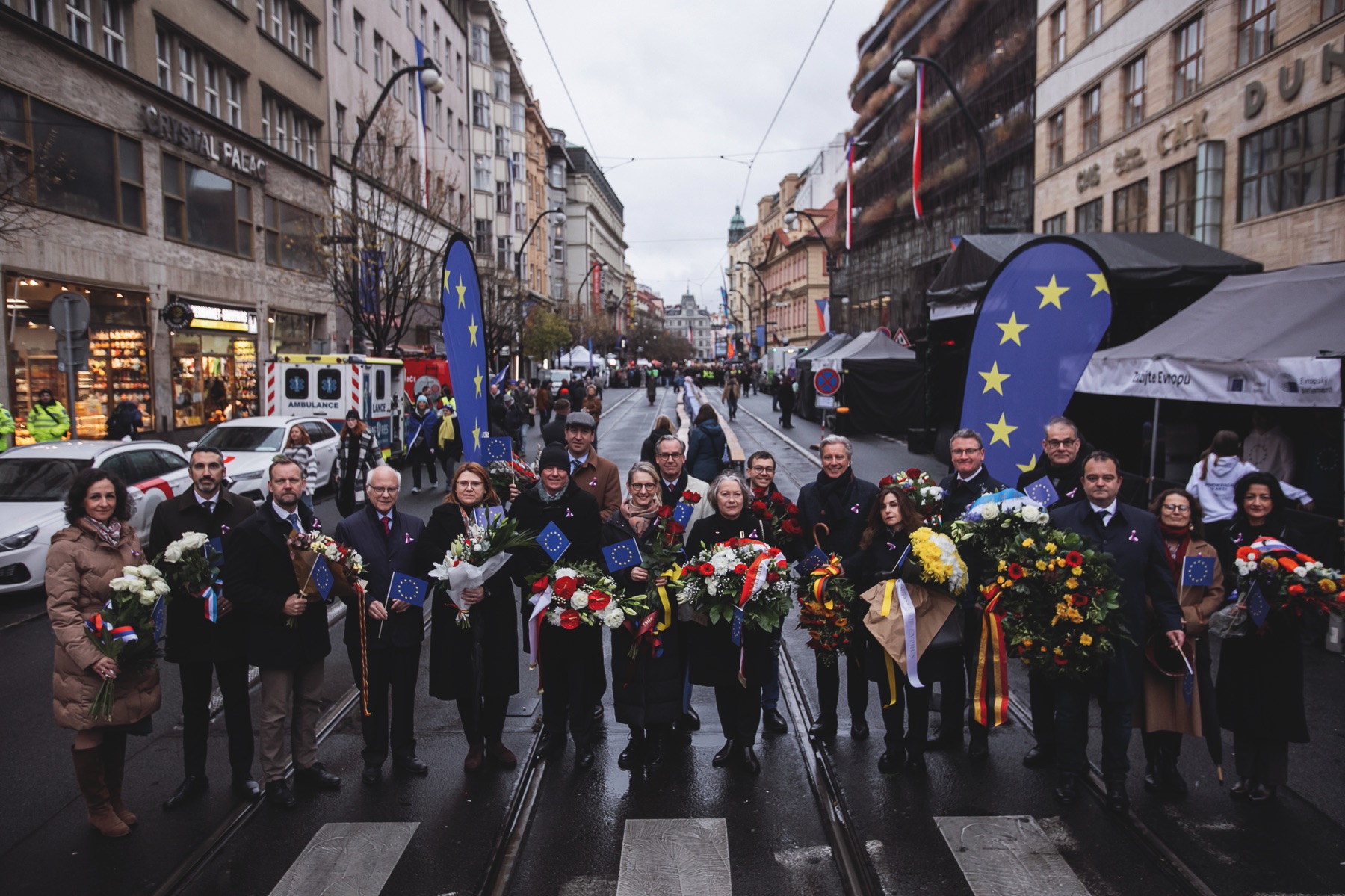
Taken on Národní třída in Prague during last year’s November 17th celebrations, the photo features Ms. Monika Ladmanová alongside ambassadors from European Union member states.
What are your main responsibilities in this role?
I represent the European Commission vis-à-vis national, regional, and local authorities, the parliament, and other institutions. At the Representation, we foster continuous dialogue with partners in national and local administration, as well as with social partners, and those in academia and civil society. We also provide logistical and other support during visits by European Commissioners and senior officials from Brussels to the Czech Republic.
We also monitor political, economic, and social developments in the country. We share these insights with our colleagues to enable the European Commission to respond to the needs of the public, industry, and other stakeholders. Furthermore, we are in contact with the media, produce creative campaigns, and organise public events and discussions. Most importantly, we speak with students and citizens and introduce the EU to them – there is truly a lot that we do.
After four years in this role, what stands out to you when you look back at your experiences?
By the time I was appointed by Ursula von der Leyen, I had already worked in the Commissioner’s Cabinet, so I knew what my role would entail. Every day is different and interesting in its own way. I have great colleagues, and I meet many interesting and inspiring people; I am grateful for it. If I had to choose one event that brought joy to both me and my colleagues, it would certainly be the visits by President von der Leyen and President Petr Pavel. They found time in their packed schedules to come and greet the entire team.
You have been working for the European Commission for 12 years. How has the institution evolved during this time, and how do you see its future?
When I joined Commissioner Jourová’s Cabinet in 2014, the European Commission was led by President Jean-Claude Juncker. It was a Commission fully focused on managing the aftermath of the financial crisis. Since then, much has changed, and the Union has adapted to challenging situations over time. Indeed, in that same year, Russia occupied part of Ukraine, followed by the migration crisis, Brexit, the COVID-19 pandemic, and then a full-scale war broke out. So, over those years, the focus shifted significantly. In parallel, social media run by big IT platforms had become a major tool for communication and for influencing people’s views.
Today, we are in a period of “polycrisis”, or rather “permanent” crisis, which serves as yet another stress test for our European unity. I believe that we, as the EU, are emerging and will emerge from it stronger, because Europe has always managed to pull together in times of crisis. However, an armed conflict in a country bordering the EU has changed a lot. We had to ask ourselves whether the current security architecture can stand up to these challenges. Member states are now coordinating their defence activities much more closely, cooperation between the EU and NATO is closer, and we are focusing more on sovereignty in security, energy, and critical raw materials as well as production – these are the tangible consequences of all the changes we have witnessed in recent years.
Looking ahead, we need to remain optimistic and work on sticking together, because we are always stronger together.
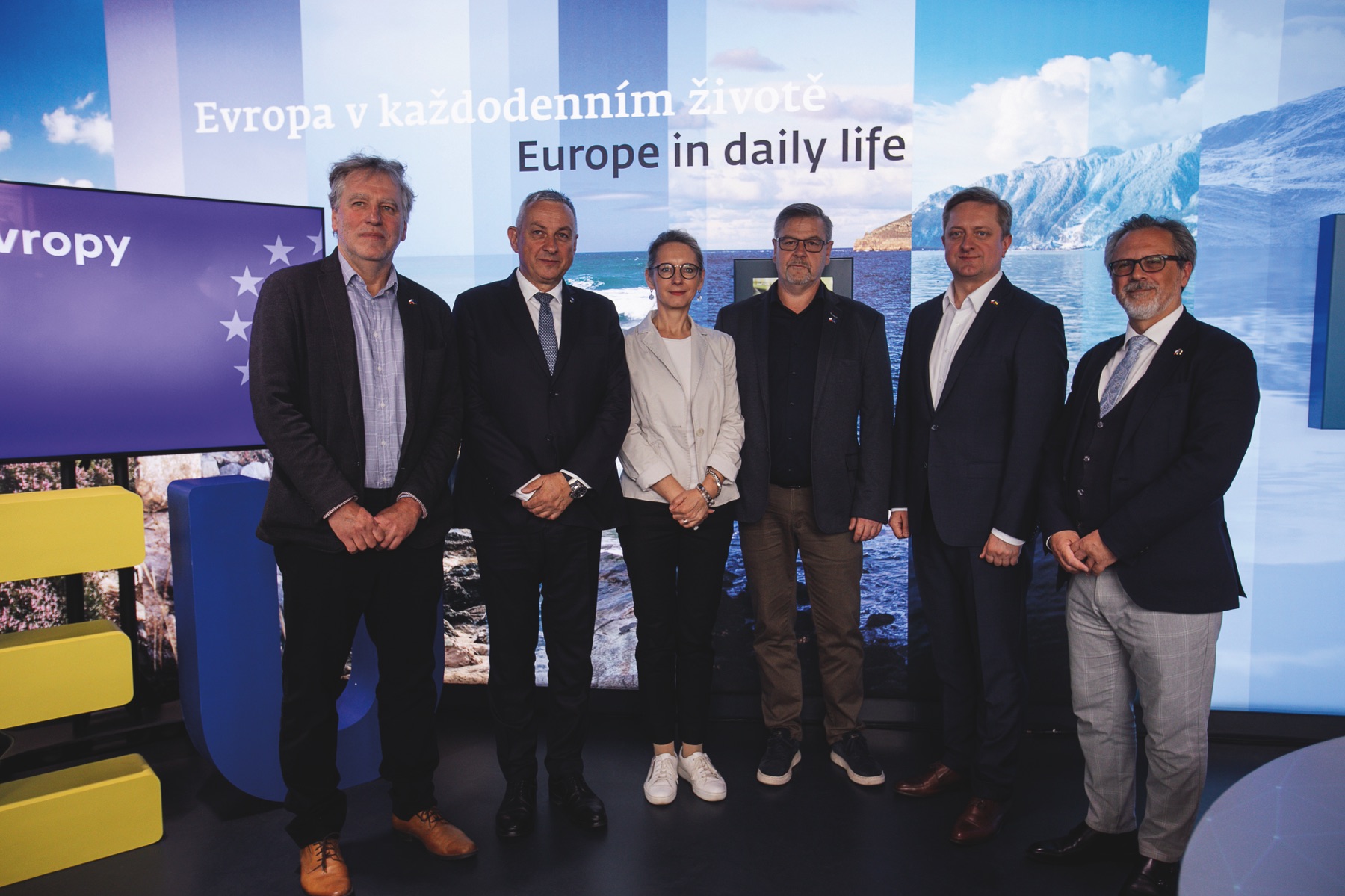
The photo taken on the occasion of Europe Day, 9 May 2026 features Ms. Monika Ladmanová with (from left to right): MEP Luděk Niedermayer, European Commissioner for International Partnerships Jozef Síkela, Senator of the Senate of the Parliament of the Czech Republic Jan Schiller, Ambassador of Ukraine to the Czech Republic Vasyl Zvarych, and Head of the European Parliament Office in the Czech Republic Jindřich Pietras.
How does being a diplomat align with your lifestyle?
In the environment of European diplomacy, a certain refinement of debate, an effort to understand partners, and a search for compromise and common solutions are inevitable. This suits me in my personal life as well. I try to seek and create harmony that many might consider utopian. It is natural for me to talk to people, to seek their views, including their emotions and feelings. I can find common ground with anyone who is open to dialogue. This is also one of my tasks as Head of the Representation. I like to be active and sociable, but I don’t force things; instead, I achieve results through discussions with people from a wide variety of backgrounds.
Returning to the role of the European Commission, I want to mention that one of our tasks is to support Member States and help them achieve a common goal. And that is no small feat. After all, the European Union is essentially a miracle that has maintained peace among its members for decades – an achievement for which it actually received the Nobel Peace Prize in 2012. It is truly a globally unique project that we must nurture.
Which of your professional experiences would you call your greatest adventure?
I had the opportunity to spend 12 years close to top political leaders. I had the chance to be there when complex issues were often being resolved, or legislation impacting the lives of millions was being negotiated. In a way, it was an adventure to be in situations where truly important documents had to be prepared overnight – materials that might decide the direction Europe would take in certain fields. I had to learn a great deal in a very short time about things I originally had only superficial knowledge of. And that affects your personal life as well, because, during those intense moments, (your personal life) has to take a backseat. But it has all enriched me as a person.
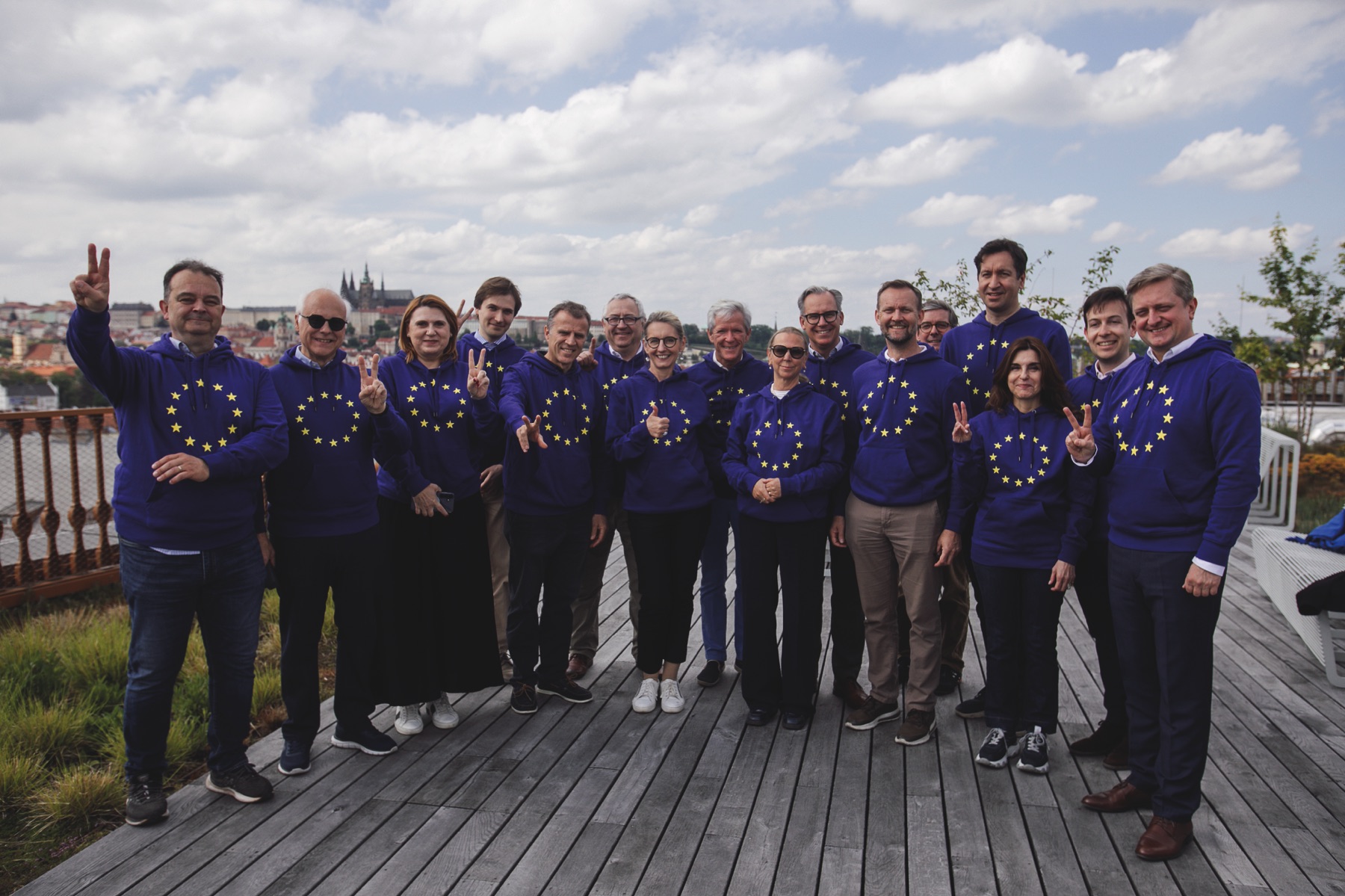
Europe Day 2026 , EU Ambassadors in the Czech Republic
What is the most peculiar challenge you’ve had to deal with?
The first thing that comes to mind is a grim, yet strange, memory of the 2016 Brussels terrorist attacks. Back then, I was commuting to work by metro from the city centre, and I absolutely had to be in the office by nine o’clock. So, I took the last possible train to “Schuman” – the station located near the Berlaymont, the main European Commission building. I got off, rushed to the office, and on my way to the 12th floor of the building I received the news that the attacks in the metro, at the station I had just passed through, had occurred. Many people died that day, and hundreds were injured. If I had taken a later train, I probably wouldn’t have made it.
Which aspect of diplomatic work do you find the most difficult?
I wouldn’t say that any part of my job is difficult, but rather that it is challenging. And I like challenges and love my job; I approach it with the utmost responsibility and humility. Sometimes, I participate in meetings that do not go smoothly, where consensus is hard to find, and I would love to step in and help unblock the situation. But in diplomacy, we all have our roles, so it is important to stick to them and sometimes accept that things do not go exactly as we might imagine.
What do you do in your free time?
Culture and sports – this is the combination that helps me organise my thoughts, which constantly revolve around the European project. Even in my free time, I look for inspiration, talk to people about Europe, and look for ways to strengthen it.
Can you give a piece of advice to the next generation of diplomats?
It is important to keep our shared history in mind and view the EU through this lens. I don’t want to repeat myself, but what has been achieved on the European continent over the past 70 years is truly something exceptional. I would like all of us to always keep this in mind, wherever work or life may take us on this planet. Europe is, after all, the safest harbour in the world, and working for it is worth it.
What is the current status of Czechia-EU relations?
The Czech Republic has already been a full member of the European Union for 22 years, yet we still encounter the “us” vs “them” narrative. We are all the EU; we belong to it, shape it, and decide the direction it will take. Therefore, speaking about EU-CZ relations is like dealing with relationships within a single family, such as between siblings.
As the guardian of the treaties, the European Commission has a specific role. It proposes legislation, functions as an administration, represents the EU externally, negotiates important trade agreements with third countries, and ensures that member states comply with what they themselves have agreed upon. All these activities are complex and can naturally lead to friction. However, we build on dialogue, partnership, and a shared commitment to a prosperous Europe.
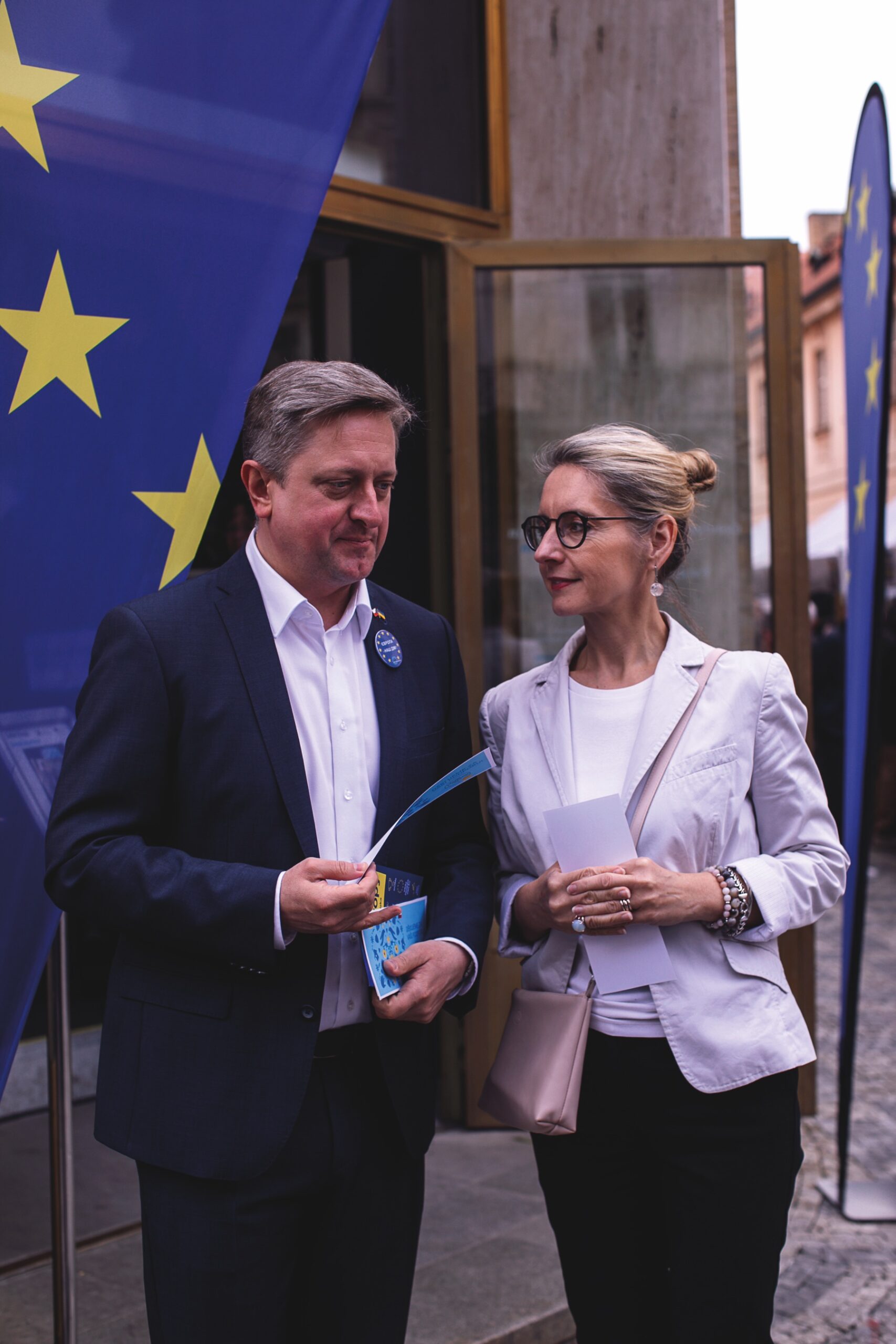
Ms. Monika Ladmanová with the Ambassador of Ukraine to the Czech Republic Vasyl Zvarych
Looking to the future, which hopes do you have for the EU and the Czech Republic?
Building our European sovereignty is now more important than ever. It is about standing on our own two feet, e.g., manufacturing chips, knowing how to effectively leverage AI, and securing critical raw materials. All of this will make us stronger and less dependent on the outside world. As Emmanuel Macron put it, the era of relying on Russia for energy, on China for production, and on the US for security is over. But we are a rich, successful continent. We might win this. To paraphrase one of the EU’s “founding fathers”, yet another Frenchman, former Foreign Minister Robert Schuman: Europe was not built based on a single plan, but through gradual steps that subsequently created mutual solidarity. Let’s strengthen it, be proud, and believe in ourselves.