

It’s never too late to begin

Ivana Ostřanská, Founder of Ostranska brand
Text: Alice Botnarenco; Photo: Archive
“Age is just a number” is a phrase we hear often, but it truly comes to life in the story of Ivana Ostřanská. I believe that staying curious, active, and creative is the key to enjoying life, whether we are 30 or 60 – passion doesn’t have an expiration date, and neither does the courage to begin something new.
Ivana is a beautiful example of this. She founded her own leather handbag brand, Ostranska, later in life, proving that experience, craftsmanship, and determination can be the foundation of a successful business. Her story is an inspiration to anyone who believes it’s never too late to follow your dream.
I hope we see more women like her, who continue creating, learning, and inspiring others at every stage of life.
Dear Ivana, why handbags? Why not furniture, fashion, or another design discipline? What is it about a handbag that continues to fascinate you after so many years?
I remember being fascinated by the clothes and handbags my mother received from my aunt, who had emigrated to Switzerland. Few people today can imagine the sense of wonder I felt when I first saw a Chanel coat. The fabric, the craftsmanship – I simply couldn’t understand how something so beautiful could even be made. Italian handbags inspired the same sense of awe. From that moment on, one seemingly simple question stayed with me: how is it made?
After 1989, I met a woman who worked as a leather craftswoman at the Centre for Folk Art Production (ÚLUV). Fashion itself did not captivate me nearly as much – leather goods seemed far more mysterious and magical. But curiosity alone was never enough. I had graduated from a traditional grammar school, and wanted to understand everything about the craft – the technology, the materials, the construction, the techniques – every detail.
That is why I studied Leather Goods Manufacturing at the Secondary School of Leather Technology. At that time, I had no ambition to become a designer. Design simply wasn’t on my mind yet. I am still in touch with my class teacher from those years. When I told him that I was considering pursuing a university degree in technology, he smiled and said, “You should study design instead.”
I took his advice, and enrolled at the Design programme at the university in Zlín. It turned out to be one of the best decisions I have ever made. I fell completely in love with design. It became a lifelong passion – perhaps even an obsession. To this day, I remain fascinated by the search for the perfect balance between craftsmanship, technology, and aesthetics.
And I still find myself asking the very same question I did as a child: how is it made?
When did you first realize that you wanted to create a brand carrying your own vision, instead of designing for others?
I ran my own brand for nearly twenty years. Then I accepted an offer from a company in Prague. Part of the reason was simply exhaustion – years of studying, raising a family, and managing employees. I no longer wanted to spend my time dealing with the aspects of running a business that never inspired me. What truly interested me was design, pattern making, and technology. Marketing, despite having earned my degree in it, was never my passion.
I have never regretted that decision.
Working for the company pushed me forward tremendously, both professionally and personally. Unfortunately, due to poor management, the business eventually ran into serious financial difficulties.
By then, I was already working as a studio assistant in the Fashion Design Studio at the Faculty of Design and Art Ladislav Sutnar in Pilsen. At the age of sixty, I found myself facing an important decision: should I remain solely in my academic role, or should I take the risk of building my own brand once again?
After careful consideration – and with the full support of my family – I decided to take the leap. To be honest, I simply couldn’t imagine my life without this work. For the first time, I knew exactly what I wanted to create and how I wanted to create it. Some people simply find their true direction later in life.
Only now do I have complete clarity about what I want to offer – without compromise.
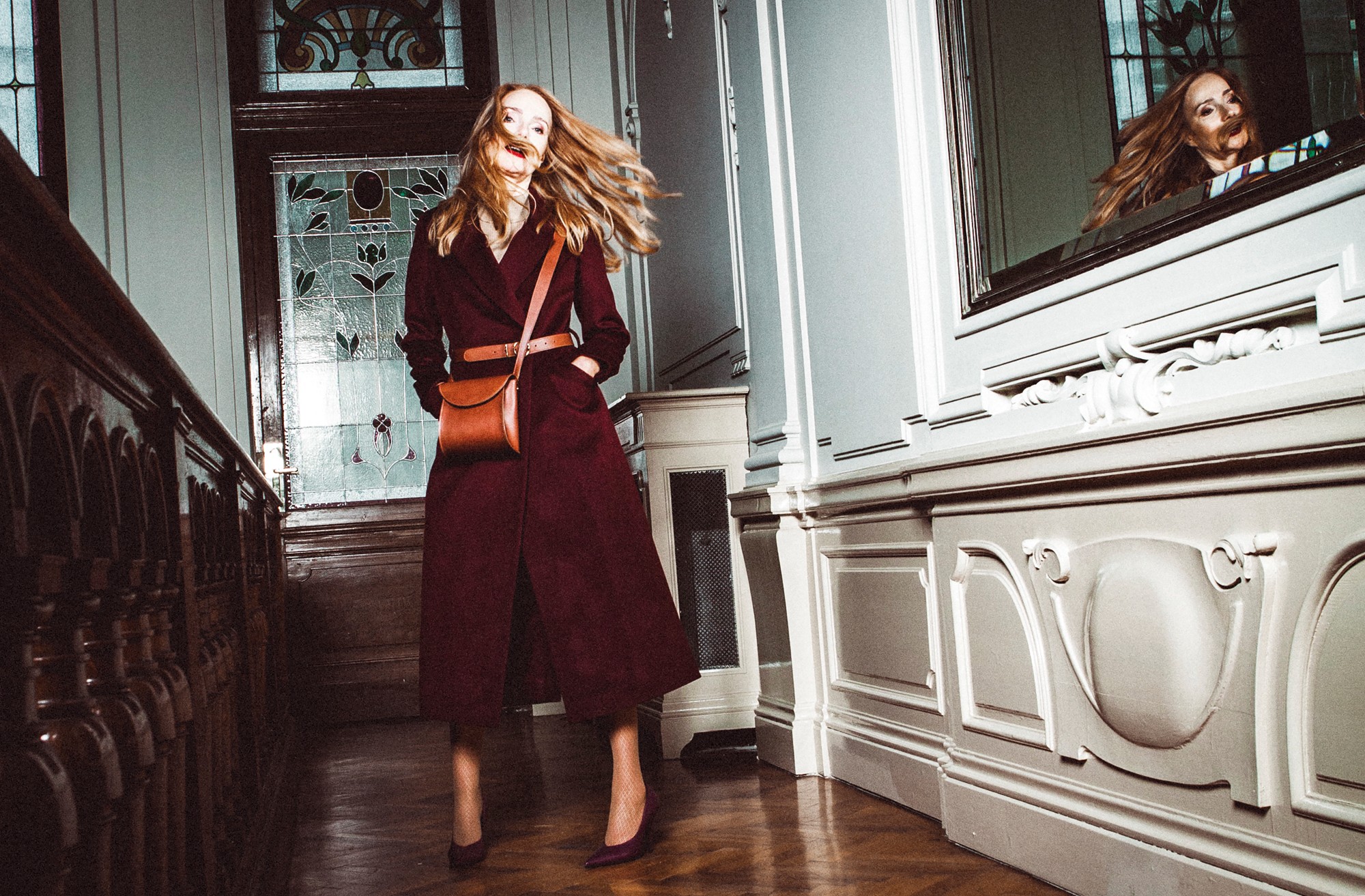
Your handbags don’t rely on visible logos. In today’s luxury market, where branding is often louder than craftsmanship, that feels almost rebellious. Was this a conscious decision from the beginning?
Your question actually contains the answer. Branding is undoubtedly important, but I am not creating for clients who need luxury labels to affirm their social status.
My products naturally carry my logo, but that has never been what matters most to me. What I value far more is purity of form, thoughtful proportions, exceptional materials, precise craftsmanship, and sound construction. I have no interest in adding unnecessary details that serve no real purpose and only distract from the aesthetic I strive to achieve.
My design language is restrained and focused on what is essential. I believe this sense of restraint is the natural outcome of a lifetime devoted to my craft. It is simply where my journey has led me.
If I gave you a completely blank sheet of paper today and asked you to design your very first handbag again, what would you do differently?
My answer to this one is quite simple. I no longer remember my very first handbag, but I know with absolute certainty that today I would do about 80% of it differently – especially when it comes to its construction and the way it was made.
You’ve spent decades perfecting your craft before launching your own brand. Do you believe experience can sometimes be a greater advantage than youth in entrepreneurship?
The experience I have gained over the years is invaluable. It is undoubtedly one of my greatest strengths. And courage has never been in short supply –otherwise, I would never have embarked on what I am doing now at the age of sixty.
The only real disadvantage is that, by sixty, you know your time is more limited. It’s something I am aware of every single day.
Many young designers dream of starting their own brand. Looking back, what mistakes do you see them making most often?
Impatience, and sometimes a lack of humility, is a natural part of being young. But if I truly wanted to master the craft, I had to learn to listen patiently to the advice of those who had come before me.
And when there was no one to guide me, the only way forward was through trial and error – making mistakes, failing repeatedly, and trying again until I found the right solution on my own.
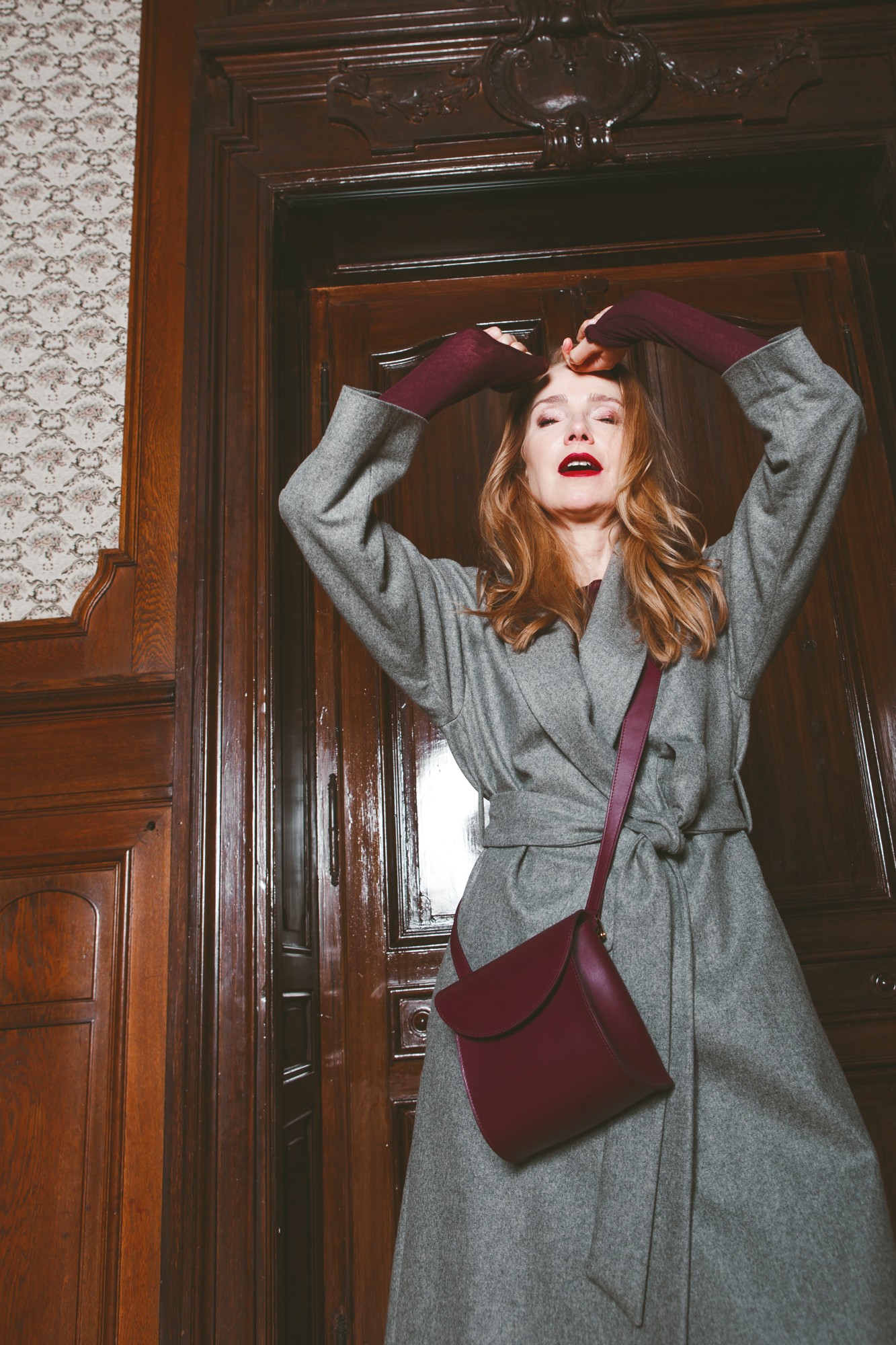
As someone who has dedicated her life to leather craftsmanship, how do you view the growing interest in alternative materials?
I am, of course, familiar with these materials. I have had the opportunity to see them – and literally feel them for myself – at the trade fairs in Milan. I completely understand why many brands choose to work with them.
I believe, however, that the issue is far more complex than it may appear at first glance.
Have you ever experimented with innovative materials such as pineapple leather, cactus leather, or mushroom leather?
No, in this respect I am rather conservative. These alternative materials have completely different properties, which makes them easier to work with in many ways.
Leather, by contrast, is a natural, non-homogeneous material. Its properties vary depending on the direction of the grain and on the specific area of the hide, reflecting differences in the density of its collagen fibre structure. Understanding how the tanning and manufacturing processes influence its character, strength, stretch, and suitability for a particular application is essential.
That complexity is precisely what fascinates me. The more you learn about leather, the greater your respect for it becomes.
For me, leather goods are where natural material, craftsmanship, technology, and experience come together. That is what continues to inspire me every day.
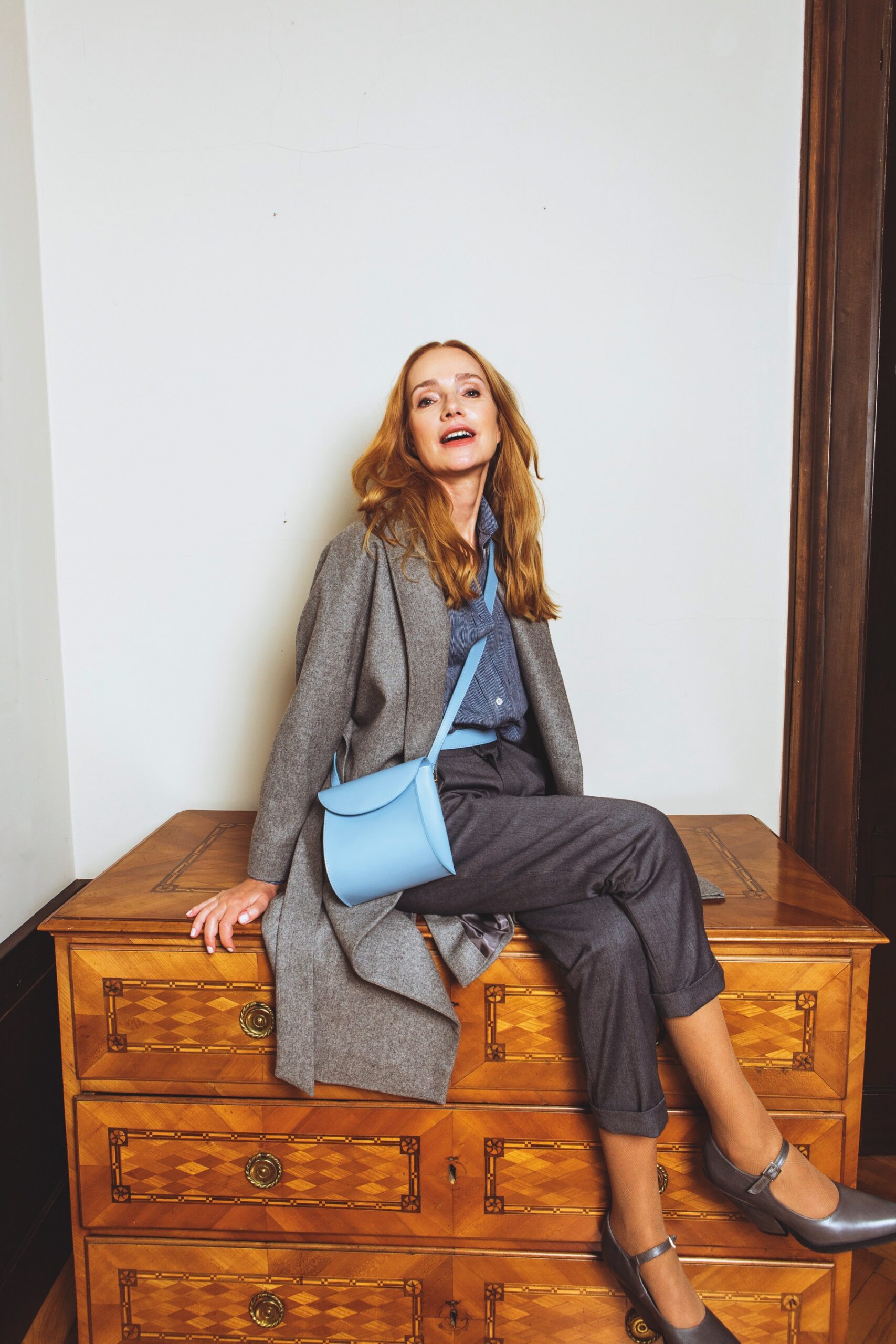
Sustainability means different things to different people. Is creating a handbag that lasts for decades, in itself, the most sustainable approach?
I cannot say whether this is the single most sustainable approach. What I do believe, however, is that truly good design is one of the most sustainable choices we can make. A well-designed product should lose neither its beauty nor its functionality after a year, two years, or even many years of use.
Ultimately, it is about responsibility – for what you create, the materials you choose, and the way the product is made. It is equally important to ask where, how, and under what conditions a product was produced. Responsibility does not rest solely with the maker; it also belongs to the person who chooses to buy it.
Today, however, I feel that the constant noise of marketing has gradually emptied words such as craftsmanship and design of their true meaning. They are used so frequently that they have become little more than slogans. As a result, people are increasingly losing the ability to recognise genuine quality.
You’ve spent many years teaching. What is the one lesson you hope every young designer leaves your classroom with?
That is a difficult question. If I had to choose just one lesson, it would be this: believe in your own work. I always try to teach my students that they must first be convinced of what they create themselves. Only then can they convince others of its value.
Who taught you the most about craftsmanship? Was there someone who fundamentally shaped the way you think about design?
In the early stages of my career, my secondary school professor was a tremendous help when it came to craftsmanship. Later, an important source of inspiration became a colleague who worked as a technologist in the leather goods industry and completed professional training in Italy. We still regularly have long conversations about technology, construction, and manufacturing processes.
As for design, I naturally have my own international role models. I am particularly drawn to the originality of Phoebe Philo, and I have always admired the purity and timelessness of Jil Sander’s work.
Is there a book that has influenced your creative thinking, or perhaps one you believe every designer should read?
Yes. Design: Aktualita, nebo věčnost? (Design: Relevance or Timelessness?) by Martina Pachmanová (2005). It is a book I return to regularly because it explores questions that I believe remain central to design today: what gives design its lasting value, and whether it can endure long after passing trends have faded.
I would recommend it to anyone. I consider Martina Pachmanová to be one of the most influential figures in Czech art and design theory. Her ability to place design within a broader cultural and social context is, in my view, truly inspiring.
When you feel creatively blocked, where do you go? What helps you reconnect with your ideas?
The best way for me to recharge is simply to change what I’m doing. Working in the garden or going for a walk usually does the trick. We live in a beautiful place, and I never take it for granted. Sometimes it’s enough just to pause and listen to the birds in the garden.
Or, I clean the house. There is something surprisingly satisfying about it – you can see the results of your work immediately. (smiles)
You’ve reached a stage in life where many people think about slowing down. Instead, you chose to build a new brand. What gives you that energy?
I think it largely comes down to mindset. I have always been an active person by nature. I eat simply and in moderation, and try to exercise every day, even if only for a short while. It helps me maintain both my energy and my focus.
I am grateful to be healthy and to be able to do work that I truly love. I see it as a gift. I have worked hard all my life, and work has always been a natural and meaningful part of who I am.
What brings me the greatest joy, however, is hearing from my customers. When they tell me they have never seen such precise craftsmanship, or that the handbag is even more beautiful in person than it appeared in the photographs, I consider that the highest compliment. And I am fortunate to work with a truly exceptional photographer.
Teaching is another great source of fulfilment. I enjoy sharing my experience with students, and I am lucky to work alongside wonderful colleagues.
If you could give one piece of advice to every woman who dreams of starting something later in life, what would it be?
I would tell them just one thing: do it. Later in life, you are unlikely to regret not being more successful – you are far more likely to regret never having tried.
And if not now, then when?
 Interview by Alice Botnarenco, a Romanian entrepreneur, founder of the Women in Business organisation, and owner of ALISIA ENCO, a fashion brand for businesswomen who need to respect a formal dress code but still wish to express their personality. By founding Women in Business in 2009, Alice created a network for women to share solutions and ideas. The organisation has been growing beautifully throughout the years. Since 2012, she has been a Mentor for the European Network of Mentors for Women Entrepreneurs. She also represented Romania at the Global Summit of Women. During this time, she had her TV show called Business for Women.