

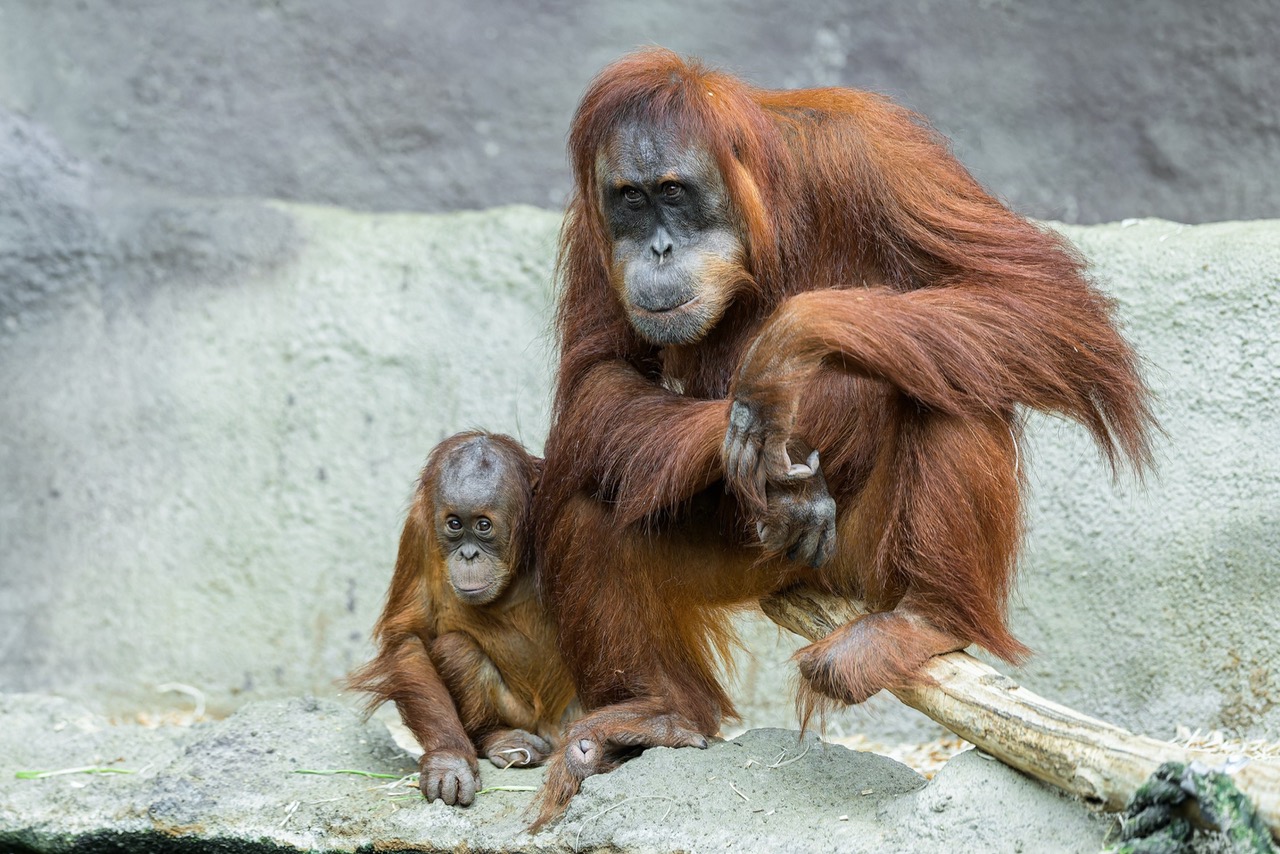
Thirteen-year-old female Diri and her first-born son Harapan, who was born in May 2024. Photo Petr Hamerník, Prague Zoo
Sumatran orangutans – male Paga, female Diri and their two-year-old son Harapan – were moved from the Indonesian jungle to the Dja Game Reserve yesterday. In the new gorilla pavilion, they found a temporary home before Prague Zoo rebuilds their existing exhibit.
The water moat that until now separated animals and visitors will be replaced by netting and glass. In addition, the apes’ living space will be significantly increased. They should return to the reconstructed habitat in about two years. In the meantime, the mentioned orangutans will live in the neighborhood of the gorilla family in the upper part of the garden, where they will inhabit the exhibit until recently inhabited by brush monkeys and kokodans.
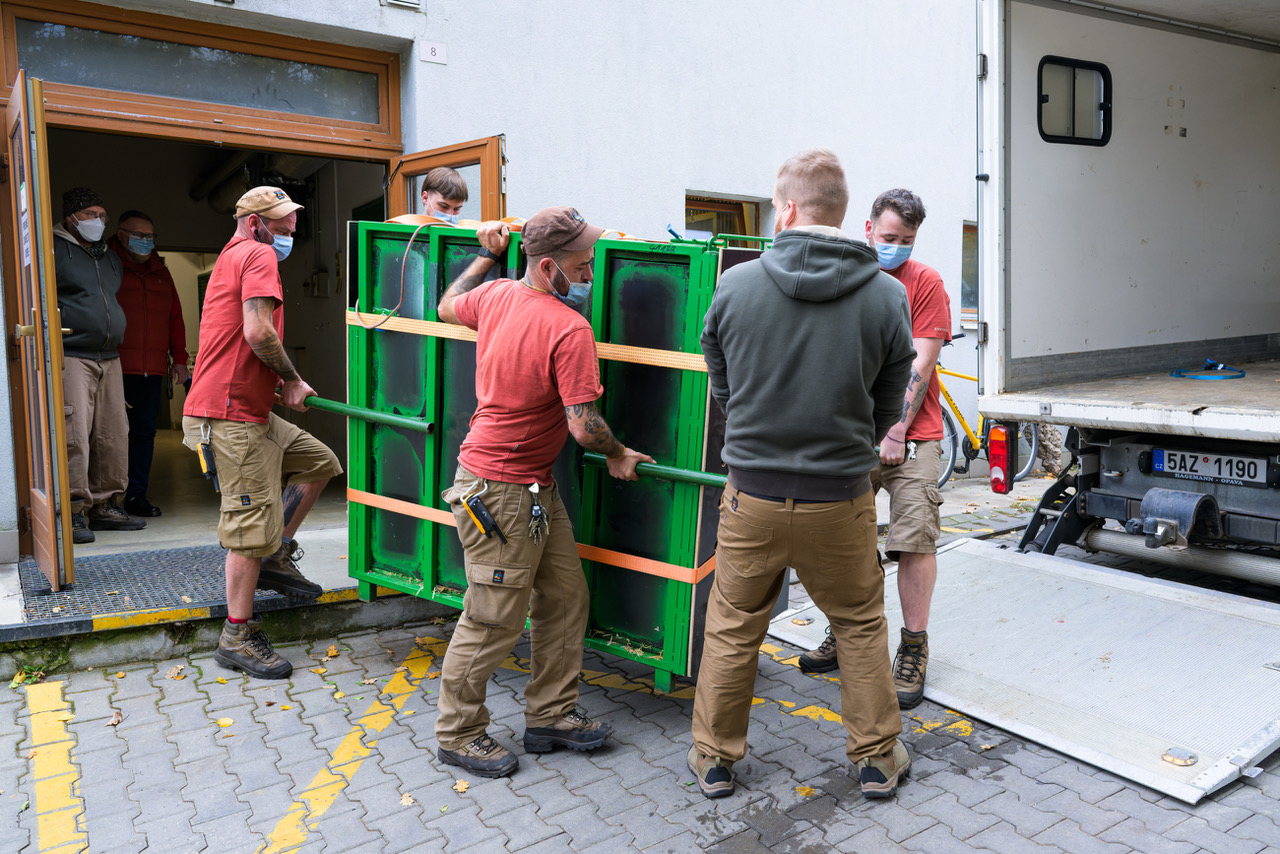
Loading crates with rare cargo. Photo by Petr Hamerník, Prague Zoo
The trio is now getting used to the back of the pavilion after the move, and will be on display during November. The fourth of the orangutans kept in the Prague Zoo, the old female Mawar, still remains in the Indonesian jungle.
“After long and thorough discussions, which we also had with leading European experts on orangutan breeding, the transfer of these three animals and the subsequent reconstruction are the best possible solution. The cub will be out of reach of the moat, and the popular orangutans will continue to be seen,” says Prague Zoo primate curator Jan Mengr.
Meanwhile, the 37-year-old female Mawar remains in her original place. “Orangutans are naturally solitary, and the female Mawar, who is afflicted with the ailments of old age, is not compatible with the rest of the farmed animals. With this in mind, and also considering that she herself is not in any danger near the water, we decided to leave her in the space she is used to until the beginning of the construction work,” he adds.
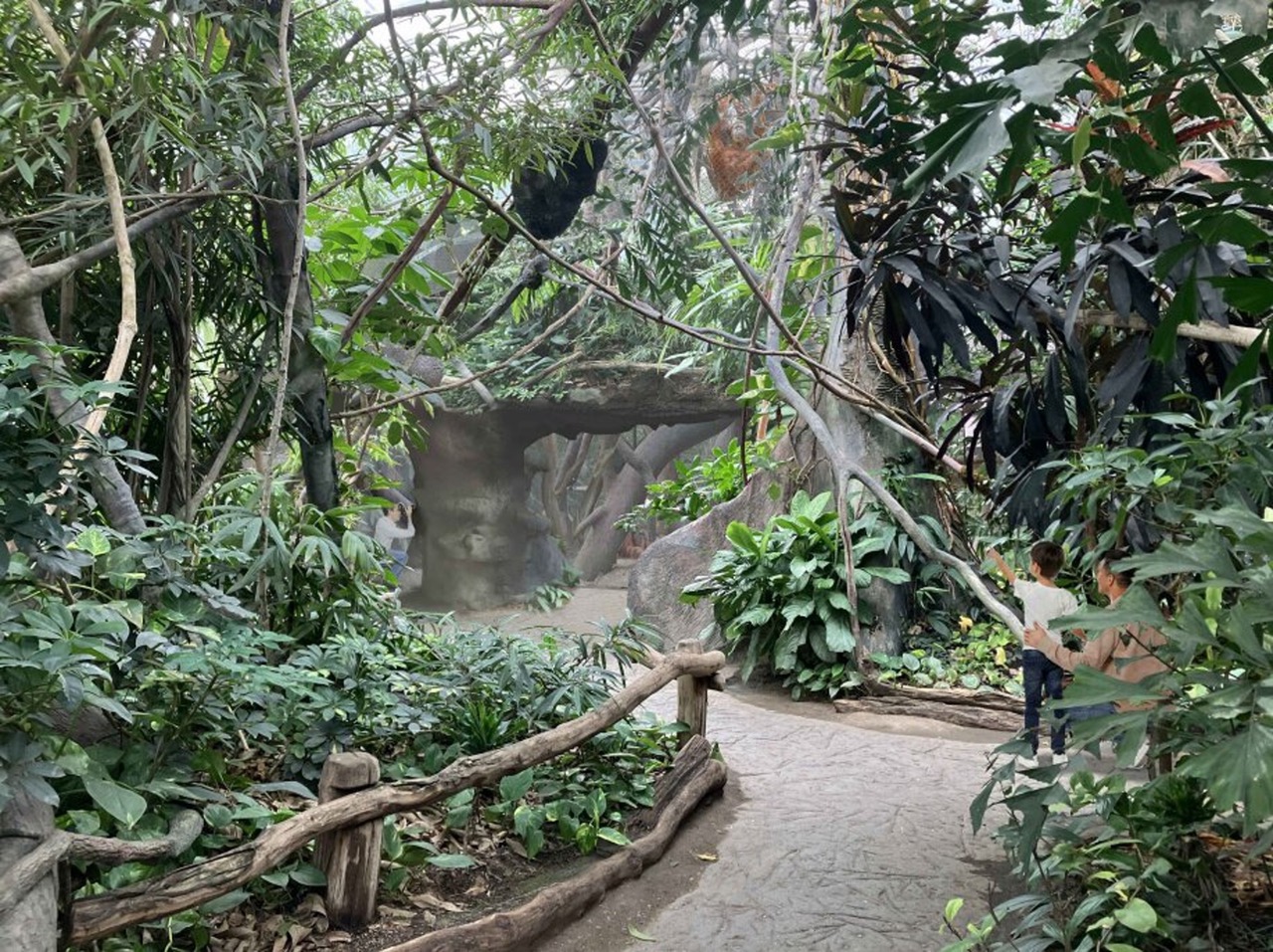
Initial visualization of the reconstruction of the Sumatran orangutan exhibit in the Indonesian Jungle pavilion. View in the direction of the visitor route from the stairs leading from the nocturne. Source Prague Zoo/AND architectural studio
The Prague Zoo is making changes after the five-year-old orangutan male Kawi drowned last year. Immediately after the unfortunate event, a system was installed to detect a fall into the water, which was used to immediately alert employees who had the means to catch a drowning primate. The area was also guarded by the staff of the visitor service. Despite the fact that the breeding of great apes near water barriers has been a proven practice of the most respected zoos in the world for years (we can name San Diego, Melbourne, Dublin, Frankfurt, Leipzig or Vienna), after the tragic accident it was necessary to come up with a different construction and technical solution for the exposition.
The Dja reserve has been preparing for the arrival of the orangutans for several months. Among other things, it was necessary to equip the ceiling of the selected exhibition with a protective net or to secure the lights, knowing the ingenuity of orangutans. Furthermore, it was necessary to install new ropes, replace the substrate and, last but not least, find a temporary home for Brazza’s cats and African brush-tailed possums. While the felines can live in the modern facilities of the pavilion, which is only a few years old, the brush birds have found a home in the Ústí nad Labem Zoo, for which the Prague Zoo once again sincerely thanks them for their help and collegiality.
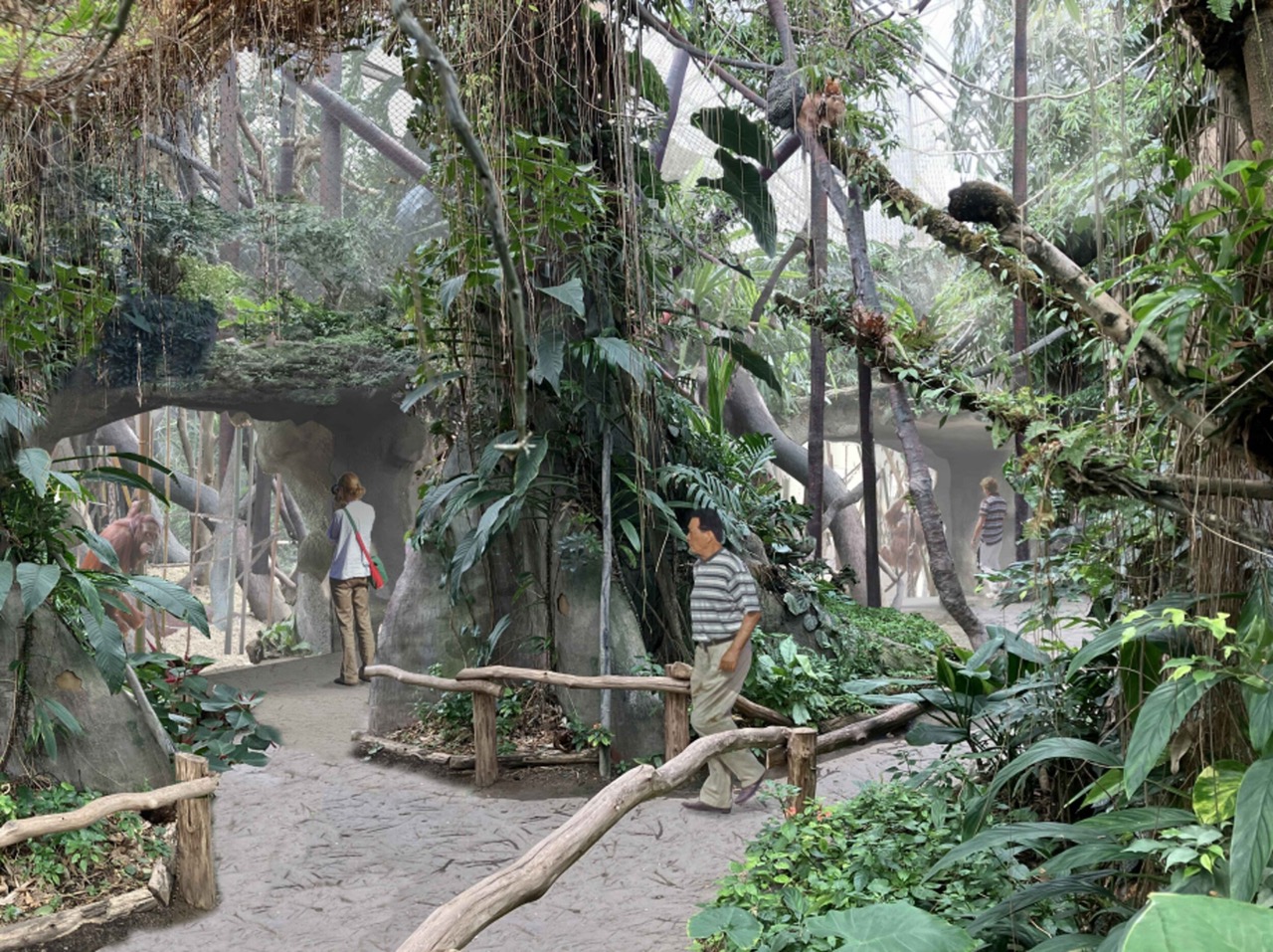
Initial visualization of the reconstruction of the Sumatran orangutan exhibit in the Indonesian Jungle pavilion. View against the direction of the visitor route from the current exhibit of Palawan porcupines. Source Prague Zoo/AND architectural studio
The transport of the orangutans itself went smoothly mainly thanks to the breeders who regularly trained them to voluntarily enter the transport crates. The transfer was done without the need to put the animals to sleep and lasted only 45 minutes.
The Prague Zoo will inform about the adaptation of the orangutans in the Dja Reserve and their transfer from the background to the exhibition through its usual communication platforms. It is currently not possible to photograph or film the relocated orangutans