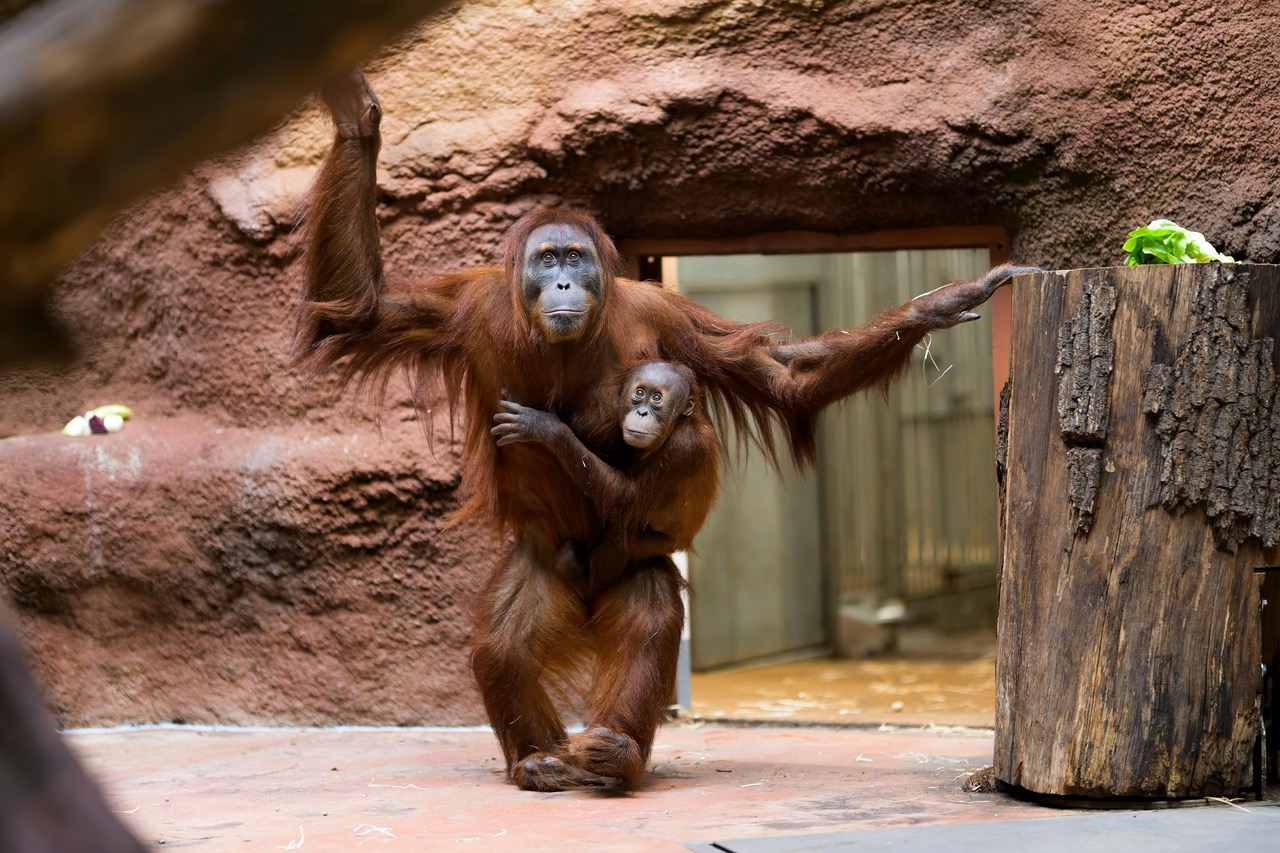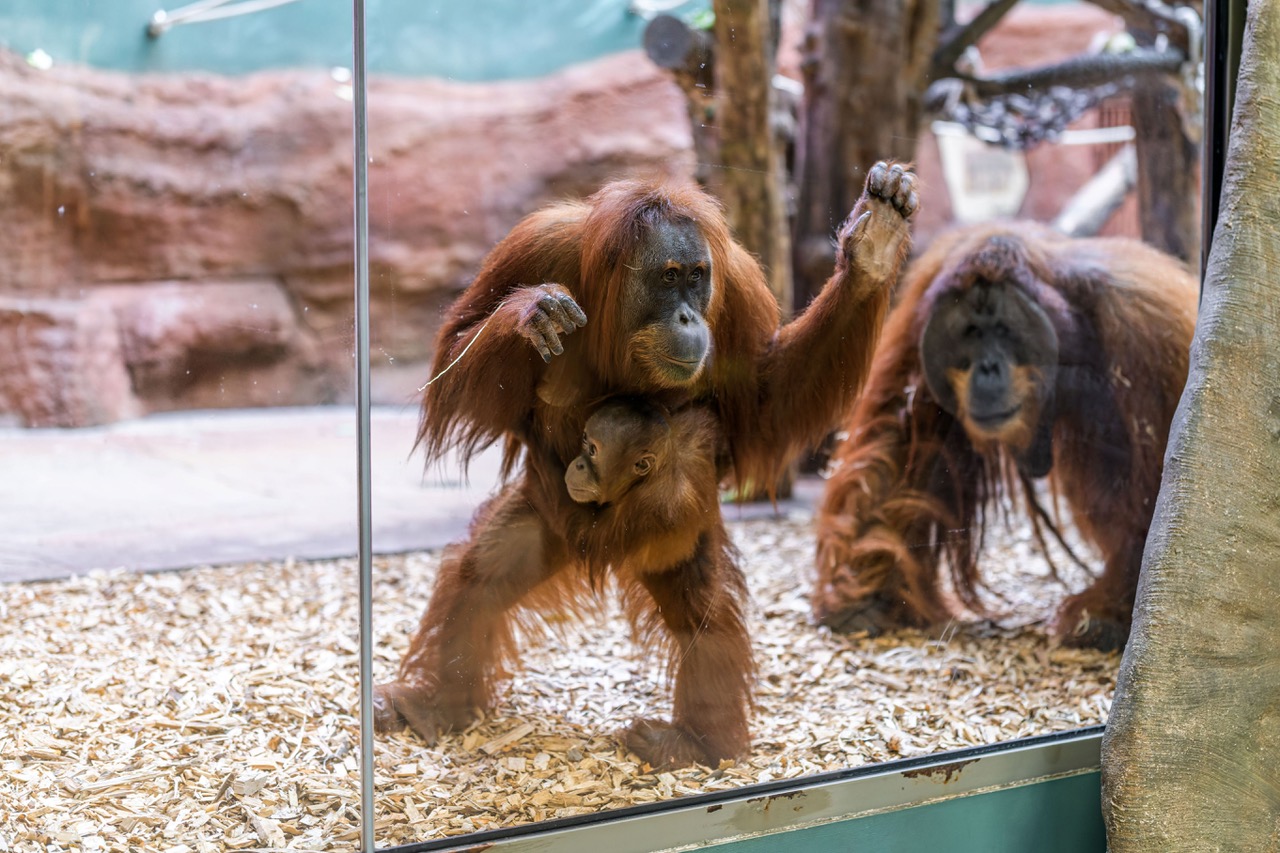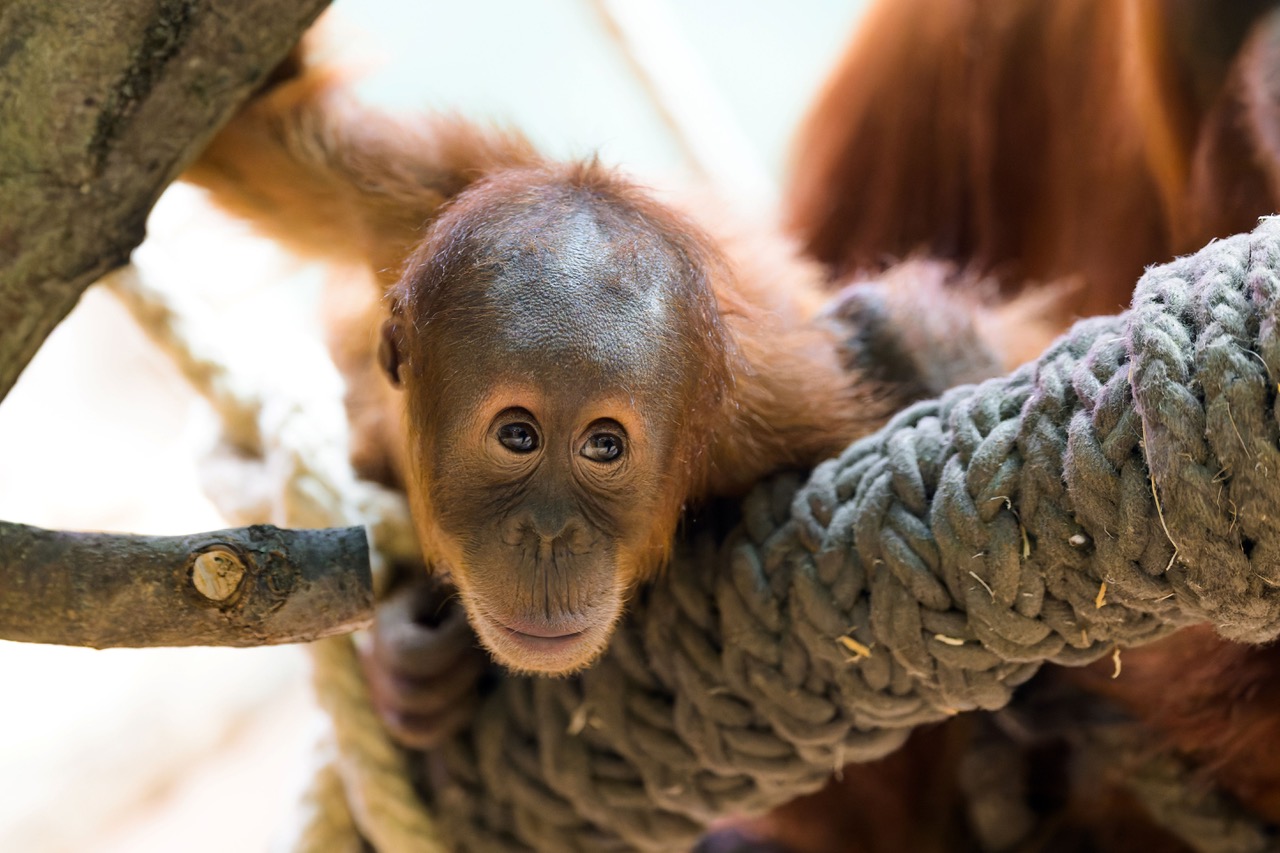

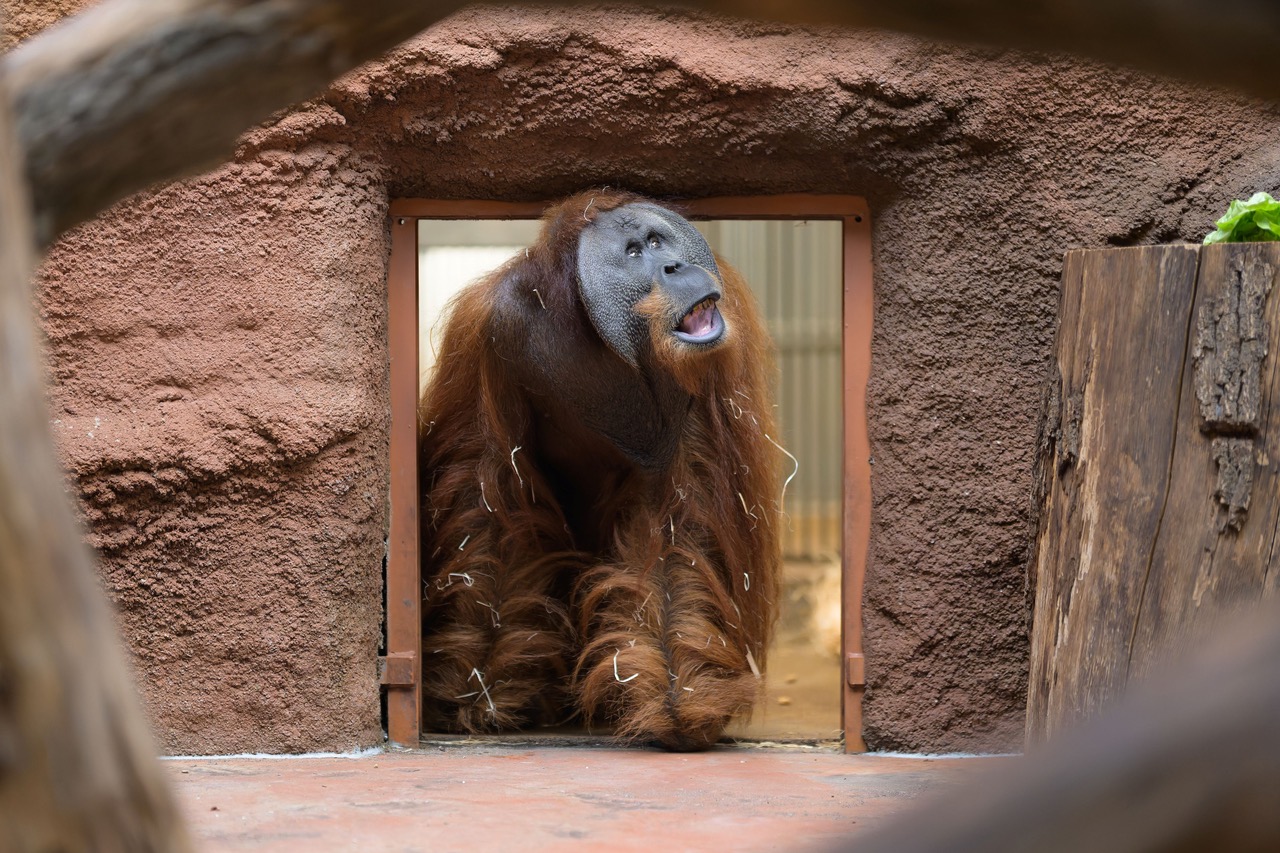
The initial reaction of Pagy, a male Sumatran orangutan, to the exhibit space within the Dja Reserve—a pavilion otherwise dedicated to Central African species. Photo: Petr Hamerník, Prague Zoo
Starting Friday 20.11.2026, a trio of Sumatran orangutans can be seen in an unusual location—next door to a family of lowland gorillas in the Dja Reserve. The male, Pagy; the female, Diri; and their two-year-old son, Harapan, have moved to this pavilion in the upper part of the zoo due to renovations in the Indonesian Jungle exhibit—a development Prague Zoo announced in a press release two weeks ago. Having settled in well within the back-of-house areas of their temporary home, the orangutans were granted access to the main exhibit space today. However, the doors to their private sleeping quarters will remain open to ensure the animals’ comfort.
“Pagy, the male, was the first to enter the exhibit. He appeared quite confident and soon began exploring various points of interest, such as the gates, the feeding hatch, and the climbing structures—trying them all out one by one. Diri was more cautious, which is to be expected given that she is carrying and protecting her young. I suspect it will take her a few more days before she lets little Hari venture out to explore on his own. For now, she keeps him pressed close to her, or at the very least, holds onto his leg,” explains Martin Vojáček, Head Keeper of Primates at Prague Zoo.
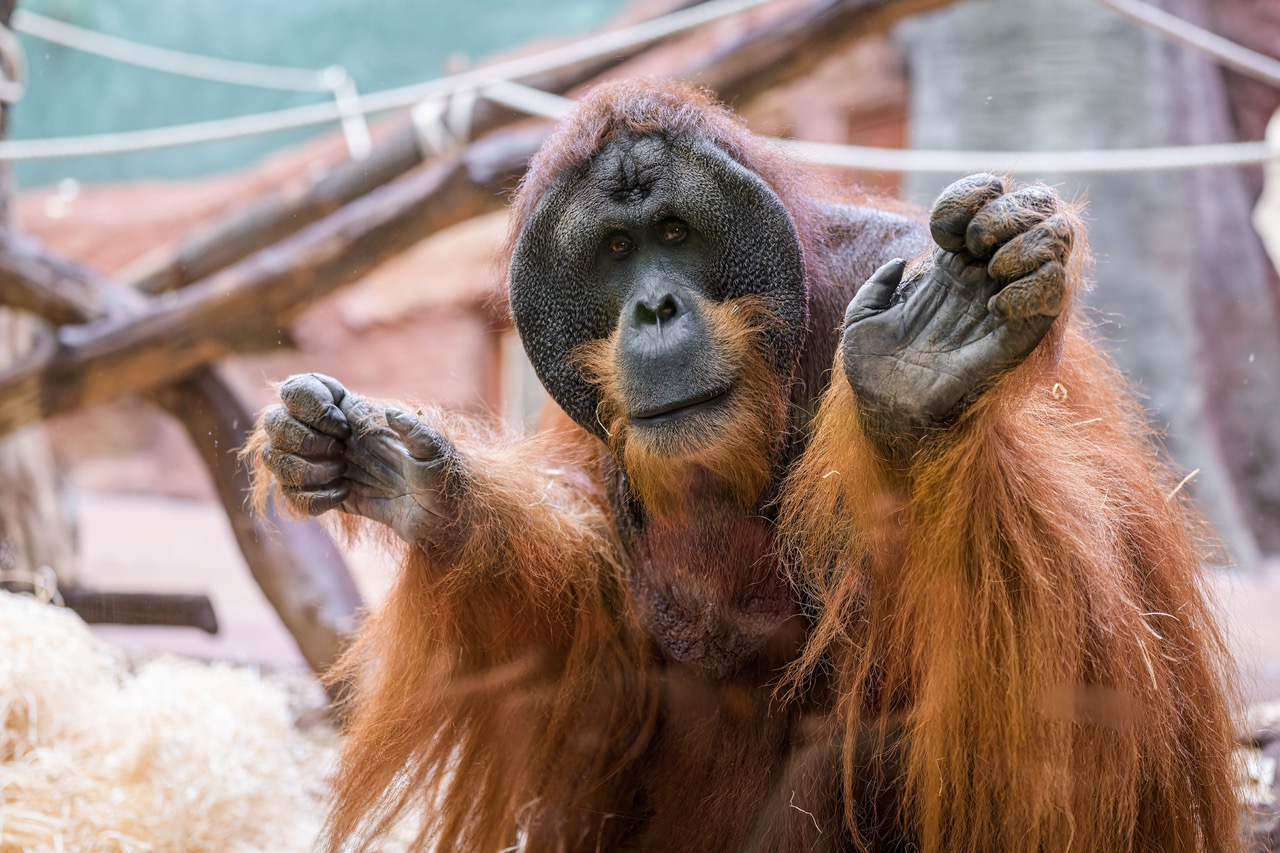
25-year-old Pagy is handling the changes quite well. While exploring his temporary enclosure for the first time, he didn’t hesitate to touch everything he encountered. Photo: Petr Hamerník, Prague Zoo
Overall, the orangutans have adapted to their new surroundings faster than anticipated. This was aided by the fact that their daily routine remains identical to the one they followed in their original pavilion; they are fed at the same times, and, most importantly, they are cared for by a team of keepers they already know well. Assumptions that the gorillas in the adjacent enclosure might react to the presence of other great apes under the same roof have not been borne out. “I believe they can sense each other, but it has had no impact on the behavior of either group,” adds Vojáček.
The orangutans will remain in the Dja Reserve for the duration of the necessary reconstruction work. The primary goal of this project is to replace the water moat in the “Indonesian Jungle” exhibit with a safer barrier consisting of glass and mesh. This technically challenging undertaking is expected to be completed in about two years.