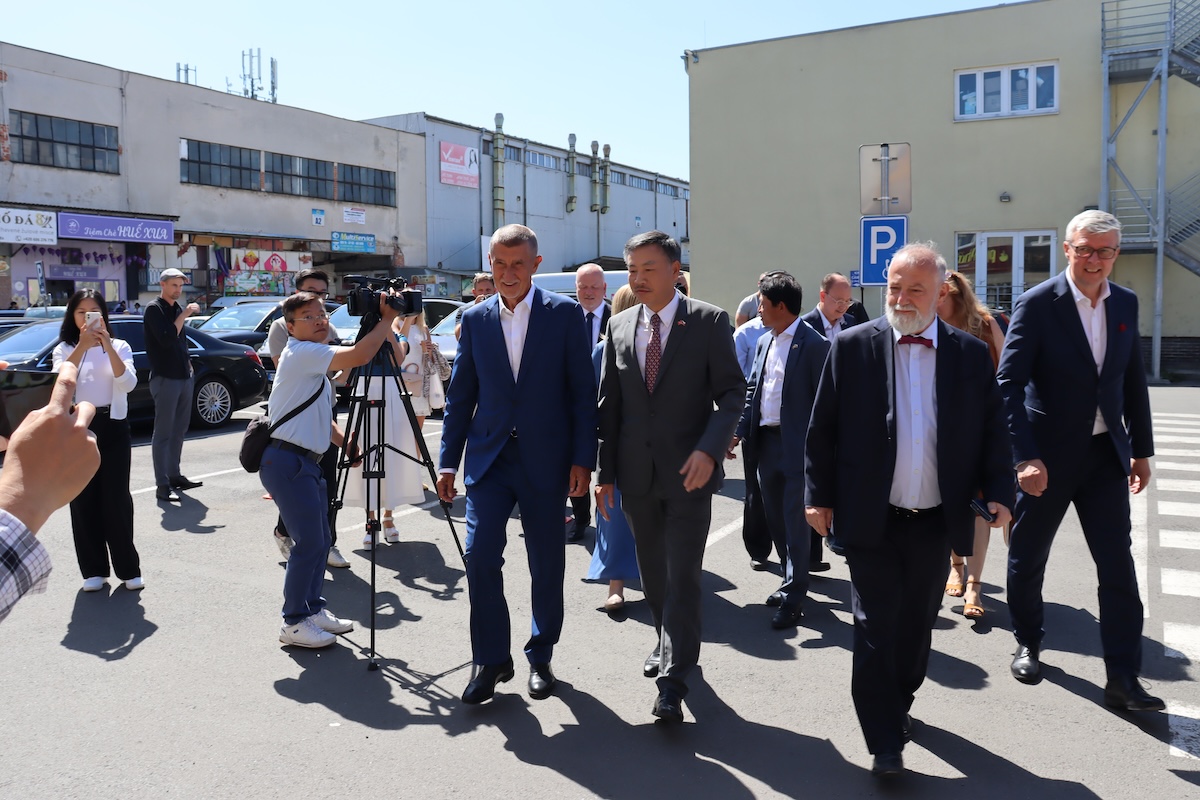

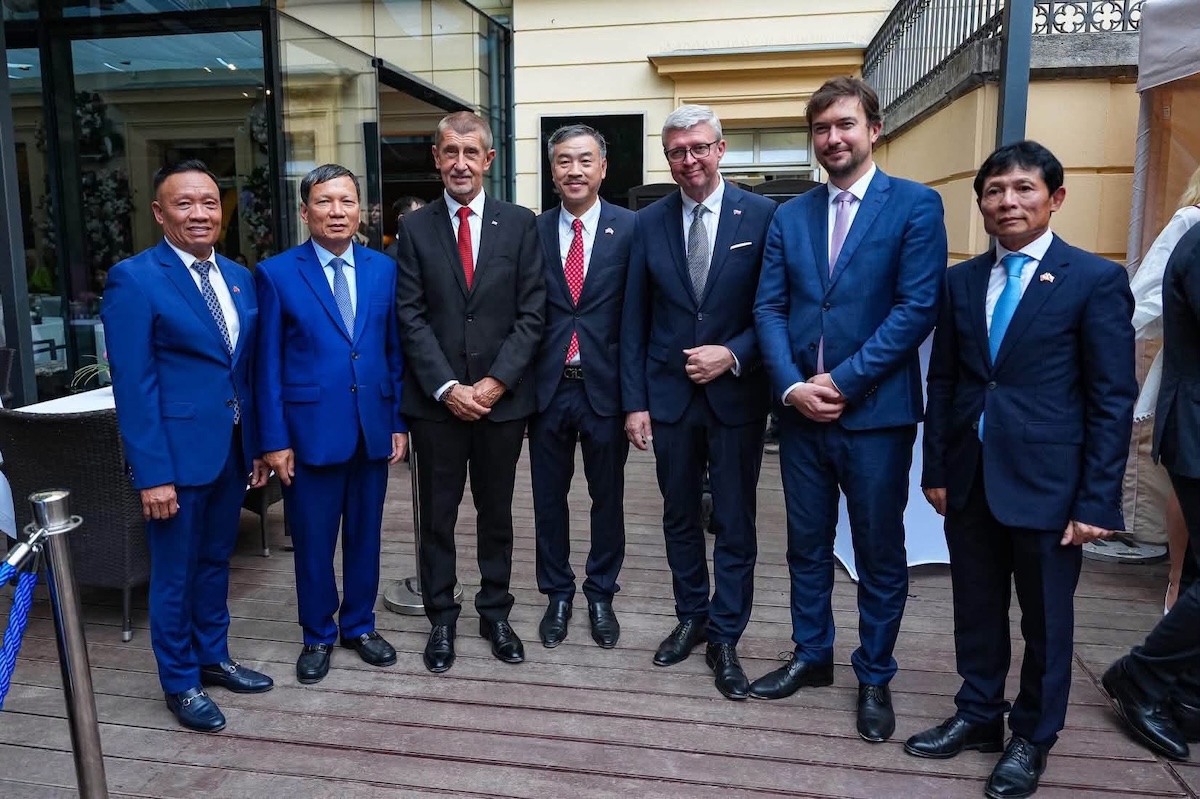
On the occasion of the upcoming visit of Mr. Andrej Babis, the Prime Minister of the Czech Republic, to the Republic of Viet Nam, we spoke with H.E. Mr. Duong Hoai Nam, Ambassador of Viet Nam to the Czech Republic
Viet Nam and the Czech Republic elevated their bilateral relations to a Strategic Partnership in 2025, ushering in a new phase of development in bilateral ties. Against the backdrop of profound geopolitical changes in Europe, what important messages does Prime Minister
Andrej Babiš’s visit to Viet Nam convey, and what are the two sides’ greatest expectations for deepening and making their Strategic Partnership more substantive and effective?
I believe that the visit to Viet Nam by Mr. Andrej Babiš, Prime Minister of the Czech Republic, carries significant political and strategic importance. It takes place at a particularly meaningful moment, as the two countries are looking ahead to the 77th anniversary of the establishment of diplomatic relations (1950–2027) and the second anniversary of the elevation of bilateral relations to
a Strategic Partnership (20 January 2025 – 20 January 2027). The visit also demonstrates the high regard in which the Czech Government and Prime Minister Andrej Babiš personally hold Viet Nam, as well as the Czech Republic’s determination to elevate
You mention “relations with Viet Nam to a new level”, what do you mean?
The official establishment of the Strategic Partnership in 2025 has provided fresh impetus and a new framework for cooperation, reflecting growing political trust, shared interests in many areas and the complementary potential of the two economies. At a time when the global and European landscapes are undergoing profound changes, strategic competition is intensifying, and issues such as security, energy, supply chains and strategic autonomy are becoming increasingly pressing, the visit also sends a clear message: Viet Nam and the Czech Republic are both committed to strengthening relations with reliable and responsible partners that share common interests and respect international law.
In particular, the visit demonstrates the two countries’ determination not only to preserve the achievements of traditional cooperation but also to proactively expand cooperation into new areas in line with their respective development priorities and strategic interests.
In my view, said H.E. Mr. Duong Hoai Nam, there are three key areas that should be prioritized.
First, we need to make breakthroughs in economic, trade and investment cooperation, turning the economic pillar into a substantive foundation of our Strategic Partnership. This area offers considerable potential, yet cooperation has not fully reflected
the strong political foundations and longstanding friendship between our two countries. We hope that the visit will provide fresh impetus for Czech businesses to deepen their engagement in the Vietnamese market, while encouraging Vietnamese enterprises to expand their investments and business operations in the Czech Republic and across the EU market. Both sides should focus on removing barriers, strengthening business connectivity and promoting concrete cooperation projects.
In particular, we should make effective use of the Viet Nam–EU Free Trade Agreement (EVFTA) to further expand bilateral trade and investment.
Second, we should expand cooperation into strategic sectors and high-value-added technologies. I believe this is one of the areas of greatest long-term significance for bilateral relations. The Czech Republic has considerable strengths in manufacturing, precision engineering, railway technology, energy, mining, defense industries and advanced technologies. Meanwhile, Viet Nam is accelerating its industrialization and modernization, developing strategic infrastructure, promoting digital and green transformations, and building a more competitive economy. These are areas in which our two economies have considerable potential to complement one another.
We particularly hope that the visit will help advance cooperation projects in these important and emerging fields.
Third, we should strengthen the political and social foundations of our relationship and promote people-to-people exchanges to ensure that the Strategic Partnership develops in a sustainable and substantive manner. The two countries should continue to increase exchanges at all levels and strengthen cooperation between legislative bodies, governments, local authorities and social organizations, while expanding collaboration in education, human resource development, culture, tourism and youth exchanges.
In particular, the Vietnamese community of more than 100,000 people in the Czech Republic, officially recognized by the Czech Government as one of the country’s ethnic minorities, represents a valuable asset and a unique bridge in bilateral relations. We hope that the community will continue to integrate successfully, make positive contributions to Czech society, preserve its cultural identity and strengthen the bonds between our two peoples. The launch of direct air services between Hanoi and Prague by VietJet Air in October 2026 has also provided an important new impetus for people-to-people exchanges, tourism and economic cooperation.
I, add H.E. Mr. Duong Hoai Nam, also wish to emphasize that, as Europe adjusts its strategic priorities and seeks reliable partners in the Asia-Pacific region, Viet Nam is assuming an increasingly important position and international profile. With its dynamic economy, stable political environment, extensive network of free trade agreements and strategic position within ASEAN, Viet Nam can serve as an important gateway for the Czech Republic to expand its presence in Southeast Asia. Conversely, the Czech Republic can provide Viet Nam with a convenient gateway to strengthen its links with Central Europe and the wider EU market.
I am confident that Prime Minister Andrej Babiš’s visit to Viet Nam, accompanied by a high-level delegation and a large number of Czech business representatives, will carry significance beyond its political and diplomatic symbolism. It will also deliver concrete cooperation outcomes and open up new opportunities and projects. Most importantly, we need to translate political commitments into action programmers, agreements into projects, and potential into measurable results.
According to the proposed programmed, the Prime Minister’s first destinations will be Hoa Lac Hi-Tech Park in Hanoi and the joint SKODA–Thanh Cong (TC Group) automobile manufacturing and assembly venture in Quang Ninh, while in Ho Chi Minh City he will visit
Ton Duc Thang University. What message does the decision to begin the visit with technology and conclude it with education convey about the new direction of bilateral cooperation, particularly in innovation and the development of highly skilled human resources, including the possibility of resuming the Czech programme for recruiting skilled Vietnamese workers?
I believe that the selection of Hoa Lac Hi-Tech Park in Hanoi, the SKODA –
Thanh Cong automobile manufacturing and assembly plant in Quang Ninh, and
Ton Duc Thang University in Ho Chi Minh City as destinations on Prime Minister Andrej Babiš’s programme carries considerable significance. It reflects a long-term vision for cooperation between our two countries: making science and technology, innovation and human resource development key drivers of the next phase of
the Viet Nam – Czech Republic Strategic Partnership.
While the visits to Hoa Lac Hi-Tech Park and the SKODA–Thanh Cong automobile manufacturing and assembly plant highlight Viet Nam’s technological capabilities, innovation ecosystem and development ambitions, the visit to Ton Duc Thang University concludes the programme with a message about people, knowledge and human resources – the decisive factors in turning those development objectives into reality. In other words, these destinations demonstrate the close connection between technology and people, as well as between immediate development needs and
a long-term vision for cooperation.
On the Czech side, the country has a long-standing tradition and considerable strengths in precision engineering, automation, manufacturing technology, new materials, energy technology, information technology and applied research in artificial intelligence. Meanwhile, Viet Nam is prioritizing the development of science and technology, digital transformation, the semiconductor industry, artificial intelligence, biotechnology and other high-value-added industries. Our two countries are well positioned to complement one another, not only through trade and investment
but also through joint research, technology transfer and the establishment of
joint research and development centers.
Another particularly important direction is to promote cooperation in higher education, vocational training and the development of highly skilled human resources. I believe that the visit to Ton Duc Thang University will help open up practical opportunities for cooperation among universities, research institutes and businesses in both countries. We can promote joint training programmes, exchanges of lecturers and students, collaborative scientific research, scholarship programmes and training tailored to business needs. Particular attention should be paid to fields in which both countries have substantial demand, such as engineering, mechanical engineering, automation, information technology, artificial intelligence, energy, healthcare and environmental technology.
I would also like to highlight an issue of considerable practical importance:
the possibility of resuming and expanding the Czech Republic’s qualified worker programme for recruiting skilled Vietnamese laborers. This is an area with significant potential that could bring tangible benefits to both sides. The Czech Republic needs additional workers in a number of sectors, particularly manufacturing, mechanical engineering, technical professions, construction, healthcare and other fields requiring specialized qualifications. Meanwhile, Viet Nam has a young and diligent workforce, capable of adapting to new technologies and increasingly well trained in professional skills and vocational qualifications.
If both Governments give their attention to and reach agreement on resuming the programme for recruiting skilled Vietnamese workers, it would not simply be a measure to address the Czech Republic’s immediate labor needs. It could also become a long-term channel for cooperation in vocational training, skills development and technology transfer. Vietnamese workers would have opportunities to gain experience in modern working environments, enhance their professional qualifications and accumulate international experience, while Czech businesses would gain access to a workforce suited to their production and business development needs.
The message I would like to emphasize is that Viet Nam and the Czech Republic should not limit their cooperation to making use of their existing strengths and advantages; they should also invest together in the drivers of future development.
If economic and trade cooperation provides the material foundation for the Strategic Partnership, then science and technology, education and highly skilled human resources will be the pillars that ensure its sustainable development for decades to come. I believe this will be one of the most promising areas of cooperation between Viet Nam and the Czech Republic in the new era.
Despite his demanding schedule, the Czech Prime Minister has set aside time to meet with the first generation of Vietnamese people who studied and worked in former Czechoslovakia
as well as Vietnamese people who speak Czech in Ho Chi Minh City. Mr. Ambassador, is the Vietnamese community in the Czech Republic serves as a bridge in Europe, how do you assess the role of this “special diplomatic asset” within Viet Nam itself in strengthening political trust and creating a distinctive feature of Viet Nam–Czech relations compared with Viet Nam’s relations with other European countries?
I believe this is one of the most distinctive and deeply meaningful human elements of Prime Minister Andrej Babiš’s visit to Viet Nam. His decision to meet with Vietnamese people who studied and worked in former Czechoslovakia as well as Vietnamese Czech speakers in Ho Chi Minh City, demonstrates not only his affection and appreciation for the generations who have contributed meaningfully to building bilateral relations, but also conveys a profound political message: Viet Nam–Czech Republic relations are built not merely on agreements between the two Governments, but also nurtured by the sentiments, shared historical memories, close bonds and mutual trust between our peoples.
I often describe the Vietnamese people who studied, worked and lived in former Czechoslovakia as a special generation – the first “people-to-people ambassadors” of Viet Nam–Czechoslovakia relations. During years when Viet Nam was still facing considerable difficulties, thousands of Vietnamese people received education and training, developed their careers and built their futures in Czechoslovakia.
They acquired not only knowledge, professional skills and practical experience, but also a deep understanding of the Czech language, culture, working practices and values. More importantly, their affection and appreciation for the Czech country and people have been passed down to their children, and have become part of the memories and identity of many Vietnamese families.
What is particularly valuable is that these connections have not remained merely memories of the older generation. Today, we can meet fluent Czech speakers in
Viet Nam itself – people who studied or worked in the Czech Republic or have developed deep personal ties with the country. They serve as natural bridges between our two societies, helping Vietnamese people better understand the Czech Republic and Czech people gain a deeper understanding of Viet Nam.
In this connection, I wish to highlight that if the Vietnamese community of more than 100,000 people in the Czech Republic serves as an important bridge bringing
Viet Nam closer to Europe, then Vietnamese people who have longstanding ties with former Czechoslovakia and today’s Czech Republic and who are now living in
Viet Nam serve as a bridge in the opposite direction, bringing the image of the Czech country and its people closer to the Vietnamese public.
This is a special diplomatic asset because not every bilateral relationship enjoys
a network of human connections spanning multiple generations, enduring through changes in time and across geographical boundaries in this way.
In my view, the most distinctive feature of Viet Nam–Czech Republic relations, compared with Viet Nam’s relations with many other European countries, lies in their historical depth and the strong foundation of people-to-people affection established at a very early stage. Our bilateral relationship did not begin solely with economic interests or policy convergence in the current period. Rather, it has been built over many decades through cooperation, mutual sharing and support. This foundation has fostered a special sense of closeness, trust and goodwill between our peoples.
Political trust is strengthened not only through high-level meetings, cooperation documents or joint statements, it must also be nurtured through mutual understanding and public support in both countries. Vietnamese people with a deep understanding of the Czech Republic can make positive contributions to connecting government agencies, businesses, universities, local authorities and social organizations in both countries. They can also help bridge differences in language, culture and working practices.
I particularly hope that we will pay greater attention to connecting different generations – not only those who studied and worked in former Czechoslovakia,
but also young Vietnamese people born and raised in the Czech Republic as well as Czech people who feel a strong attachment to Viet Nam. We need to transform
the fond memories and affection of previous generations into concrete cooperation opportunities for present and future generations, particularly in education, science and technology, business, culture and tourism.
It can be said that the Vietnamese community in the Czech Republic is a bridge connecting our two countries on European soil, while Vietnamese people in Viet Nam who have longstanding ties with former Czechoslovakia and the Czech Republic serve as a bridge right here in our homeland. Together, these two bridges form a unique network of connections, with deep historical roots, a vibrant presence today and promising prospects for the future.
This is a distinctive advantage, a valuable source of social capital and an invaluable “diplomatic asset” that both countries should continue to cherish, preserve and promote as we work to make the Viet Nam–Czech Republic Strategic Partnership increasingly substantive, effective and sustainable.
We have now direct flights between the Czech Republic and Viet Nam. I hope the tourism between the 2 counties will flourish, and more Czech people will visit our beautiful country.