

Education goes far beyond grades
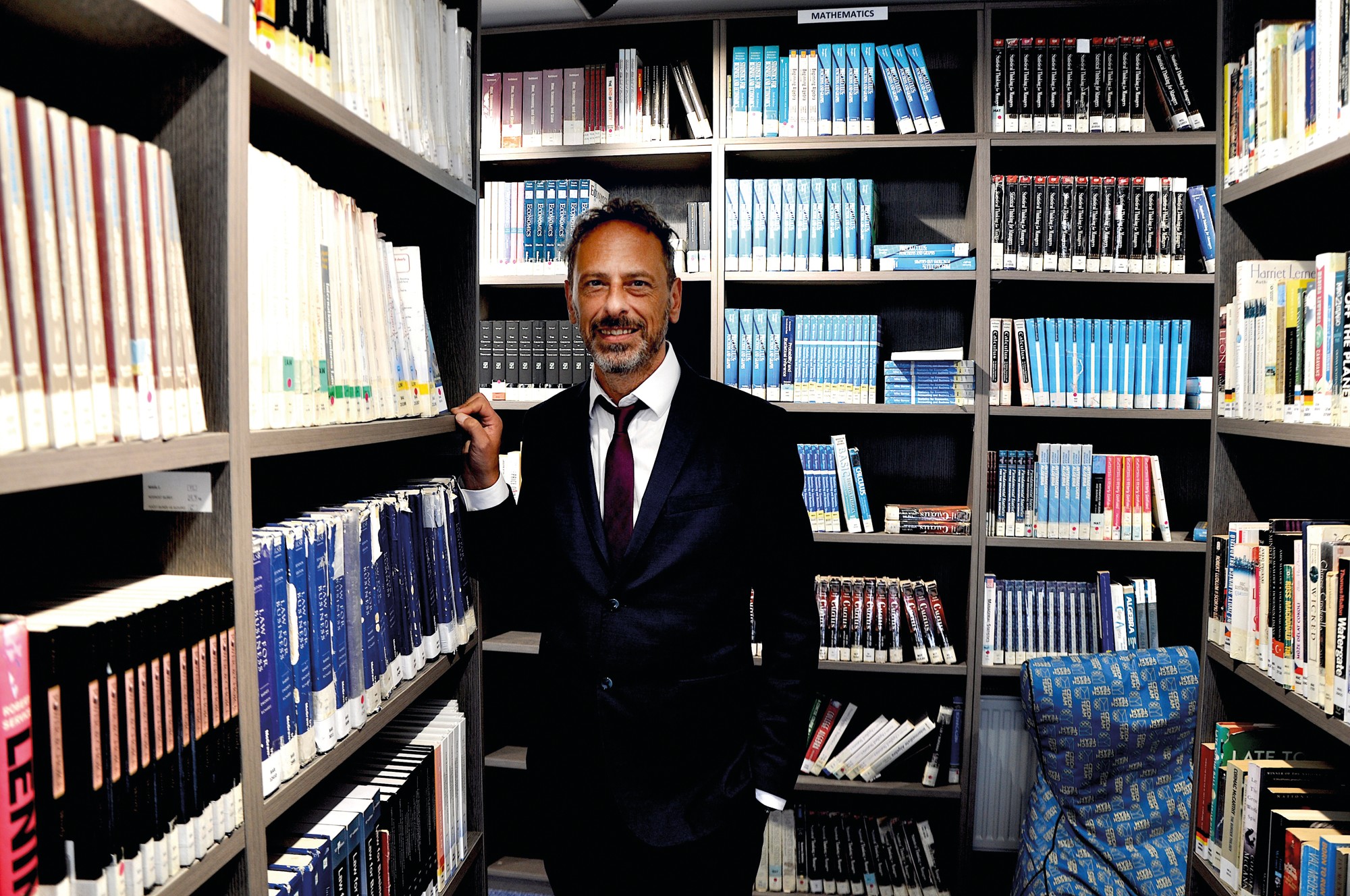
Stefano Cavagnetto, Dean of School of Business and IT, UNYP
Text: Martina Hošková and M. Zisso; Photo: Archive
Before we talk about your work, who are you outside of your roles as a dean and an academic?
Outside my academic and leadership roles, I’m a quiet and reflective person who values peace and simplicity. I find joy in collecting and reading the classics, the kind of books that invite you to slow down, think deeply, and return to them with new eyes. Although the world has changed dramatically, I’ve found that their insights continue to help us understand ourselves, learn from human experience, and approach today’s choices and challenges with greater perspective. Music is another constant in my life, offering both inspiration and space for thinking –without words, it can express emotions and experiences that are often difficult to articulate. It reminds me that not everything meaningful needs to be explained; sometimes understanding comes simply from listening, reflecting, and allowing ourselves to experience the moment. Also, I would add nature – I love reconnecting with the natural world; for me, nature is both a source of energy and a reminder of the importance of balance and simplicity in life.
How did growing up in Italy shape your views on education and success?
Growing up in Italy taught me that education goes far beyond grades; it’s about curiosity, creativity, and learning to see the world from different perspectives. It also shaped my view of success: not simply as professional achievement, but as finding a meaningful balance between ambition, relationships, and enjoying life. Above all, I learned to value tradition while staying open to new ideas, and to use what we learn to make a meaningful difference for ourselves and for others.
When you think back to your student days, was there a teacher, mentor, or turning point that had a lasting influence on you or led you toward academia? Why was it so significant to you?
Looking back, in the first part of my studies I was fortunate to study with prominent Italian logicians and philosophers such as Professor Paolo Casalegno, Professor Diego Marconi, and Professor Sergio Cremaschi.
In the second part, during my stay at the Institute of Mathematics of the Academy of Sciences of the Czech Republic, I was fortunate to study with world-renowned Czech mathematicians who profoundly shaped the way I think, teach, and work with students today. I owe all of them a great debt of gratitude, but Professor Jan Krajíček, my PhD supervisor and a recent recipient of the Schoenfield Prize for outstanding expository writing in Mathematical Logic, had a particularly lasting influence. Almost twenty years ago, he showed me that great teaching is about finding the right balance between intellectual rigor and genuine support and care for the students. That lesson has stayed with me and remains at the heart of my approach to education today, and to some extent has influenced my academic management approach as well.
What motivates or excites you most about teaching and working with students?
What excites me most about teaching is seeing students discover their own potential. I believe education should be rigorous, but also deeply student-centered: every student brings different strengths, ambitions, and ways of thinking. My role is not simply to transmit or mediate knowledge, but to challenge, support, and guide them in becoming confident, independent thinkers. This is something I learned from my own mentors, particularly Professor Jan Krajíček, and, after twenty years, it still remains the most rewarding part of teaching for me.
Beyond subject knowledge and a degree, what should students gain from a university education?
Beyond knowledge and a degree, university should give students the confidence to think independently, the courage to question assumptions, critical thinking, and the curiosity to keep learning. Learning should contribute to the development of the whole person rather than simply transmitting information. Education should create conditions in which students learn to exercise their own judgment, confront different perspectives, and gradually develop an intellectual voice of their own. Ultimately, education is not about teaching students what to think but how to think, and how to turn that thinking into meaningful action for others, and more broadly for society.
What changes in the world of professional employment, such as the growing use of AI, are universities not yet fully preparing students for?
AI is transforming not only what we do, but how we think, learn, and work. I believe that there is an important call to which universities must respond: they must go beyond teaching students how to use new technologies. We need to prepare them to question, evaluate, and work creatively alongside them, which means placing greater emphasis on critical thinking, adaptability, ethical judgment, and human skills. These qualities will enable students not simply to respond to change, but to shape it for a better future. It might be a great opportunity for everyone!
As someone who has recently joined UNYP, what have you noticed about the university, its students, and its community?
What struck me most about UNYP is its strong sense of community and its genuinely student-centered culture. Students are not simply part of the university; they are at the heart of it. There is a real commitment to knowing them as individuals, understanding their aspirations, and supporting both their academic and personal growth. That combination of community, genuine care, and a shared passion for education is what has impressed me most.
Who is UNYP for, and how can its student-centered “You Explore You” approach help students discover their strengths and prepare for the future?
UNYP is for students who want more from university than simply earning a degree. “You Explore You” means putting each student at the center of their education and helping them discover their strengths, challenge themselves, and find their own direction. In a rapidly changing world, we cannot predict every career our students will have – but we can give them confidence, curiosity, and adaptability to shape their own future.
What makes UNYP’s business program distinctive, and why should someone consider a business degree in today’s rapidly changing economy?
What makes UNYP’s business program distinctive is a great combination of an international outlook, solid academic fundamentals, and practical experience, all within a genuinely student-centered educational approach. Students are encouraged to explore their strengths, connect theory with real business challenges, and develop their own direction. In an economy that is being rapidly reshaped by AI and technology a business degree matters more than ever, but only if it develops more than technical knowledge. We need graduates who can think critically, adapt quickly, understand technology, and, above all, bring human judgment and creativity to the decisions that will shape the future.
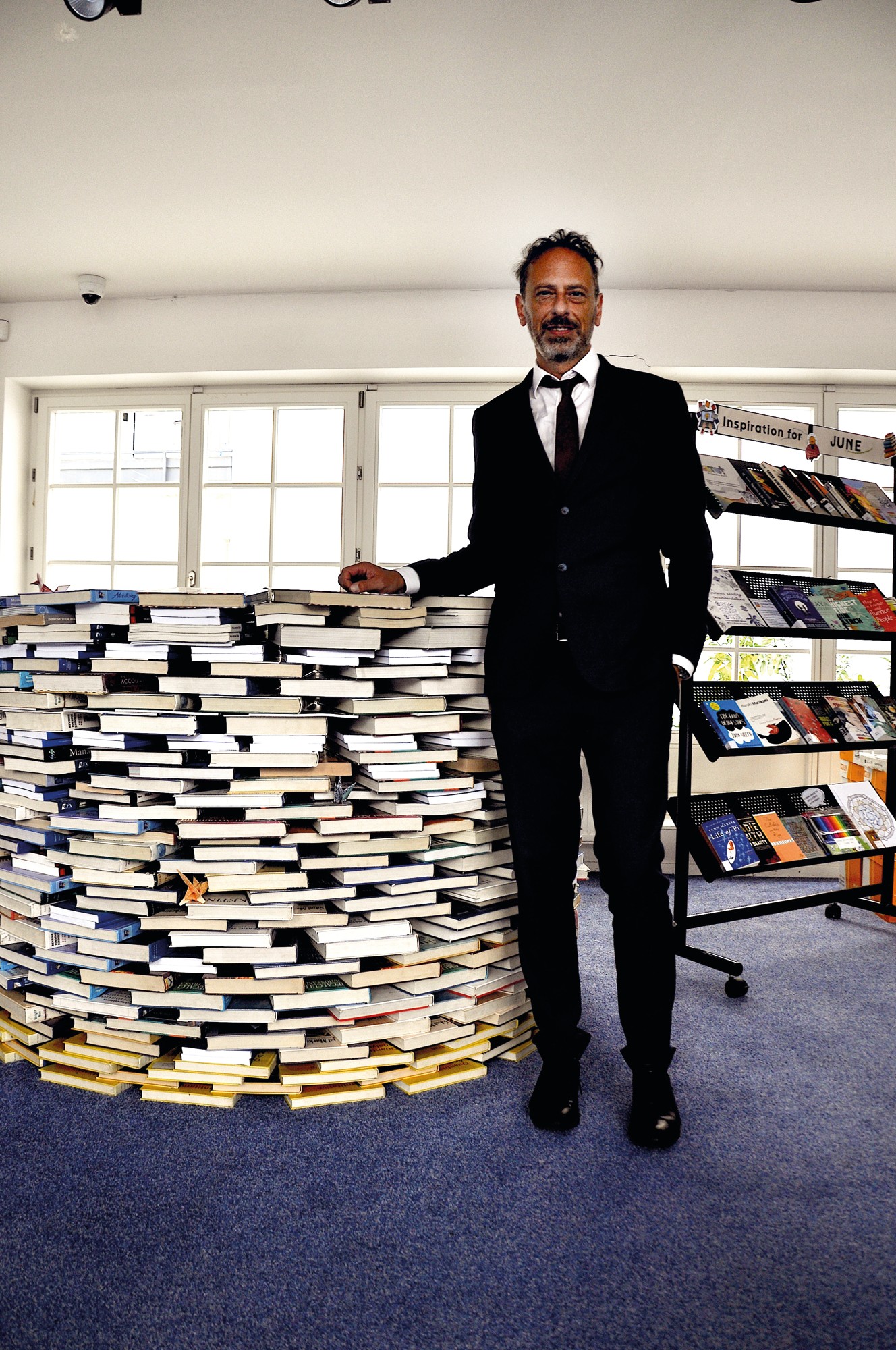
Stefano Cavagnetto, Dean of School of Business and IT, UNYP
Can you give an example of how the program prepares students for real-world challenges?
A great example I would say is the Professional Immersion Experience at the end of the program, where students step beyond the classroom and apply what they have learned in a real professional environment. It is an opportunity to confront real-world challenges, connect theory with practice, and develop the confidence and judgment that cannot be learned from textbooks alone. In many ways, it is the real bridge between being a student and becoming a professional.
Speaking from personal experience rather than as a dean, what is the one piece of advice you would give today’s students?
Stay curious, inquisitive, and open-minded, keep learning even after your studies, and never let someone else define success for you. University is more than preparing for a career; it is a unique opportunity to discover who you are, challenge what you think you know, and find what truly matters to you. Knowledge will change, technology will change, and careers will change, but the ability to think critically and independently, keep learning, and remain true to your own values will stay with you for life.