

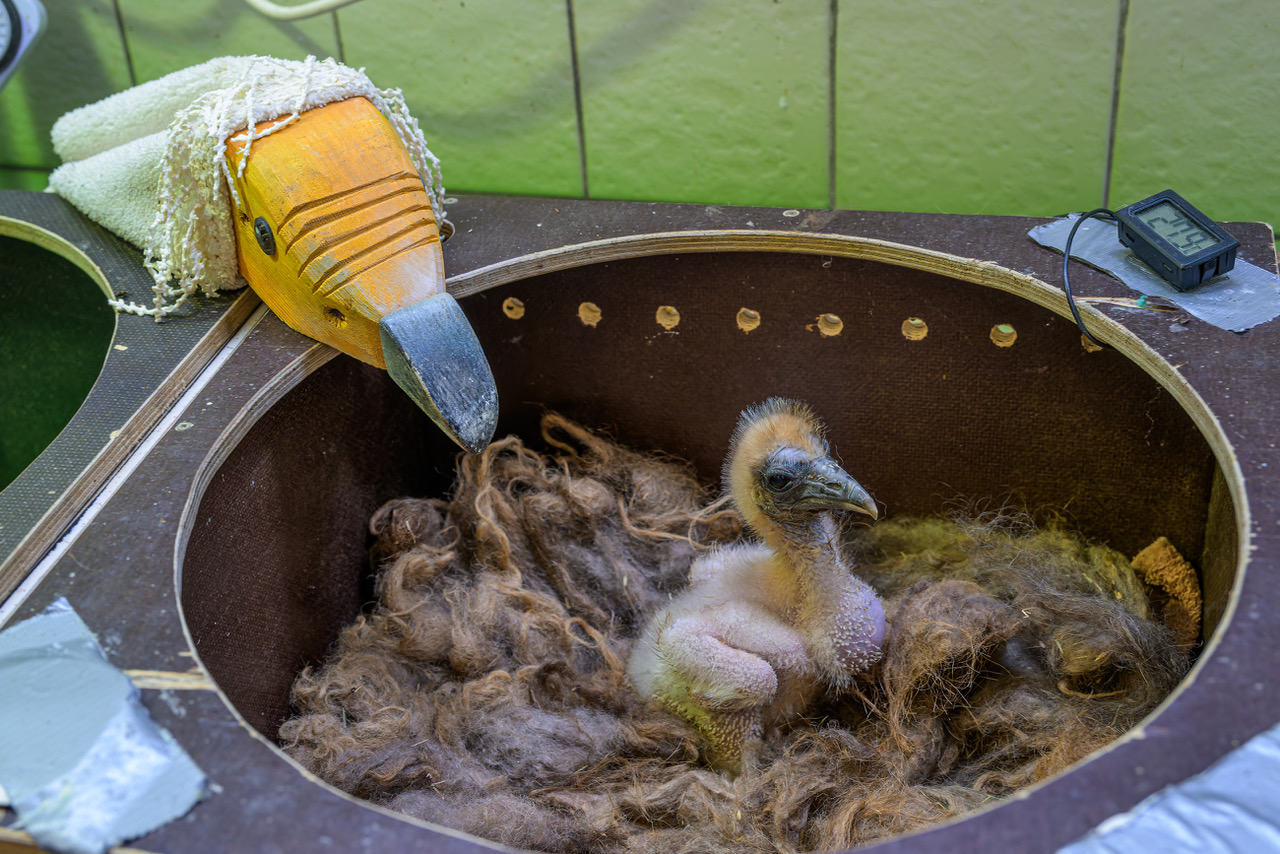
The puppet method prevents the cub from sticking to a person, i.e. its breeder. Apart from scavenging vultures, the Prague Zoo also uses this method in the case of artificial breeding of lesser condors, two-horned rhinoceroses or Javan grebes. Photo by Petr Hamerník, Prague Zoo
An exceptional Egyptian Vulture chick is being raised at Prague Zoo. Both parents originated in the wild and owe their survival to international cooperation among experts. The male, named Brok, was shot with a shotgun in Lebanon and arrived at Prague Zoo in June 2022. In September of the same year, a female named Qalamoon arrived from Syria; she had suffered a similar fate, having also been illegally captured and injured during migration. Her case marked the first time a bird from Syria had entered the European Endangered Species Programme (EEP). Despite their ordeal, the vultures recovered and bonded in Prague—producing offspring this summer.
The discovery, securing, and confiscation of the birds, followed by the complex administrative, transport, and veterinary procedures that led to their successful rescue, are the result of years of effort by dozens of people across five countries. As the EEP coordinator for this species, Prague Zoo highlights its collaboration with the Bulgarian Society for the Protection of Birds (BSPB), the Society for the Protection of Nature in Lebanon (SPNL), the Syrian Society for the Conservation of Wildlife (SSCW), and BirdLife International Middle East (BLIME). “At Prague Zoo, we like to say that nature conservation should know no national borders, and this success is a practical application of that idea. Thanks to the cooperation of local authorities, the efforts of conservationists, and long-standing collaboration with Bulgarian colleagues—who coordinate these unprecedented transfers of injured birds of prey to Europe—these stories, which often seem like something out of a movie, tend to have happy endings,” says Antonín Vaidl, Prague Zoo’s curator of birds and an EEP coordinator.
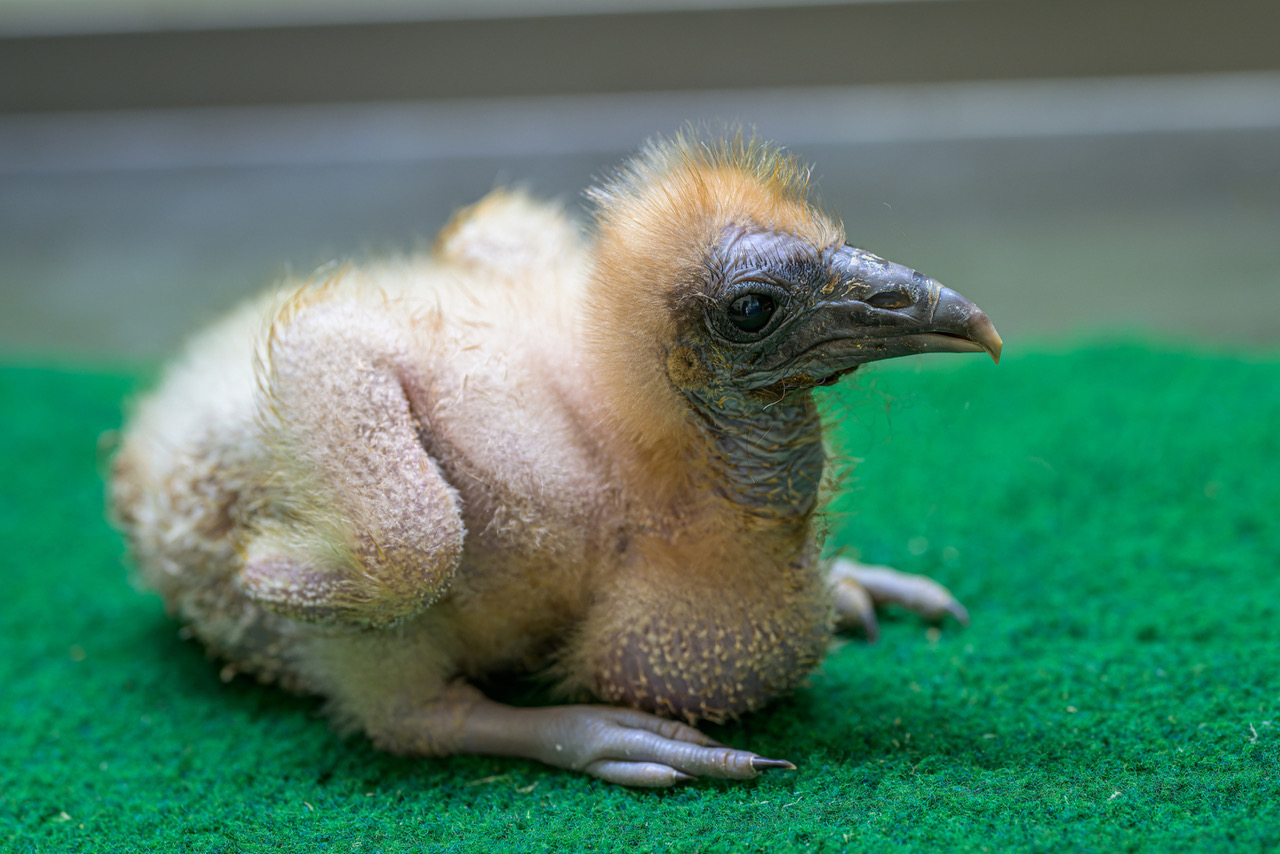
Cub captured at only three days old. Photo by Petr Hamerník, Prague Zoo
The Egyptian vulture is the only migratory vulture species in Europe. During its annual migration from breeding grounds in southern Europe to wintering grounds in Africa, it undertakes a journey of up to 5,000 kilometers. Many birds perish after colliding with power lines or wind turbines, or are illegally captured or even shot. Thanks to cooperation between local conservationists and experienced breeding institutions, rescued individuals are given a second chance at life in a zoo. Moreover, their genetic material provides a valuable boost to breeding programs.
The male Broka was found by rangers from the SPNL in September 2021. Together with two other vultures, he was illegally kept on a farm in Lebanon. While one of the trio was released into the wild, the other two males – namely Brok and also a vulture called Loki – had healed wing fractures and lead shots in their bodies, so they could not be returned to the wild.
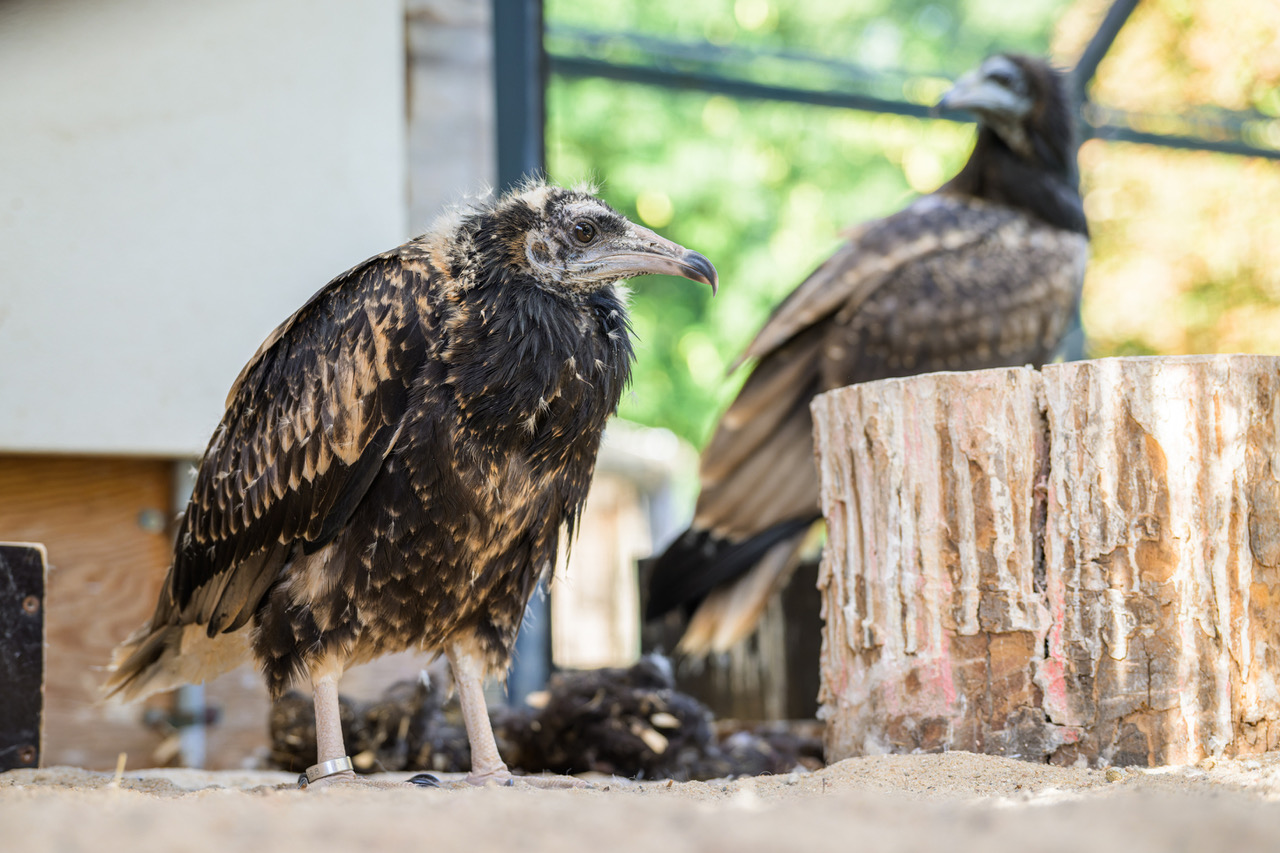
The current form of Kali’s vulture (in the foreground) already resembles an adult individual. However, it will not reach full adult dress until the beginning of the next decade. Photo by Petr Hamerník, Prague Zoo
With the support of their Bulgarian colleagues, they reached the Prague Zoo in June 2022, where they gradually recovered from their injuries. The second of the males named Loki left in April 2023 to strengthen the “scavenger” breeding in France, but Brok remained in Prague. “I removed three bullets from his body, the other six bullets will probably remain in his body forever. They are encapsulated and the operation would be risky,” explains veterinarian Helena Vaidlová.
The lead level in the blood of the rescued vultures gradually decreases. “We do not yet know how much lead affects reproduction, i.e. what is the limit for reduced fertility and embryo development. All of this is the subject of further testing. We have no comparison abroad, as this is the first large-scale research for this species,” adds Vaidlová, pointing out the research role of modern zoos in addition to the conservation function.
The mother of the current chick was first reported by Bulgarian colleagues in the fall of 2021. She and another young vulture were captured in Syria on their migration journey in 2019 or 2020. In 2021, the two vultures were found in illegal breeding and then seized thanks to the efforts of SSCW and BLIME. The young vulture recovered and flew free, but the adult female showed a problem with her wing. Challenging negotiations on its export to the European Union and inclusion in the EEP bore fruit – the Ministry of the Environment of Syria supported the transport, while the Bulgarian BSPB ensured it financially.
The female was named Qalamoon after the mountain range on the Lebanese-Syrian border. It was transported to Prague from Damascus via Beirut and Istanbul. She became not only the first vulture from Syria to strengthen European breeding, but also the very first bird from this country to ever enter the EEP. On arrival in September 2022, however, she showed signs of infection and osteoarthritis of the left wing following an untreated injury. After her condition improved and she was quarantined for a month, she was placed in a familiarization aviary. There, just like in nature, vultures look for a suitable partner. From a human point of view, they can be unexpectedly picky.
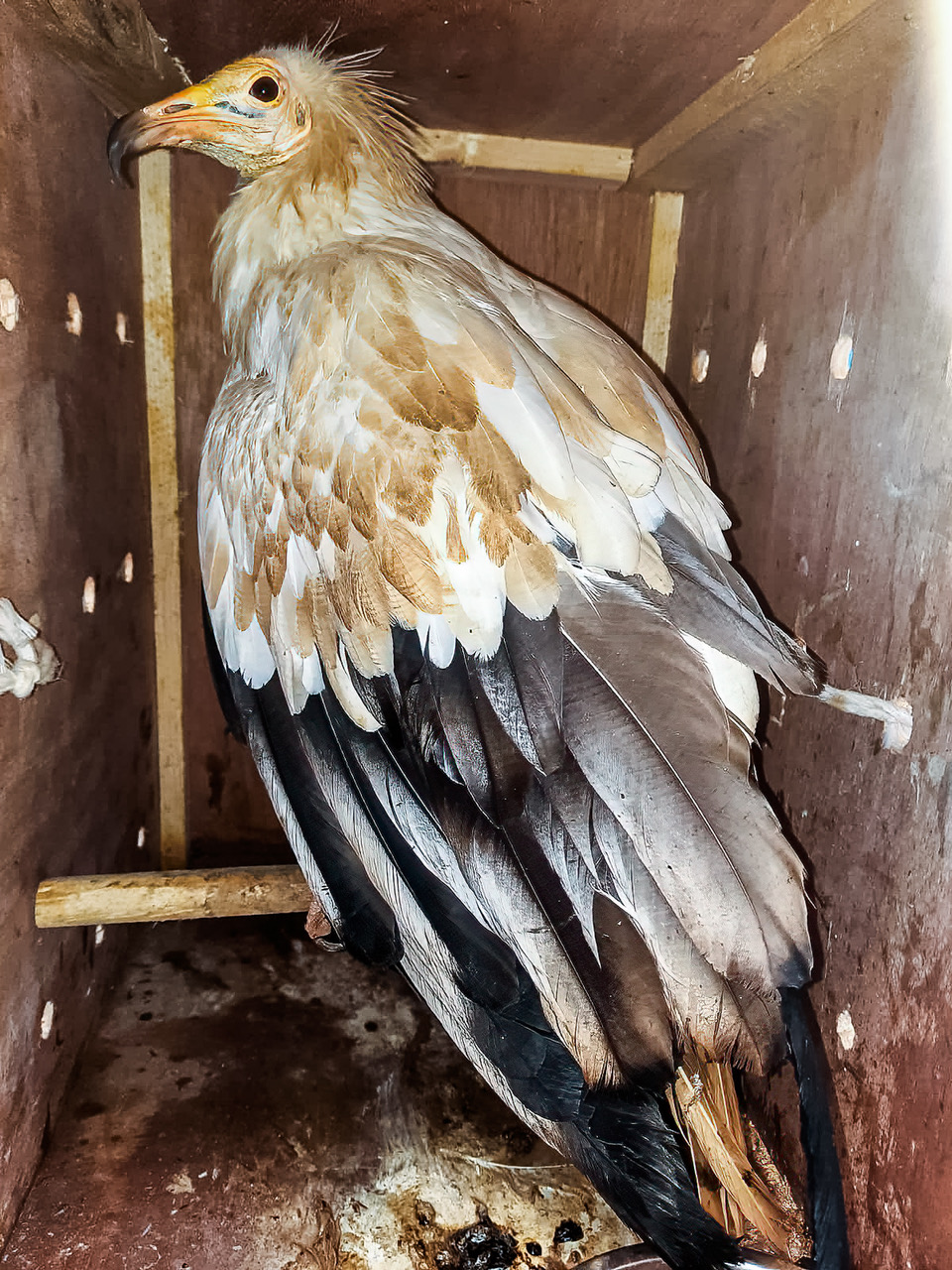
The mother of the current cub, a female brought from Syria called Qalamoon. In the picture from September 2022, in the transport crate in which she arrived in the Czech Republic. Photo by Antonín Vaidl, Prague Zoo
The Middle Eastern sufferers, Brok and Qalamoon, found favor in each other. Fertilized eggs were unexpectedly laid by the female directly in the familiarization aviary this year. Considering the inappropriate location and also the rarity of its contents, the egg was placed in a hatchery. The little vulture was hatched on July 12 and due to the couple’s inexperience, it was placed under the deserving female Debora, who had already taken on the role of foster mother in the past. At the same time there was a cub
supplemented with a puppet imitating the head of an adult scavenger vulture. This proven method prevents harmful imprinting of the young on the human face of the breeder.
The cub is a male and was named Kali by its keepers. His valuable blood will strengthen breeding in another European zoo in the future. His parents, who started a new life at the Prague Zoo, will stay here and, with a bit of luck, give birth to more offspring.
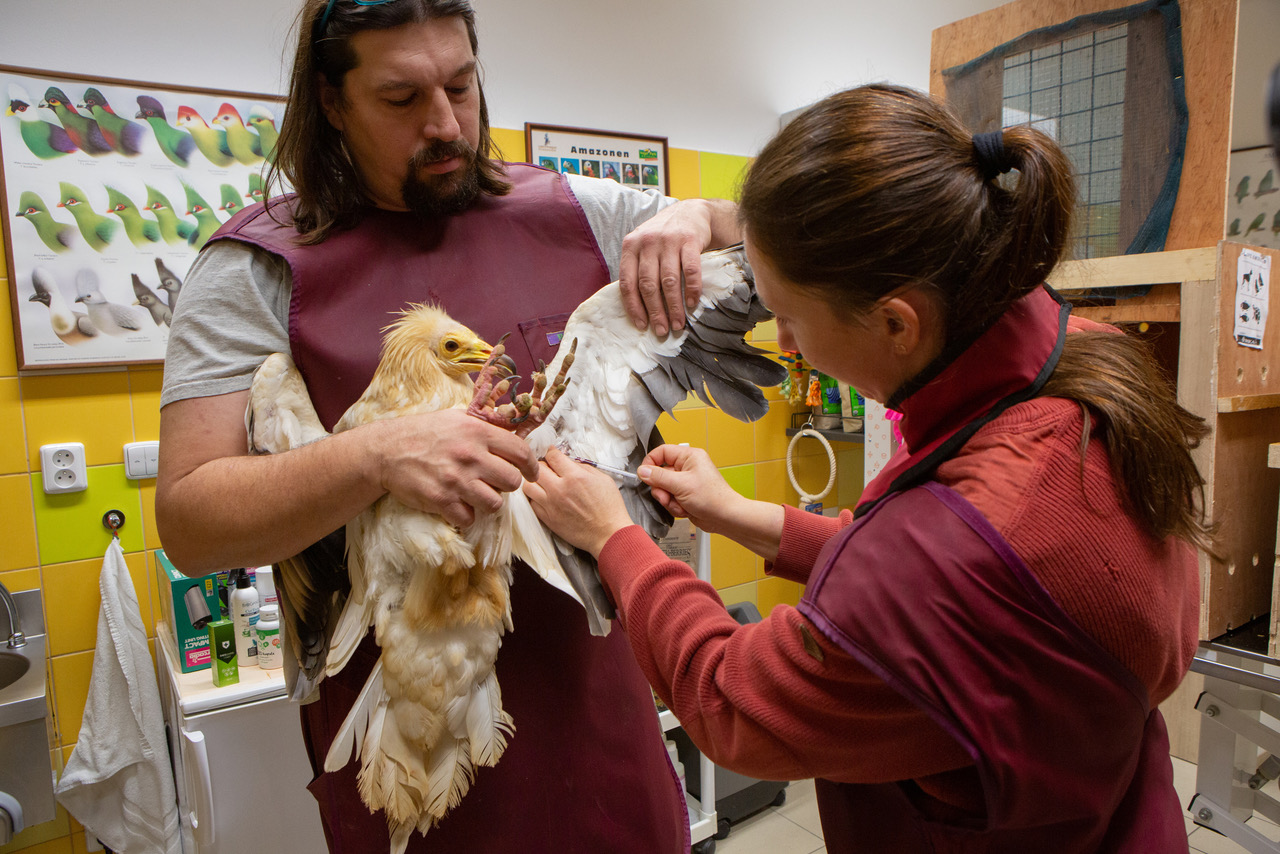
Veterinary inspection of vultures imported from Lebanon by bird curator Antonín Vaidl and veterinarian Helena Vaidlová (The picture is illustrative, it shows another scavenger vulture transported from Lebanon. It is not the father of the young, male Broka.). Photo by Tereza Mrhálková, Prague Zoo
With 40 hatchlings, the Prague Zoo is one of the most successful breeders of the scavenger vulture, the smallest and most endangered European vulture. In addition to breeding in human care, it also long-term supports the reintroduction program of this predator into the wild. In cooperation with the non-profit organization Green Balkans, she has already released 13 scavenger vultures from her farm in the Eastern Rhodope Mountains in Bulgaria.
You can read more about the protection of the scavenger vulture by the Prague Zoo on the website: https://www.zoopraha.cz/zachrana-supa-mrchozraveho-v-jizni-evrope.