International Institute for Middle East and Balkan Studies (IFIMES[1]) from Ljubljana, Slovenia, regularly analyses developments in the Middle East and the Balkans. General (Rtd) Corneliu Pivariu is a member of IFIMES Advisory Board and founder and former CEO at Ingepo Consulting. In his comprehensive analysis entitled “What will the future look like?” he is analysing the global geopolitical evolution and its impact on the states.
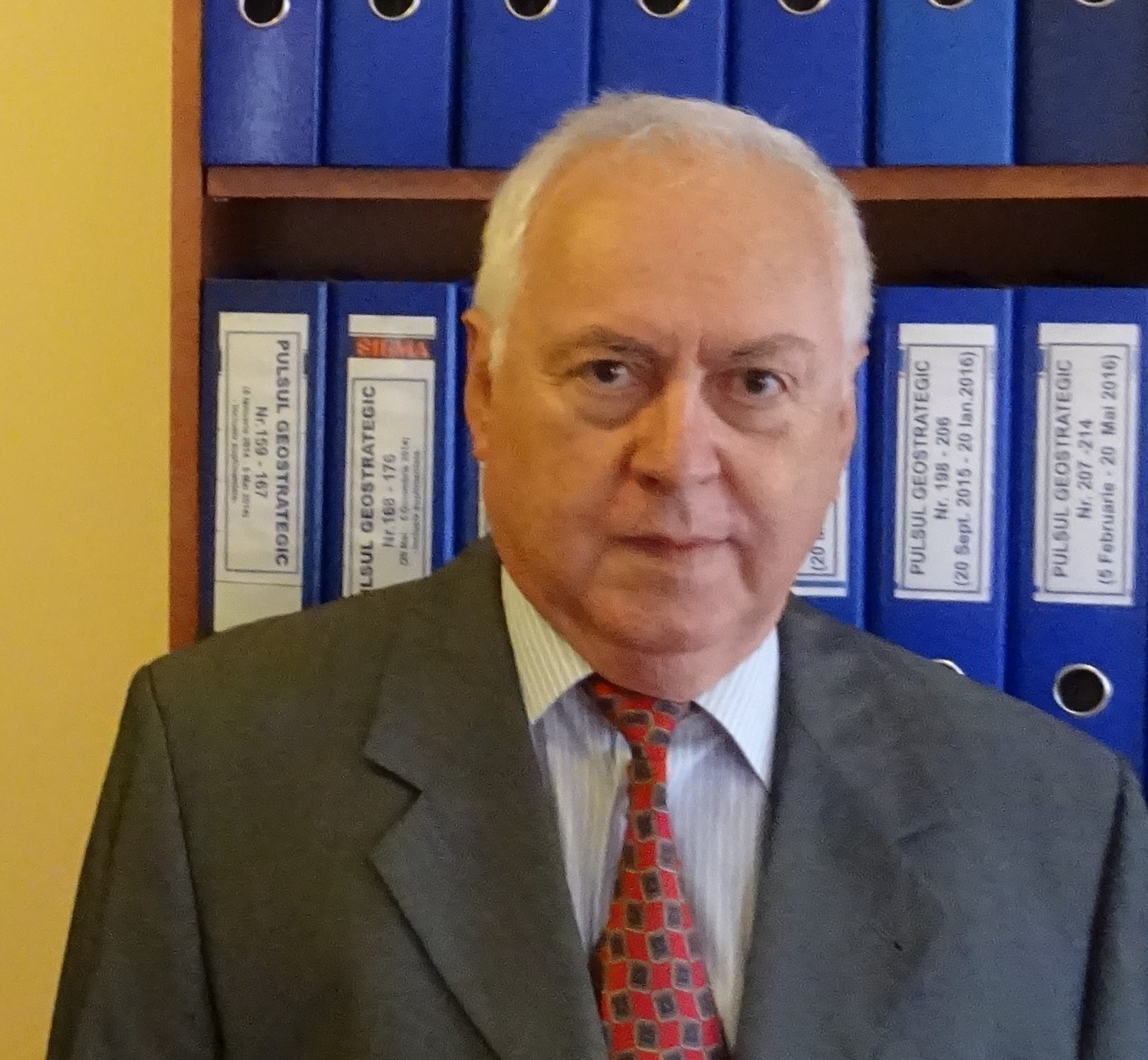
● General (Rtd) Corneliu Pivariu
Member of IFIMES Advisory Board and Founder and the former CEO of the INGEPO Consulting
What will the future look like?
Motto:“As we see the way of the world and as both we and you are aware of it, the law is concerned only with those ones who are equally powerful. As it is, the powerful ones are acting in accordance with what they can do while the weak ones are suffering for what is in store for them” – Thucydides, some 2,500 years ago
Corneliu PIVARIU
A question that arises on each occasion when unexpected challenges confront a community, a country and now an entire planet. The world is in the midst of a deep existential crisis triggered imperceptibly when the bipolar world ceased to exist and the march of globalisation advanced, once that the political class has declined worldwide and it is no longer capable at finding the most appropriate solutions for the future evolution of mankind (at least in what it demonstrated since some time, and notably now).
Overall considerations
Confused by the technological and informational burst, most of the mankind neglected nature and its laws and, even more, man became their most destructive element while environmentalism is an insignificant factor, unable to essentially eliminate or diminish the wrongdoings man wrought to nature with irreparable consequences even for his own future. Man goes on behaving in ways that disregard the natural equilibriums and the intensifying imbalances of the human society contribute greatly to the – unfortunate I would say – evolution of the human society now and at least on a short and medium term.
What will the future look like? Just like we devise it or as an old Romanian saying goes “your sleep depends on the way you turn down your bed”. However, most of the world’s political class is willing to sleep in a bed turned down by others (be them other states or other transnational entities), as the political class has no meaningful solutions to the current situation, at least at this point.
The struggle for the world’s supremacy is unfolding in a quite new way since no viable solutions for new global geopolitical balances were found and the formulas that were tried proved to be unviable after the bipolar world vanished and the world became, for a short period, unipolar under the US leadership.
On this background and after the emergence of the pandemic caused by COVID-19 (the virus code-named SARS2-COV was anyway heralded at least since 2017) it has become clearer that, beside the state players represented by states, other powers with global geopolitical interests, too, operate, some of them much more powerful than numerous states, and which, due to the present international architecture, are not internationally represented and therefore they cannot act openly for promoting their specific interests.
In fact, their movements were visible already in the second half of the XXth century when the big oil corporations made their presence felt, then that of the armament industry corporations, and, during the last decades, the medical and pharmaceutical corporations (known generically as Big Pharma) as well as the corporations of the information field, the great social platforms, which won already important international positions although unrecognized by the current international architecture where the evolution of the human society is discussed, negotiated and, sometimes, decided.
While more time will elapse from the outburst of COVID-19 pandemic as well as from any other ample phenomenon, not only the opposing data are accumulating but also those data which are following and which are to outline in a not too far a future the reality about this pandemic. I will not insist on this subject but it’s more and more obvious that this global milestone will have important effects on the global geopolitical evolution directly impacting the economy (the gap between rich and poor will unfortunately widen, the concentration of capital will increase and the middle class will weaken).
Regretfully, in tandem with these political and economic aspects, an ampler campaign is under way for minimising the role of the educational process, for infringing man’s fundamental rights and freedoms, for denying the family’s role and importance, for increasing the frictions between social classes and categories to the promotion of hatred (from the old dispute between workers and intellectuals to that between young and old or between salarymen and pensioners, etc), denying the importance of human knowledge of the past and even the hatred for the dead. “Who could have ever imagined that the statues of Christopher Columbus, Cervantes or Voltaire would be destroyed or desecrated? In some areas of the globe, the current hatred covers the past as well (a past which nobody can change, be it good or bad!), today’s people hate the people of yore… who nevertheless created, invented, discovered, left enduring works. The contemporaries’ struggle with the statues is a token of intellectual poverty, of lack of culture, of definite infantilism, of losing the clear judgement„[2].
The enhanced technological development of the last decades, especially in the field of information in tandem with AI will not be, after the pandemic, as spectacular as it is estimated (nothing will be like before) but it will be induced in particular by the technological developments, 5G and 6G, Internet of Things (IoT), Artificial Intelligence (AI), and the uncontrolled actions of the human factor on the environment followed by major cataclysms. Let us not forget that the evolution of social conscience is always slower than the progress of science and technology and history proves that at least until now, all new scientific discoveries were initially applied in the military field – a destructive one, aimed at achieving certain political and military goals and only after that adapted for the civilian field.
As professor Klaus Schwab said during an on-line conference dedicated to preparing the 2021 WEF at Davos, we need a Great Reset of capitalism. In fact it is about using the opportunities offered by COVID-19 pandemic for more ambitious global changes than those promoted by the EU through Green New Deal. Or, to say it more bluntly, by using the pretext of making the world more „equitable”[3] we speak about a new Cold War between China and the US in which all the other world’s states take part. A brief analysis underscores the following probable developments.
China
COVID-19 pandemic affects the global geopolitical evolutions which are in a close interdependence with the political interests of certain great state actors as well as with the important influences and interests the non-state actors with great economic power want to promote. China is in a position to obtain a unique role globally, she has the capacity of becoming the sole world superpower at a time when the US relinquished it and, probably, at least for a decade will not recover the world weight it had at the end of the XXth century. Nevertheless, the latter has a very great military power, technological advances (yet in the field of AI China seeks to reach the US level in 2025 and to become world leader in 2030) and political influence that China outweighs only partially. The US have still a great financial and economic power as long as the dollar will be a reference currency globally.
China might take the advantage granted by the political system of a sole world leadership and take the initiative of adopting certain measures for the evolution of the global geopolitical situation as the Western democracies and the US are extremely slow in the decision-making process. On this background, the Belt and Road Initiative (BRI) launched in 2013 expanded and 138 states and 30 international organizations joined it so far. Even if the project will slow down for a period due to COVID-19, the pandemic created new opportunities for China and, within this framework, BRI might move the centre of gravity of the international trade (and probably of the financial system) from the US to China.
Strengthening the positions achieved in Africa and especially in the Middle East may facilitate China’s attaining the role of sole super power. If China succeeds in replacing „en doceur” Russia and Iran in Syria in the process of economic recovery, Beijing will gain an extremely favourable position not only for the Mediterranean basin but also for Europe.
It is clear that China seeks to become a dominant power globally but should take into account the mistakes of all previous „empires”, as the way it acted in Hong Kong is strongly criticized as it is the treatment of the Uyghur minority, projects and major investments in countries where repayment of due sums to Beijing are long delayed. It should take into account as well the specific problems it is confronted with domestically and which are the greatest danger for achieving and maintaining global supremacy.
I think Beijing is convinced since a long time that it has no everlasting friends or allies in its global plans, but provisional allies only for certain specific objectives when their interests are consistent. In all likelihood, the said provisional partners are convinced of all these except they will not dispose of China’s economic, financial, political and military leverages.
The USA
The domestic events triggered in the spring of 2020 in the US caused by the emotion that followed the tragic death of George Floyd and which was amplified by media brought to the forefront the Black Lives Mater movement (BLM), which emerged several years earlier and determined great social upheavals in the country. Apart from the fact that those events prove the existence of certain social and political problems as well as economic inequalities which were not appropriately addressed by the American political class during the last decades, we are certainly witnessing a political movement of the Democrats for diminishing Donald Trump’s chances of winning a new mandate in the November 2020 presidential elections. COVID-19 pandemic overlaps the US domestic events and represents the most serious challenge for the world international order lead by the US, a role president Trump pulled out to a secondary position through his slogan “America first”. A report of the Council on Foreign Relations[4] stated that the United States should focus on improving domestic policy and economic competitiveness if it wants to play an active role on the international arena. To that purpose, The US should capitalize on its relations with Canada and Mexico, to expand a much more active cooperation with its allies, to develop the partnership with Europe, to improve its relations with India, to invest in the international institutions seeking a track for resuming the relations with Russia and focussing less on the Middle East and more on Asia. The unavoidable and expanding competition with China should be certainly placed at the centre of the American foreign policy in its search for a new world order. What will be the decision or the answer of the American political class we will see after the November 2020 elections. Although the Democrats are presenting Joe Biden as a winner by far, I do not think Donald Trump is already defeated. Even if he wins, president Trump will be further confronted with a fierce domestic opposition which will hinder his actions abroad for resuming the role of the world’s leader in the competition with China.
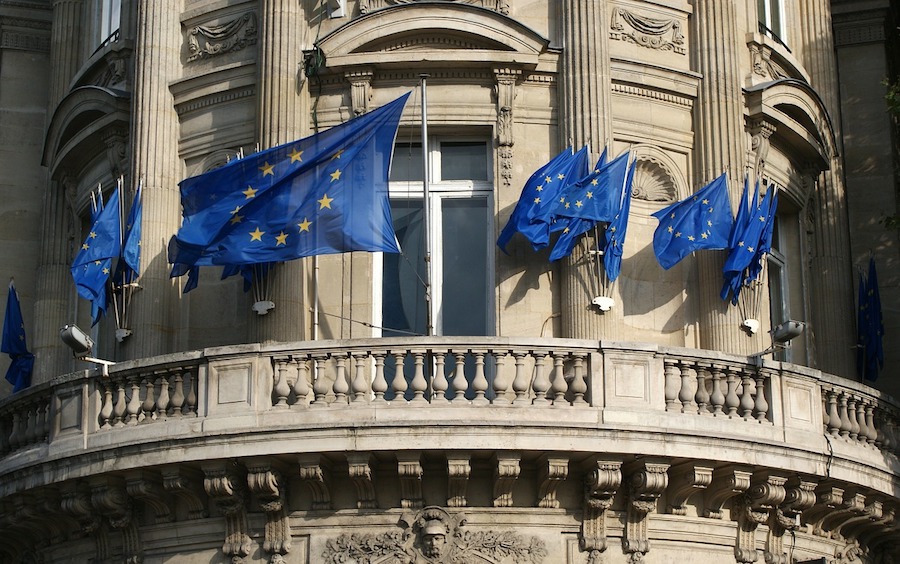
The European Union (EU)
The EU project emerged 70 years ago in order to solve the intra-European problems, particularly for securing peace and reconciliation. The evolutions that followed turned the EU in an attractive model as the stability and prosperity it enjoyed was backed by the political and military alliance with the US and NATO’s umbrella. Besides, the European Union is an absolute necessity since no European country, be it Germany, Great Britain or France cannot at present, and much less in the future, deal with giants such as China, the US, India, Russia. That was the logic of the willing assembly of the European states in a union. Except that once it took shape, the “intelligentsia” from Brussels lived in another, illusory, world, distanced from the geopolitical reality and seemed to focus on economy, finance and utopias. They forgot or disregarded Russia’s continuous and aggressive pressure, China’s new aggression and the forceful resuming of the Islamic conquest. Furthermore, during the last 12 years, the EU went through three major crises, the financial one, the euro crisis and then the migration from the Middle East and Africa with adverse consequences to which BREXIT should be added.
At the moment, the EU goes through the crisis caused by COVID-19, which – probably too optimistic- the Vice-President in charge of co-ordinating the external action and security policy, Joseph Borrell, considers it „as a great accelerator of history”[5]. Borrell pleads for a common foreign policy of the EU whereby investments sould be made not only politically but also financially. In fact, the European foreign policy is almost non-existent and Josep Borell insists on a EU which pursues its own interests and values and avoids joining sides with one or another of the great players who intends to control the globalised world. It sounds great in theory but there is no practical sign that the EU-China meeting in the 2020 fall, which is to be held in Leipzig, will witness notable events to that purpose although the first bilateral agreement was approved recently[6] between the two sides. The declaration of the President of the European Commission, Ursula von der Leyen, made on that occasion seems more interesting to me: “The Covid-19 pandemic and certain major bilateral and multilateral challenges show that the EU-China Partnership is essential, whether it’s trade, climate, technology or defending multilateralism. Yet in order that our relationship develop further, it should be based even more on rules and reciprocity so that it ensures perfectly fair rules of the game”.
Democracy and the respect for human rights are at risk and the best example is age discrimination (ageism). Although the European Commissioner for Equality – the Maltese Helena Dalli stressed in March 2020 that: “Equality and non-discrimination are human rights’ fundamental principles which govern our Union as well. No crisis allows us get estranged from these principles… There is no place for ageism in the EU…COVID-19 crisis revealed discriminating attitudes on elderly people…The European Commission is engaged in respecting all the people’s rights including those of the older Europeans all along the current crisis and that no one will be left behind… That includes the lucrative activity, social and mobility measures at the EU level”[7]. Unfortunately, not everywhere in the EU this statement was taken into account. In Romania, people over 65 were almost totally sequestered in their households during the state of emergency and were allowed 2 hours only and later 3 hours a day to go outside for supplies or other necessities. We mention here the statements of the Dutch Mark Rutte who proposes a euthanasia law for healthy 75s who feel their lives are complete[8].
Therefore, we should pay great attention to which way COVID-19 accelerates the history! At this historic stage the EU is totally dependent of the Brussels thick bureaucracy and will not be able to respond properly to the great challenges it is confronted with
Germany
“The problem of Germany is that it is too big for Europe but too small for the world”, said Henry Kissinger, while Russia, which is both European and Asian power without being dominant in either of the continents seeks to play a prevailing role worldwide. Maybe this is one of the reasons for which in the course of history the two countries cooperated closely (see the secret “Reinsurance” Treaty concluded between Germany and Russia in 1887). Let us not believe that if Germany opposed recently Russia’s re-joining G7, the Russian-German cooperation goes through critical moments.
After WWII, Germany’s evolution has been marked by certain favourable moments such as The Marshall Plan, the reunification after the fall of the Berlin Wall (which was strongly backed by the US on the background of a weakened Soviet Union even if France and Great Britain were reluctant), the EU’s expansion to the East and the creation of euro.
On this background and especially after Donald Trump became president, it was obvious that Germany adopted a strategic repositioning with regard to the US which is seen by the German foreign minister Heiko Mass as a repositioning of the entire Europe.
With reference to the way Berlin will reposition Germany with regard to Russia, China, Eastern Europe and the trans-Atlantic relations the conclusions of professor Carlo Masala[9], after Chancellor Angela Merkel delivered a speech at the Konrad Adenauer Foundation on May 27th, 2020 are interesting. The first one is that Berlin does not want to adopt a tough line in its relations with China and stressed that the EU has a strategic interest in this relationship and that it will be a priority for the German government. Secondly, for Germany its relationship with Russia takes precedence over the relations with the Eastern Europe. And thirdly, there is a fracture in the trans-Atlantic relations even if Chancellor Angela Merkel indicated that Europe’s most important partnership is with the United States. We notice that the relationship with the US was „degraded” from the “most important friend outside the EU” – as the political manifesto of the CDU of 2017 states – to that of „partner”. The actual status of the relations between Germany and the US has been illustrated recently by Washington’s decision of withdrawing 11,900 military from Germany (as a result of Berlin’s refusal to increase the military spending to 2% of GDP) who will be relocated partly in Italy and Belgium, others will be returned to the US (Poland offered to accommodate these troops but the US probably does not want to further sensitize Russia with such a decision).
While Russia and China have presidents, who provide stability on a long term in their foreign policy, Chancellor Merkel is about to step down in August 2020.Her successor, no matter who will be, doesn’t seem to dispose of a comparable political stature to Merkel’s or to other competitors.
Russia
After the 25th June – 1st of July 2020 referendum when 78.56% of participants voted „Yes”, president Vladimir Putin made sure he may remain president until 2036. If until 2010 Moscow sought to be at least equal to Washington worldwide, circumstances have changed as the Kremlin is aware of the shifts occurring and will manifest at the international level. A document of the well-known Valdai organisation stresses the global geopolitical dangers in 2020: the risk that the US and China severe the cooperation considering that the two countries represent 40% of the global GDP; resuming another type of Cold War which will fundamentally change the economic international relations; the decline of the economic integration; Artificial Intelligence (AI) will become a new line of geopolitical competition; rise of populist movements; citizens’ profound discontent as a result of their disapproval of the way the governments deal with the economic and social challenges and that led to protests worldwide and weakened the governments’ ability to adopt appropriate measures. The challenges, categorized in four chapters are considered to be: Geopolitical/economic (the exacerbation of economic confrontations, the protectionism in trade and investment fields, the downturn of the great powers); environmental (global warming, the destruction of natural ecosystems, the water crisis); technological (cyber-attacks on infrastructure and financial institutions, losing private life); social (polarization of domestic policy, social stratification, loss of confidence in media outlets, the dominance of fake news).
Although Russia appears currently, at a first sight, at a certain advantage, it is confronted with two important problems: the demographic decline and the collapse of the oil price (as a renowned analyst said – and I quote roughly – at over 100 dollars the barrel Russia is a superpower and, under this level, it is an ordinary power).
In an analysis of the post-global order, Alexadr Dughin assessed that the leading elite existing in Russia who took shape during late Soviet times and in post-Soviet times do not meet at all the current chanllenges as they are the heirs of the bipolar and unipolar (globalist) order and of the thinking associated to it, as Russia is strongly connected to the globalist structure and the urgency on a short run is to establish a new and irreversible post-global world order.
India
The fifth world’s economy with more than one billion people, India is a world power in the making and a potential superpower. It benefits from an international influence on the rise and has in important say about global problems yet it is confronted with serious economic and social problems as a consequence of centuries of colonial exploitation.
India’s main strategic partners are the Russian Federation, Israel, Afghanistan, France. Certain analysts estimate that Israel will replace Russia in what concerns both the strategic partnership and armament deliveries.
Ever since achieving independence, India sought to be autonomous from foreign powers but China’s repeated incursions in the border area in the Himalayas forced it to seriously consider two options: alignment with China or search for a broader international coalition able to break its neighbour’s geopolitical ambitions.
It is expected that in the future India’s preponderance on the international arena and its role in the new international order to be significantly on the rise.
Turkey
“Those who believe that we wiped out of our hearts the lands we withdrew with tears in the eyes one hundred years ago are wrong”, president Recep Tayyip Erdogan declared at mid-February, 2018, and that is probably the most evocative declaration which outlines the political vision of the current leader in Ankara for Turkey’s foreign and military policy for the coming years. Turkey’s foreign policy has yet to find the best solution between the anti-Western fluctuations and the neo-Ottoman dream of regional hegemony, on the one hand, and the need of good relations with the European Union, the US, China and even Iran, on the other.
Under Erdogan’s leadership, Turkey is determined to maximize its geopolitical position and role benefitting from the hesitations of the great international players. It is difficult to estimate to what extent it will achieve these plans, however it plays a more and more important role the Middle East equation (Syria) and North Africa, including in the Mediterranean.
Romania in COVID-19 pandemic
Romania’s evolution in the first half of 2020 was marked, as it was the case with the other countries in the world, by COVID-19 pandemic with certain specific notes, some of them I would have not wanted to happen and which I will present in brief. The Romanian political class proved again its weak capacity of properly managing the situation and no positive significant evolutions were recorded in comparison to the previous analysis[10], and the political actions were strongly influenced by the prospect of local elections (already postponed for 27th of September, a uncertain date at the time of writing these lines) and parliamentary ones. Moreover, through their behaviour toward the population, the political class proves that the 50 years of communist dictatorship continue to have strong influences. The great majority of politicians consider themselves our masters (yet we are guilty as well when accepting this behaviour) and act accordingly (during the alert status the president spoke several times on TV and his warning gestures were accompanied by directing his fingers to the audience), and the speeches of many dignitaries were full of cautionary words (a understatement for treats) and strengthened the feeling of distinction (they – the elected ones who are allowed everything; we, the mob, are to be subdued and not to think). Incidentally, and this is probably a European record, during the first two months of the state of emergency, 120 million euro worth of fines were handed down and the compulsory actions are considered (at least this is what results from public declarations) a main modality of fighting the pandemic. It would seem thus that the population is very unruly and do not observe laws and rules but the truth is that the Romanians, in their great majority, as it is in the case in other European states, observe the legislation and the rules imposed by the authorities. The shortcomings of the education, which is a long process yet almost completely neglected during the last decades, are nevertheless taking their toll.
The danger represented by the pandemic is uninspiringly exaggerated (SARS2-COV virus certainly exists and makes victims, no doubt about it) but the statistics present errors and are not convincing, while recognizing those errors comes late and that increases the lack of confidence and the lack of transparency contributes further to the lack of confidence. The authorities were late in recognizing that 94% of the deceased registered as deaths due to COVID-19 were suffering of at least another comorbidity. Forbidding the autopsies for establishing the causes of deaths[11], under the childish and untrue pretext of the danger of disseminating the virus was another reason for the lack of confidence.
As I said, age discrimination during the first period of the emergency state was obvious as Romania was the only European country where those over 65 years of age were allowed to come out of the households 2 hours only and later 3 hours only a day, in a time interval fixed by the authorities and that was a measure nobody apologized for afterwards. Among the important personalities of the country it was only the president of the Romanian Academy, Ioan-Aurel Pop, who had a clear position of condemning this measure[12], a measure which should have rallied a much bigger number of people than it did. The discrimination goes on by the non-observance of the pensions law which provides for their increase as of the 1st of September, a law the president announced already the government cannot observe as a consequence of the economic situation created by the epidemic. Having in mind that in Romania pensions represents around 8% of the GDP (in the EU’s member states it represents 12%) and the pensions indexation with the inflation provided for by law have to be enacted every year in January, that has been enacted in 2019 in September only and no news of it in 2020 so far. “Nothing is more valuable than old men’s advice”, as the old Romanian saying goes, and that was often used with pride until some decades ago. It seems that they wish to replace it by the syntagma „Let he who has old people around him kill them”.
We register violations of the human rights and liberties with a frenzy worth a better cause in the new law No. 136/2020, “through which the physician recommends your lock-down, the physician decides your confinement, the physician recommends the prolongation of your confinement… you cannot leave the location where you have been forcefully locked-down… The physician replaced even the judiciary and might deprive you of freedom, no matter what you wish[13]”.
During this time, deforestation goes on unhindered (three hectares an hour according to December 2019 data), in spite of the EU warnings, the number of unemployed comes close to 900,000 people, the economy registers losses on which the authorities do not offer a clear situation and the foreign loans reached around 10 billion Euro in the first half of 2020.
It seems that among state institutions the Constitutional Court and the Ombudsman only remained defenders of the human rights and freedoms in Romania.
The pandemic revealed another sad truth: the Romanian state is not able to secure employment for the existing workforce. In full state of emergency, thousands of Romanian travelled by chartered planes to Germany – which was in its turn affected by the pandemic – to harvest asparagus (what they were doing since many years), Austria made available a special train for bringing back the social caretakers from Romania. That way, the situation of tens of thousands of Romanians working in the farms and slaughterhouses in Germany, the Netherlands and Great Britain, the caretakers in Austria and Italy, the harvesters of strawberries in Spain were revealed to the general public. The Romanian government did not react on the subject; probably our politicians do not realize that they may reach the point of being treated at the Brussels headquarters the way the Romanian workers are treated abroad.
I conclude optimistically with the promises of president Klaus Iohannis made at the 29th of July press conference: “We had a meeting on the issue of the European funds. We discussed the ways Romania can turn to better use the European funds worth 80 billion euro. We determined the priority domains. We want Romania to prosper and that can be done only through huge investments. Our top priority is investing in the infrastructure. We have funds for highways and railroads, to modernize the energy infrastructure, for investing in education and health.”
Authorities offered us so far many promises and spoke always about the future: we’ll do, we’ll prepare, we are about to, in a short time. We will see what the future has in store for us, yet we should not adopt a passive attitude. A coagulation factor for moving things forward, to the better, must be created.
Education, economic development and democracy should be Romania’s three main action fields in the future and not petty political behaviour with no vision.
Short conclusions
The COVID-19 pandemic seems to hasten the evolution towards multilateralism yet it will not be achieved in an idyllic way but through a global competition for power, influence and resources where the resentments and historical frustrations feeding the desire to revenge cannot be neglected.
The observance of the human individual rights and freedoms, which were agreed upon and formalized in the UN Charter after WWII, remain entirely valid yet they are at risk and the mistakes of the past must not be repeated.
The states and the markets will witness new changes in the political and economic fields in a way which will be noticeable only in time and, for instance, many corporations relocate their production facilities from China. Inequalities will grow and new failed states will emerge.
It will be not difficult for China, under the current circumstances, to become the sole world superpower yet the problem is how long will it succeed in maintaining that position. Multilateralism will win in the end.
The shortcomings of the educational process globally will be obvious, yet AI will contribute to taking over many activities performed currently by people with important existential consequences (it is foreseen already for 2020 worldwide that the number of employees will decline by 25 million as a result of the AI development).
The development of 5G and 6G communications and of IoT will have important effects on the evolution of not only the interhuman relations but also of the international ones. There is a danger that these developments be used for curtailing the human rights and for unacceptable intrusions in the private life.
I believe that opting between being and having is vital for the mankind’s evolution and future and this is why I retake here president Emil Constantinescu’s conclusion[14]: “Politics in the knowledge society and in the globalised world of the future should be constructed as a complex vision on the future, based on a new dialogue about the human values. The current global medical crisis, which brought to the forefront not our wealth but our life, dictates us brutally to opt between having or being. The creation of a new arbitration between power and knowledge is needed to reconfigure a framework in which each individual be able not only to be but also to become”.
Anyway, Thucydides wad right some 2,500 years ago, is right now and will be probably right on a long-term future.
About the author:
Corneliu Pivariu is a highly decorated two-star general of the Romanian army (Rtd). He has founded and led one of the most influential magazines on geopolitics and international relations in Eastern Europe, the bilingual journal Geostrategic Pulse, for two decades. General Pivariu is member of IFIMES Advisory Board.
Ljubljana/Bucharest, 13 August 2020
Footnotes:
[1] IFIMES – International Institute for Middle East and Balkan Studies, based in Ljubljana, Slovenia, has Special Consultative status at ECOSOC/UN, New York, since 2018.
[2] Ioan-Aurel Pop, president of the Romanian Academy in an interview granted to Gazeta de Cluj magazine, 2020.
[3]The states and international organizations strived so much to make the world a better place so that now a new billionaire emerges every two days and the income of the richest 2,200 billionaires increased by 12% annually; 1% of the richest people of the planet own incomes equal to those of the poorest 3.8 billion people in the world.
[4]The End of the World Order and American Foreign Policy, Council Special Report no.86, May 2020
[5] Speech delivered at the Annual reunion of Germany’s ambassadors, 2020.
[6] Agreement between the EU and China on Geographical Indexes (IG), approved on July 20th afte almost 10 years of negotiations
[7] https://www.age-platform.eu/policy-work/news/eu-commissioner-equality-reaffirms-older-persons-rights-time-covid-19
[8] https://www.dutchnews.nl/news/2020/07/euthanasia-law-proposed-for-healthy-over-75s-who-feel-their-lives-are-complete/
[9] Carlo Masala, professor of international policy at Bundeswehr University, Munchen
[10] https://corneliupivariu.com/romania-la-101-ani-de-la-crearea-statului-national-unitar/
[11] Decision of the National Center for Monitoring and Controlling the Communicable Diseases (CNSCBT): “Death of a pacient confirmed with COVID-19 can not be attributed to a preexisting disease (e.g. cancer, hematological conditions, etc) and COVID-19 should be reported as cause of death, no matter the pre-existing medical conditions that might be suspected of favoring the COVID-19 severe evolution. COVID-19 should be mentioned on the death certificate as cause of death for all deceased persons to whom COVID-19 caused or is supposed to have caused or contributed to death.”
[12] His article The Dangerous Old People was published on the Academy’s site and was taken over by several daylies.
[13] http://teopal.ro The Tragedy of the Romanian Citizen: You Are Sick, You Are Guilty!
[14] Emil Constantinescu, President of Romania, 1996-2000, President of the Berlin Academy of Cultural diplomacy. The world medical crisis – a historical chance for a new global political project

 About the author:





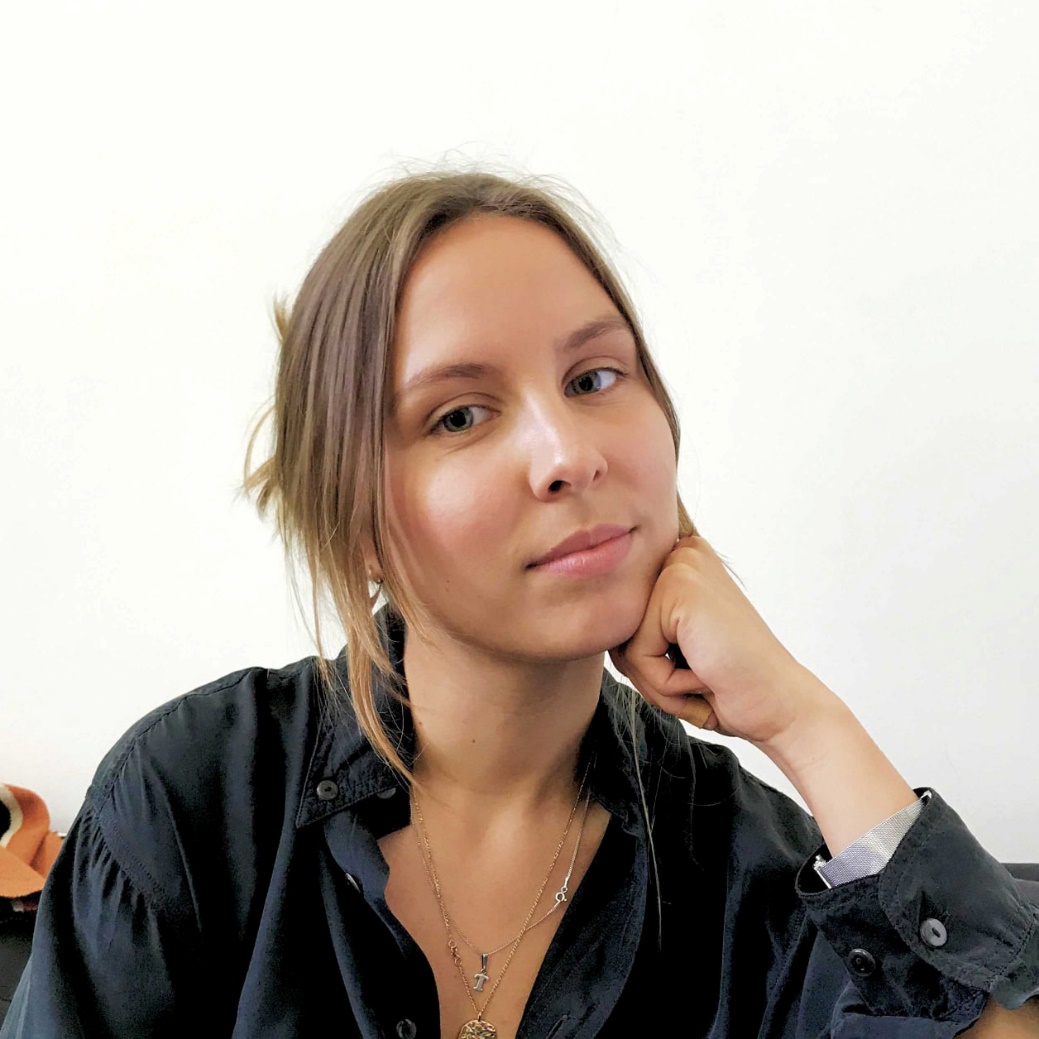















 Dr. Antonia Colibasanu is Geopolitical Futures’ Chief Operating Officer. She is responsible for overseeing all departments and marketing operations for the company. Dr. Colibasanu joined Geopolitical Futures as a senior analyst in 2016 and frequently speaks on international economics and security topics in Europe. She is also lecturer on international relations at the Romanian National University of Political Studies and Public Administration and associate professor for the Romanian National Defense University Carol I Regional Department of Defense Resources Management Studies. Prior to Geopolitical Futures, Dr. Colibasanu spent more than 10 years with Stratfor in various positions, including as partner for Europe and vice president for international marketing. Prior to joining Stratfor in 2006, Dr. Colibasanu held a variety of roles with the World Trade Center Association in Bucharest. Dr. Colibasanu holds a Doctorate in International Business and Economics from Bucharest’s Academy of Economic Studies, where her thesis focused on country risk analysis and investment decision-making processes within transnational companies. She also holds a Master’s degree in International Project Management. She is an alumna of the International Institute on Politics and Economics at Georgetown University.
 Bich T Tran is a PhD candidate at the University of Antwerp and a Researcher at the Global Affairs Research Center, Ryukoku University.





 Josip Juratovic (SPD),
 Cristina Muntean is a consultant, trainer, mentor and coach who specializes in personal branding, strategic communications, emotional and systemic intelligence for leadership. A former journalist with more than 12 years of experience in the Czech, Romanian and international media, she founded MediaEducationCEE, a PRadvisory and training agency in Prague in May 2010. Her clients are executive level managers and entrepreneurs with Top100 companies in the Czech Republic and Central and Eastern Europe. Cristina is also an internationally certified trainer and coach with the Enneagram, a complex system of personal development, and a facilitator of systemic dynamics in organizations. She provides services in English, Czech, French and Romanian, her mother tongue. Cristina can be reached at +420 776 574 925 or at





 Author is chairperson and professor in international law and global political studies, Vienna, Austria. He has authored six books (for American and European publishers) and numerous articles on, mainly, geopolitics energy and technology.